
Highlights
- Germany has launched a rare earth magnet recycling facility in Pforzheim using HPMS technology, processing up to 750 tonnes annually—a strategic move to reduce China dependence, though current capacity addresses only a fraction of Europe’s 20,000-tonne annual demand.
- HyProMag’s hydrogen-based recycling method bypasses full chemical reprocessing for cost and emissions advantages, but Europe still lacks heavy rare earth separation infrastructure and depends on future EV scrap supply for meaningful scale.
- Mkango Resources (MKA.L), backing the facility, remains a pre-revenue developer with a CAD $340M market cap driven by speculative momentum rather than fundamentals, reflecting high-risk exposure to rare earth supply chain evolution.
Germany has opened a rare earth magnet recycling plant aimed at reducing reliance on China. The technology is credible and politically backed, but the facility is small relative to demand. It signals progress—but not yet independence.
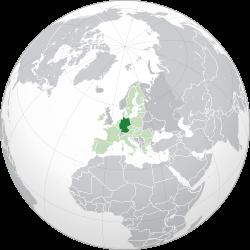
A Ribbon Cut with Strategic Intent
In Pforzheim, Germany, has switched on more than a plant—it has tested a thesis. Backed by Mkango Resources Ltd (opens in a new tab). (MKA.L) and operated by HyProMag GmbH (opens in a new tab), the facility uses Hydrogen Processing of Magnet Scrap (opens in a new tab) (HPMS), a method developed at the University of Birmingham (opens in a new tab).
The aim is clear: turn end-of-life magnets into a domestic feedstock and chip away at China’s dominance.
What Holds Up Under Scrutiny
The engineering case is sound. The plant is permitted for up to 750 tonnes per year of NdFeB magnets, with staged ramp-up from roughly 100 tonnes. Policy alignment is equally real. Germany and the UK highlighted the project in a joint critical minerals statement—evidence that recycling is no longer peripheral but central to Western supply chain strategy.
HPMS itself matters. It bypasses full chemical reprocessing, reducing cost, emissions, and permitting friction—advantages Europe needs.
Where the Math Gets Uncomfortable
Scale remains the constraint. Europe consumes about 20,000 tonnes of magnets annually (16,000 to 18,000 tonnes are imported from China). Even at full capacity, this plant supplies a sliver of demand. More importantly, recycling does not solve the hardest problem: separating heavy rare earths. China still dominates that step, and without it, magnet independence remains partial at best.
The Story Told—and the Story Omitted
The narrative leans on “resilience” and “diversification.” Fair—but incomplete.
Less emphasized:
- Scrap supply is finite and competitive
- Feedstock often traces back to Chinese-origin magnets
- Europe still lacks a large-scale solvent extraction infrastructure
Recycling is a strategic layer—not a system.
Why This Actually Matters
This is tangible progress. Europe is building capacity, not just issuing policy. That alone marks a shift.
But investors should resist the easy headline. This is not a breakthrough—it is a foothold.
The signal is direction, not dominance.
Profile
HyProMag is emerging as a leading player in rare earth magnet recycling by using its patented HPMS technology, which enables a highly efficient “short-loop” process. Instead of breaking magnets down chemically, HPMS preserves the original alloy, converting end-of-life NdFeB magnets directly into reusable powder with significantly lower energy use, emissions, and environmental impact. Backed by decades of research from the University of Birmingham and strong government support, the company has established facilities in the UK and Germany and is expanding into the U.S., positioning itself as a scalable, low-carbon alternative within the growing circular magnet supply chain.
However, key constraints remain. HPMS output quality depends heavily on the condition of incoming scrap, requiring strict feedstock control and a fallback system of “medium” and “long loop” processing for lower-quality material. More importantly, large-scale growth depends on future supply—particularly end-of-life electric vehicle motors, which will not enter recycling streams in significant volumes until the late 2020s. While near-term feedstock sources like hard drives and manufacturing waste are sufficient for initial operations, HyProMag’s long-term expansion is tied to the timing of EV fleet turnover, making its growth trajectory a function of both technology and market sequencing rather than immediate scale.
Mkango Resources Ltd. (MKA.L) is a Canada-based rare earth company focused on building a sustainable, vertically integrated supply chain spanning mining, recycling, and processing. Through its subsidiary Maginito, the company is advancing recycled magnet production via HyProMag while also developing the Songwe Hill rare earth project in Malawi and downstream initiatives in the UK and Poland. Ownership is relatively dispersed, with the largest stake held by entities linked to Noble Group (opens in a new tab) (via Talaxis) at roughly 18–20%, followed by smaller individual and corporate shareholders, while the majority—about 68%—is held by the public. Overall, Mkango’s strategy combines primary resource development with circular economy initiatives, positioning it as a hybrid upstream–midstream player in the evolving rare earth supply chain.
A pre-revenue rare earth developer with a market cap of roughly CAD $340 million as of April 2026, the valuation reflects strong investor expectations despite limited current financial performance. The company reports no meaningful revenue, negative EBITDA (-$4.7M), and a net loss of about $14.9M, with weak balance sheet indicators including low cash ($2M) and a very low current ratio (0.18). Returns are deeply negative, with ROA and ROE reflecting early-stage capital deployment rather than operating profitability. At the same time, the stock has shown high volatility and strong momentum—up over 150% year-over-year—suggesting speculative interest tied to its rare earth strategy rather than fundamentals. Ownership is largely retail-driven, with about 33% insider ownership and minimal institutional participation, reinforcing its profile as a high-risk, development-stage play leveraged to future growth in the rare earth supply chain rather than current earnings.


2 Comments
2 replies
Loading new replies...
New member
New member
Join the full discussion at the Rare Earth Exchanges Forum →