
Highlights
- Chinese firms are establishing factories in Africa driven by margin arbitrage rather than export-led industrialization, targeting local pricing power instead of global competitiveness.
- Africa lacks the critical midstream infrastructure—supplier networks, reliable power, logistics systems, and component manufacturing—that transformed China into an industrial powerhouse.
- Real industrial transformation requires more than capital inflows: it demands supplier ecosystems within tight geographic clusters, value chain advancement, and mastery of processing layers where true economic power resides.
So there is a story everyone wants to tell. Yes, there is a familiar narrative gaining traction again: China is moving manufacturing to Africa. Wages in Guangdong rise, margins compress, and factories migrate—first to Vietnam, then Bangladesh, now perhaps to Nairobi or Addis Ababa. Africa, long cast as a resource supplier, is finally stepping into its industrial moment. A new “factory of the world” is emerging. It is a compelling story. It is also, at least for now, the wrong one. What is unfolding across parts of Africa is real. Chinese firms are arriving. Industrial parks are filling. Steel plants, textile mills, and assembly lines are being built. Capital is moving. But the deeper structure—the thing that actually made China indispensable to the global economy—is not moving with it.
Not yet. And not easily.
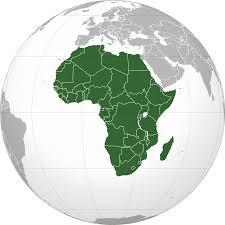
Rare Earth Exchanges™ reviews a piece from The Economist (opens in a new tab) capturing rising Chinese factory investment in Africa, however missing the deeper reality: industrial power is not about placing factories, it’s about building integrated systems. It underestimates the importance of supplier ecosystems, reliable infrastructure, midstream processing, and export-oriented scale—while misreading current investment as transformational rather than market-seeking and margin-driven. It also overlooks Africa’s fragmented markets, weak logistics, and lack of comparison to more advanced manufacturing hubs like Southeast Asia. In short, it mistakes increased activity for structural change, when the real question is whether Africa can move from isolated production sites to globally competitive industrial systems.
What Is Actually Happening
The current wave of Chinese investment into Africa is not driven by a grand relocation of global manufacturing. It is driven by pressure—internal, structural, and increasingly acute. China’s industrial base is under strain. Overcapacity, price wars, and thinning margins—from solar panels to electric vehicles—are forcing firms to look outward not for expansion, but for survival. Africa offers an outlet.
But this is not the export-led model that built East Asia.
Instead, many Chinese firms are producing for Africa itself. Fragmented though these markets may be, they offer something China increasingly does not: pricing power. Products commoditized at home can command multiples abroad. The incentive is straightforward. This is not export-led industrialization. It is margin arbitrage—capital chasing pricing gaps, not building global competitiveness. And that distinction matters.
The Missing Middle
The idea that Africa could become “the next China” rests on a fundamental misunderstanding of how industrial power is built.
China’s rise was never just about cheap labor. It was about systems. Dense supplier networks. Reliable power. World-class logistics. Deep labor pools. And, critically, mastery of the midstream—the chemical processing, component manufacturing, and system integration layers where most value is created.
That middle layer is the hardest to replicate. It is also where Africa remains structurally thin.
Factories can be built in years. Ecosystems take decades. What is emerging today is not a transfer of industrial dominance, but a thinner layer of activity—assembly, fabrication, localized production—without the deeper integration that turns manufacturing into power.
Motion Without Momentum
The numbers suggest acceleration: more projects, more capital, more announcements. Chinese manufacturing FDI into Africa has risen sharply in recent years, with dozens of new projects annually. Yet scale can mislead. Across sub-Saharan Africa, manufacturing’s share of GDP has declined from roughly 18% in the 1980s to around 10% today. Meanwhile, Africa’s trade deficit with China has widened to over $100 billion in recent estimates—signaling continued dependence rather than convergence.
This creates a paradox: more factories, but not necessarily more industrialization. Activity is increasing. But the underlying structure—the capacity to compete globally at scale—remains elusive. Even at its current pace, Africa’s industrial clustering remains far behind Southeast Asia, where supplier density, export integration, and logistics systems are already deeply entrenched.
The Quiet Trade-Off
There is another layer to this shift, less visible but more consequential. Chinese investment brings jobs, infrastructure, and momentum. It fills gaps where domestic capacity is limited, and Western capital is often absent. For many governments, it is a pragmatic choice.
But it also reshapes control. Local firms compete not just with imports, but with foreign-backed manufacturers operating on different timelines and cost structures. Industrial policy becomes intertwined with external capital. Strategic autonomy narrows, even as economic activity expands.
This is not a simple development story. It is a negotiation between growth and dependency, speed and sovereignty.
Access Is Not Control
Africa is gaining factories. It is not yet gaining control. Access to capital is not the same as control of supply chains. The presence of production is not the same as mastery of systems. Alignment with global capital flows does not equal independence from them. This distinction is where value—and power—resides. It is also where most analyses fall short.
A Different Future Taking Shape
None of this means the opportunity is illusory. Far from it. There is a path—narrow, difficult, but real—where localized production evolves into regional strength, and regional strength into global competitiveness. But it will require more than capital inflows.
It will require:
- Durable power infrastructure, measured in uptime—not capacity
- Logistics systems that reduce port dwell times and internal friction
- Supplier ecosystems within tight geographic radii
- Workforce development that compounds skills, not just employment
- And, above all, movement into the midstream—processing, refining, and component manufacturing
Without that, Africa risks becoming not the world’s factory, but its overflow valve—a place where excess capacity lands, rather than where industrial power is built.
The Real Signal for Investors
The signal is not in headline investment figures or factory announcements. It is in execution.
- Are supplier networks forming within 100–200 km clusters?
- Is production moving up the value chain—or staying in assembly?
- Are exports scaling beyond regional markets?
- Are power grids delivering consistent industrial uptime?
- Are working capital cycles stabilizing amid FX volatility?
These are the indicators of system formation. Without them, growth remains episodic—real, but fragile.
The Bottom Line
Africa is not becoming China. Not now. What is happening is more subtle—and more important.
China is extending its industrial reach, not relocating it. African economies are absorbing capital and capability, but not yet the architecture of manufacturing power. The result is a hybrid model: part opportunity, part dependency, still in formation.
The factories are arriving. The system is not. And in the modern global economy, it is the system—not the factory—that determines who wins.


0 Comments
No replies yet
Loading new replies...
Moderator
Join the full discussion at the Rare Earth Exchanges Forum →