
Highlights
- India is investing ₹7,280 crore (~$0.9B USD) to build 10,000 tonnes of annual rare earth magnet capacity using abundant cerium to reduce costs and import dependence.
- Cerium-substituted magnets offer cost savings but face performance trade-offs—suitable for mid-tier applications like appliances and two-wheelers, not high-performance EVs or wind turbines.
- The critical constraint is midstream processing capacity: China controls 85–90% of separation and refining, meaning India's strategy risks stalling without scaled industrial execution.
India is betting on abundance to solve dependence. A ₹7,280 crore (~$0.88–$0.90 billion USD) government program aims to build 10,000 tonnes of annual rare earth magnet capacity, while scientists explore using cerium—its most plentiful rare earth—to lower costs. For a general reader: India wants to make its own magnets using cheaper local material, even if performance is slightly lower.
Cerium 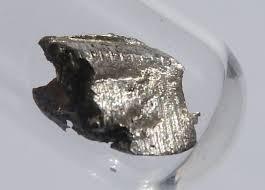
Where the Science Holds
The premise is credible. Cerium is abundant and far cheaper than neodymium and praseodymium. Substituting cerium into NdFeB-type magnets can reduce costs. Work from Mumbai-based Bhabha Atomic Research Centre (BARC) on lower-temperature alloy powder production is a meaningful step. Globally, similar research has long been explored, including alongside supply from Lynas Rare Earths feeding non-China ecosystems.
Physics Draws the Line
Cerium comes with a trade-off: weaker magnetic strength and poorer thermal stability. That limits these magnets to mid-tier uses—appliances, pumps, two-wheelers—not high-performance EV drivetrains or wind turbines. The article notes this, but underweights the implication: cerium magnets complement, not replace, NdFeB.
The Unspoken Constraint: Midstream Reality
Here is the key omission: processing is the chokepoint.
Mining cerium is not enough. Separation, refining, alloying, and magnet fabrication are capital-intensive, chemistry-driven, and time-bound. China still dominates ~85–90% of processing capacity. Without scaled midstream capability, India’s ambition risks stalling between lab success and industrial reality.
Why Investors Should Care Now
In the period we now enter into--Great Powers Era 2.0, coined by Rare Earth Exchanges™, supply chains are leveraged. India’s strategy can reduce import dependence marginally and monetize underused resources. But it does not yet shift control.
A smart move at the edges. The center—processing, scale, execution—still decides the game.


0 Comments
No replies yet
Loading new replies...
Moderator
Join the full discussion at the Rare Earth Exchanges Forum →