
Highlights
- India accelerates foreign investment approvals in rare earth magnets and processing sectors, requiring majority Indian ownership and 60-day clearance for neighboring countries, including China.
- The policy addresses formal ownership but exposes a deeper challenge: true independence requires absorbing decades of Chinese-developed expertise, equipment, and engineering capabilities.
- Success hinges on India's ability to transfer not just capital but knowledge, as the distinction between ownership and operational control remains unresolved in global rare earth supply chains.
India has taken a notable step in its industrial policy playbook, fast-tracking foreign investment approvals in rare earth magnets and processing sectors long dominated by China. Under new guidelines, proposals from neighboring countries, including China, may now be cleared within 60 days, provided that Indian entities retain majority ownership and control.
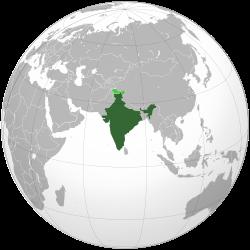
At first glance, the move appears pragmatic. India is attempting to accelerate domestic manufacturing capacity in critical technologies while maintaining sovereignty over key assets. In a world increasingly shaped by supply chain competition, such balancing acts are becoming common. But the policy also reveals a deeper tension—one that extends beyond India. Rare earth supply chains are not merely about ownership or access to capital. They are defined by the ability to process materials at scale: to separate, refine, and ultimately transform them into high-performance magnets used in everything from electric vehicles to missile systems.
Here, the challenge becomes more complex. While India’s requirement for domestic control may address formal ownership, it does not necessarily resolve dependence in practice. The expertise required to operate these processes—along with the equipment and engineering behind them—has been built over decades, largely within China’s industrial ecosystem.
The risk, then, is not that India fails to build capacity. It may succeed in doing so. The question is whether that capacity will be fully independent or quietly reliant on external inputs embedded deeper within the system. This is not a flaw in policy so much as a reflection of reality. Industrial capabilities, particularly in rare earth processing, are not easily transferred or replicated. They are learned, refined, and scaled over time.
India’s approach may ultimately prove effective if it can absorb not just capital, but knowledge. But until that transition occurs, the distinction between ownership and control will remain a defining—and unresolved—feature of the global rare earth landscape.


0 Comments
No replies yet
Loading new replies...
Moderator
Join the full discussion at the Rare Earth Exchanges Forum →