
Highlights
- The U.S. has no meaningful primary magnesium production while China controls 85–90% of global supply—a structural dependency across aerospace, automotive, and defense that underpins trillions in downstream manufacturing despite being only a $2–3 billion market.
- Magrathea Metals is developing electrolytic technology to produce carbon-neutral magnesium from brines, backed by $100M+ in funding and a joint venture with TETRA Technologies targeting a 2027 smelter, but faces the gap between pilot success and continuous industrial-scale operation.
- The core challenge isn't finding magnesium—it's mastering energy-intensive, chemically complex industrial processes at scale, where most Western efforts have historically failed and where true supply chain resilience will be determined.
Magrathea’s $100M-plus funding announcement (opens in a new tab) is being framed as a breakthrough moment for U.S. magnesium production. That framing is directionally correct—but incomplete. Magnesium is not just another critical mineral. It is a structural dependency embedded across aerospace, automotive, steelmaking, and defense manufacturing. And today, that dependency sits overwhelmingly in one place: China.
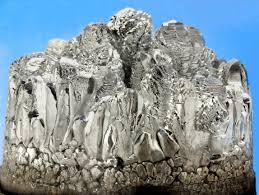
Magnesium, a critical metal, is the lightest structural metal, used primarily in aluminum alloying (automotive and aerospace), die casting (gearboxes, housings), and steel desulfurization. It is also essential in producing titanium (via the Kroll process), zirconium, and other high-performance materials used in jet engines and nuclear systems. A single aerospace platform can incorporate hundreds of pounds of magnesium-containing components—not because it is rare, but because nothing substitutes its weight-to-strength profile at scale.
The market itself is deceptively small. Global primary magnesium production sits around ~1.1 million tonnes annually—roughly a $2–3 billion market at current prices (it may surge to $9 billion by 2033 (opens in a new tab)). But that small market underpins trillions in downstream manufacturing. That asymmetry is the real risk.
China produces approximately 85–90% of global magnesium, largely via the Pidgeon process (opens in a new tab)—a coal-intensive, cost-optimized system refined over decades. Russia, Israel, Brazil, and Kazakhstan make up most of the remainder. The United States, critically, has no meaningful primary production today. That is not a resource problem—it is a process problem.
Midstream is where the system breaks.
Magnesium production is energy-intensive, chemically complex, and operationally unforgiving. Whether using thermal reduction or molten salt electrolysis, the process requires tight control over feedstock purity, dehydration chemistry, chlorine handling, and continuous high-temperature operations.
This is not a mining problem—it is industrial process manufacturing at scale.
WhatAbout Magrathea?
Magrathea’s approach—electrolytic production from brines, coupled with its joint venture with TETRA Technologies (opens in a new tab) in Arkansas—is technically plausible. Leveraging existing infrastructure (land, energy systems, brine supply) is exactly how this industry must be rebuilt. The company also reports significant future offtake interest, including distribution relationships with firms like Wogen (opens in a new tab). But this is where the press release moves faster than reality.
“$100M+ backing” is not the same as a fully financed commercial smelter. A single industrial-scale magnesium plant can require hundreds of millions more, alongside years of commissioning, qualification, and operational tuning. Similarly, announced demand—hundreds of thousands of tonnes—does not equal executable supply. Early-stage production targets remain a fraction of global demand.
Market Access
And the market structure matters. Magnesium is not traded on liquid exchanges like copper or aluminum. It is largely an opaque, over-the-counter market, transacted via contracts, brokers, and traders such as Traxys, Wogen and myriad smaller traders and brokers. Price discovery is thin. Liquidity is episodic. When disruptions occur—as seen in past Chinese energy curtailments—prices can spike violently.
An Alternative Yet?
So what does Magrathea actually represent?
Not a solution—yet. It represents one of the few credible attempts to rebuild U.S. magnesium capability at the process level. That alone makes it strategically important. But the gap between pilot success and industrial reliability is where most Western efforts fail.
The deeper question is not whether tariffs, funding, or policy can support this effort.
It is whether the United States can relearn how to run these systems continuously, competitively, and at scale.
Because in magnesium—as in rare earths—the pattern is now clear: The problem is not finding the metal.
It is mastering the process. And that is where history has been far less forgiving.
Profile
Magrathea Metals (opens in a new tab) is a California-based climate-tech and critical minerals startup founded in 2022 and headquartered in the San Francisco Bay Area. Led by CEO Alexander Grant, the company is developing electrolytic technology designed to produce carbon-neutral magnesium metal from seawater and industrial waste brines, aiming to rebuild domestic Western magnesium capacity and reduce dependence on China’s dominant supply chain. Backed by the U.S. Department of Defense, Cargill, and Sedgman Novopro, Magrathea has raised more than $30–40 million through seed, Series A, and federal funding rounds. The company has already secured agreements with over 25 customers and partners, including multiple U.S. defense firms and a major automaker. With a pilot demonstration facility underway and plans for a scaled U.S. magnesium smelter by 2027 capable of producing up to 2 million pounds annually, Magrathea is positioning itself at the intersection of industrial policy, lightweight materials, supply chain resilience, and strategic manufacturing.


0 Comments
No replies yet
Loading new replies...
Moderator
Join the full discussion at the Rare Earth Exchanges Forum →