
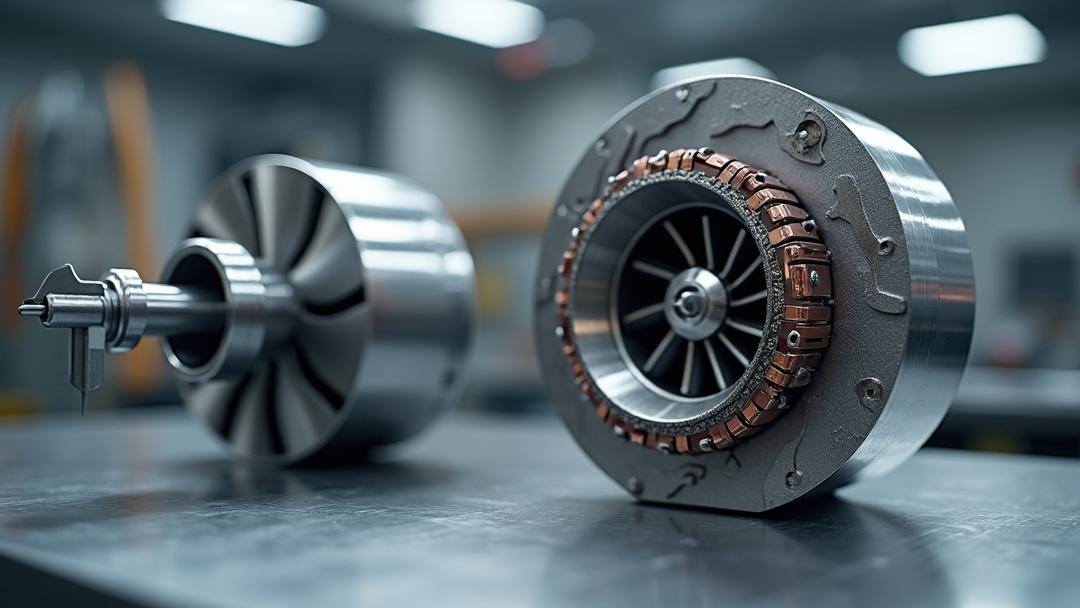
The evolution from wood-and-fabric aircraft to modern aerospace marvels depended on advanced alloys, but rare earth elements (REEs) have become equally critical enablers. While aerospace structures still rely on aluminum, titanium, nickel superalloys, and high-strength steels, REEs power the high-energy magnets, sensors, and specialized coatings that make modern aviation possible. From neodymium-based actuators to samarium-cobalt generators operating at extreme temperatures, these elements drive miniaturization, reliability, and electrification trends reshaping aerospace design. Understanding where REEs intersect the aerospace value chain reveals both technological opportunities and supply-chain vulnerabilities that affect everything from fighter jets to commercial airliners.
Table of Contents
How did aerospace alloys change aerospace alloys—and why do rare earths matter?
Early aircraft were built from wood, fabric, and basic steel alloys that couldn't handle extreme temperatures or repeated stress cycles. These materials limited how fast planes could fly, how high they could climb, and how long they could stay in service. Modern aerospace alloys transformed aviation by enabling jet engines with higher thrust-to-weight ratios, pressurized cabins that can withstand millions of flight cycles, and lighter structures that maintain precise shapes under extreme conditions.
While aerospace structures still depend on aluminum, titanium, nickel superalloys, and high-strength steels, rare earth elements have become critical enablers around these materials. They power the high-energy magnets in actuators and generators, maintain magnetic stability at extreme temperatures, and enable specialized sensors and optical systems. Rare earths also appear in certain coatings and polishing compounds that improve surface finish and performance.
The intersection between rare earths and aerospace goes beyond the alloys themselves. These elements are essential inputs for subsystems like electric actuators, position sensors, and generators that must survive intense heat and vibration. Understanding where rare earths fit into the aerospace value chain helps explain why supply chain security and regulatory compliance have become major concerns for the industry.
Rare Earth Role in aerospace alloys
Which elements are used and why
Neodymium and praseodymium form the core of NdFeB magnets used in aerospace electric actuators and high-power motors. Dysprosium and terbium boost the coercivity of these magnets, allowing them to resist demagnetization at higher temperatures.
Samarium combines with cobalt to create SmCo magnets that maintain their magnetic properties at temperatures where many NdFeB grades would fail. This makes them valuable for applications near engine hot zones or where cooling is limited.
Yttrium, europium, and terbium appear in phosphors and optical materials used in cockpit displays, indicators, and inspection equipment. These elements enable precise color rendering and brightness in critical aerospace displays.
Cerium and lanthanum serve dual roles in aerospace manufacturing. Cerium oxide polishes optical components to extreme precision, while both elements are being studied as alloying additions that could improve casting behavior and oxidation resistance in certain alloy systems.
How it works
The physics behind rare earth applications in aerospace centers on magnetic and optical properties that conventional elements can't match. In an electromechanical actuator, NdFeB or SmCo magnets generate strong magnetic fields with high remanence and coercivity. This creates more torque in a smaller, lighter motor package, reducing aircraft weight and improving system packaging.
Generator and starter motors use dysprosium or terbium-enhanced NdFeB magnets to maintain coercivity during thermal soaks and electrical faults. These heavy rare earth additions prevent demagnetization (opens in a new tab) when temperatures spike, preserving reliability margins that are critical for flight safety.
Position sensing systems rely on stable magnetic fields to maintain accuracy. Rare earth magnets in resolver and encoder assemblies provide consistent performance across temperature ranges and vibration levels that would cause drift in conventional magnetic materials.
Temperature drives material selection throughout these systems. Magnets operating near bleed air ducts, engine nacelles, or high-current windings can exceed the operating limits of standard NdFeB grades. This makes heavy rare earth additions or SmCo magnets essential despite their higher cost and concentrated supply chains.
Journey from Mine to Product
Supply chain steps
The path from rare earth ore to aerospace component involves multiple transformation steps. Mining operations extract and concentrate rare earth ores, which then undergo chemical separation to isolate individual element oxides. These oxides are converted to metals or master alloys, then transformed into functional materials like magnets, phosphors, or optical components.
For magnet production, the process flows from oxide to metal, then through alloy melting and strip casting to create the base material. This material becomes powder through jet milling or hydrogen decrepitation, gets pressed and sintered into shape, then machined and coated before assembly into motors or actuators. Each step requires qualification and serialization to meet aerospace traceability requirements (opens in a new tab).
Optical and phosphor pathways follow a different route. Oxides undergo high-purity chemical processing before crystal growth or phosphor powder synthesis. These materials are then coated or bonded into components that must pass calibration and environmental qualification for vibration, temperature, and electromagnetic compatibility.
Aerospace integration adds layers of configuration control and documentation that extend back through every tier of the supply chain. Even when rare earths aren't in the primary structural alloy, their presence in critical subsystems triggers the same rigorous traceability and quality requirements.
Typical chokepoints
Separation capacity creates persistent bottlenecks in the rare earth supply chain. Producing separated heavy rare earths like dysprosium and terbium at aerospace-grade purity is more challenging than processing light rare earths like cerium and lanthanum. Qualification demands consistent chemistry and tight impurity control, further constraining available sources.
Magnet manufacturing faces its own chokepoints. The sintering process requires specialized knowledge to achieve consistent properties. Coating and corrosion protection technologies must meet aerospace durability standards. High-quality powder processing directly affects yield and property consistency, which determine whether components can achieve aerospace certification.
Heavy rare earth availability and processing concentration create particular risks for high-temperature magnet grades. Dual-use export controls can restrict access to certain materials and technologies. Long requalification cycles slow substitution efforts once aerospace designs are frozen, creating supply chain vulnerabilities that can persist for decades.
Statistics & Societal Impact
Quantitative snapshot
Global rare earth mine production reached about 390,000 metric tons in 2025, and China accounted for roughly 69% of output. China also dominated downstream conversion, with 91% of refined magnet rare earth supply and 94% of sintered permanent magnet production in 2024, reinforcing a supply concentration that still affects aerospace systems dependent on rare earth-enabled components.
The permanent magnet market is projected to grow significantly as electric vehicles and wind turbines compete for neodymium, praseodymium, and heavy rare earths. This competition directly impacts aerospace actuator miniaturization efforts that rely on the same materials.
NASA's electrified aircraft propulsion research indicates that more-electric aircraft architectures could increase permanent magnet requirements by 3-5 times per aircraft compared to traditional hydraulic and pneumatic systems.
FAA data shows that improved actuation and sensing systems contribute to a 45% reduction in unscheduled maintenance events when rare earth-enabled components replace older hydraulic systems, even though the primary load-bearing structures remain conventional aerospace alloys.
Downstream effects
The shift to smaller, lighter electromechanical systems reduces hydraulic system complexity and associated risks like fluid leakage and fire hazards. However, this transition creates new challenges in thermal management, electromagnetic interference control, and magnet supply continuity.
Higher precision sensing enabled by rare earth magnets improves flight control stability. This reduces off-nominal loading events that can cause fatigue damage in aerospace alloys, indirectly supporting longer service life for structural components.
The societal impact appears as improved aircraft dispatch reliability and reduced maintenance burden. Airlines benefit from more predictable operations and lower operating costs. Yet this progress increases supply chain sensitivity when critical inputs have limited processing diversity and require years-long aerospace qualification timelines.
Innovators & History
Key breakthroughs
The commercialization of NdFeB magnets in the 1980s by Sumitomo Special Metals and General Motors revolutionized magnetic materials. These magnets offered energy products far exceeding previous materials, eventually enabling the miniaturization of aerospace actuators and motors as supporting electronics and thermal management technologies matured.
SmCo magnets, developed in the 1960s and 1970s, maintained their relevance due to superior high-temperature stability. This created two distinct paths in aerospace applications: maximum power density with NdFeB for cooler applications, and temperature robustness with SmCo for hot zones.
More-electric aircraft programs at Boeing, Airbus, and NASA accelerated the importance of electric actuation and generation systems. These initiatives linked propulsion and airframe design trends directly to advances in permanent magnet and power electronics technologies.
The evolution of aerospace quality management standards like AS9100 tightened documentation and sourcing requirements for all critical materials. This reinforced controlled sourcing practices for rare earth-enabled components throughout the supply chain.
From lab to product
Research breakthroughs translated into manufacturable components through advances in powder metallurgy and processing control. Engineers developed corrosion-resistant coatings specifically for aerospace magnet applications. Design rules evolved to account for demagnetization risks at operating temperature and under electrical fault conditions.
Commercialization typically started in industrial motor applications where performance could be proven. As qualification evidence accumulated around vibration resistance, thermal cycling tolerance, and long-term field stability, these technologies migrated into high-reliability sectors and eventually into flight-critical applications.
Why It Matters Now
Current drivers
Aerospace electrification trends are accelerating for actuation, environmental control, and hybrid propulsion concepts. This increases the installed magnet mass per aircraft even as structural components remain dominated by aluminum, titanium, nickel, and steel alloys.
Defense readiness and space systems require radiation-tolerant, high-reliability electromechanical subsystems. Magnet temperature stability and long-life sensing capabilities directly affect mission success rates and maintenance intervals for these critical applications.
Global demand from electric vehicles and wind turbines is creating competition for neodymium, praseodymium, and heavy rare earths. This competition raises procurement concerns about lead times, lot control, and the need for substitution strategies in aerospace applications.
Security & policy context
Processing concentration presents significant risks because mining is only one constraint in the supply chain. Separation facilities, metal-making capabilities, and magnet manufacturing expertise are unevenly distributed globally, creating multiple potential chokepoints.
Onshoring initiatives and recycling pilot programs aim to reduce supply chain exposure. However, aerospace qualification cycles and configuration control requirements can delay adoption of new sources. Any change requires robust equivalency testing and extensive change-control documentation before implementation.
Future Outlook
Materials & design trends
Heavy rare earth reduction methods like grain-boundary diffusion for dysprosium and terbium show promise for maintaining high-temperature coercivity with fewer constrained elements. Adoption depends on supplier capabilities and successful qualification testing.
Recycling of magnet scrap and end-of-life products is expected to expand, though aerospace's long service life and low scrappage rates limit near-term recovery volumes compared to consumer electronics and automotive sectors.
Designers are exploring alternative motor topologies and ferrite magnets for less demanding applications. These alternatives involve mass and volume penalties but offer reduced rare earth exposure and improved material availability.
5–10 year scenario
Demand will likely track broader electrification trends in aerospace and adjacent industries. The key bottleneck may shift between separated oxide availability and qualified magnet manufacturing capacity depending on geopolitical developments and investment outcomes.
Mitigation strategies will center on multi-sourcing, enhanced material traceability, and improved incoming inspection protocols. Design margins for thermal demagnetization will increase, while policy support for midstream capacity buildout continues where feasible.
The aerospace industry will need to balance performance requirements with supply chain resilience. This means accepting some design compromises to reduce dependence on the most constrained rare earth elements while maintaining the safety and reliability standards that define aerospace applications.
Conclusion
Rare earth elements have transformed from obscure materials to critical enablers of aerospace innovation, powering the magnets, sensors, and systems that make modern aircraft lighter, more efficient, and more reliable. While primary aerospace alloys remain aluminum, titanium, and nickel-based, REEs enable the electrification revolution reshaping aviation architecture. The intersection of growing demand, concentrated supply chains, and stringent aerospace qualification requirements creates both opportunities and vulnerabilities. Success requires balancing performance optimization with supply security, driving investments in alternative sources, recycling infrastructure, and design flexibility. As aerospace continues its electrification journey, managing REE dependencies will prove as crucial as advancing the alloys themselves.
FAQs
Do rare earths actually go into aerospace alloys, or mostly into subsystems?
REEs primarily enable adjacent subsystems like permanent-magnet motors, actuators, and sensors rather than being major constituents of structural alloys. While some niche applications use REEs as minor alloying additions, their largest impact comes through enabling high-performance electromagnetic and optical components that integrate with conventional aerospace alloys.
Why are Dy and Tb considered higher-risk than Ce or La?
Dysprosium and terbium are heavy rare earths with more constrained supply and processing capacity, used specifically to improve high-temperature magnetic performance. Cerium and lanthanum are light rare earths produced in larger quantities with broader availability, presenting different supply risk profiles despite still requiring separation and refining infrastructure.
When would aerospace use SmCo instead of NdFeB?
SmCo magnets are selected when continuous operating temperatures exceed 150-180°C or when demagnetization margins must accommodate extreme thermal soaking. Applications near engine hot sections, bleed air systems, or with limited cooling typically favor SmCo despite lower maximum energy product compared to NdFeB.
How does electrification increase REE relevance if the airframe is still Al/Ti/Ni/steel?
Electrification replaces hydraulic and pneumatic systems with electric motors and actuators, most using high-performance permanent magnets containing Nd/Pr and sometimes Dy/Tb. Even with conventional structural alloys, the shift to electric systems dramatically increases REE content per aircraft through proliferation of motors, generators, and sensors.
What does qualification change about REE-related sourcing?
Aerospace qualification locks specific material/process/supplier combinations to demonstrated performance standards, making source changes require extensive requalification testing lasting 12-24 months. This creates switching barriers that amplify supply chain risks, as validated alternatives cannot be rapidly substituted even when technically equivalent materials exist.
