
Highlights
- A May 2026 study argues that Peru's mining competitiveness increasingly depends on ESG data transparency and traceability rather than just production capacity, as European regulations transform the industry into an “audit-driven” compliance ecosystem.
- Using Monte Carlo simulation, researchers conclude that firms providing auditable emissions tracking, human-rights due diligence, and chain-of-custody verification will gain financing advantages, while those lacking such systems face reduced competitiveness even if compliant under Peruvian law.
- The findings reinforce that strategic power in critical minerals now belongs to those shaping commercial legitimacy rules—standards, audit systems, and regulatory frameworks—rather than merely controlling mineral deposits.
In a sweeping new May 2026 study, From Voluntary Ethics to Mandatory Assurance: Global Governance of Peruvian Mineral Value Chains, lead author Luis-Felipe Arizmendi (opens in a new tab) and collaborator Elke Schrader (opens in a new tab) argue that Peru’s position as one of the world’s leading suppliers of copper, silver, zinc, tin, molybdenum, and gold is increasingly shaped not just by geology or production capacity, but by data transparency, traceability, and ESG assurance requirements spreading through global supply chains. The authors contend that Europe’s expanding ESG framework—combined with Swiss trading hubs, multinational buyers, and global finance networks—is gradually transforming mining from a localized permitting industry into an “audit-driven” compliance ecosystem where minerals increasingly must travel with verifiable emissions, labor, community, and environmental data.
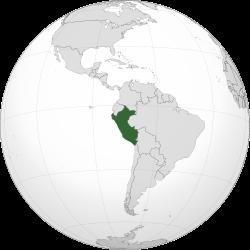
The paper examines Peru’s growing “legislative disconnect.” Domestically, Peru’s mining laws remain largely focused on environmental licensing and site-level compliance. Internationally, however, downstream buyers and financiers increasingly seek auditable ESG disclosures linked to European regulations such as the CSRD, CSDDD, CBAM, and the Critical Raw Materials Act.
Using institutional benchmarking and a Monte Carlo simulation, the researchers conclude that ESG “data capacity” may become one of the most important determinants of future market access. Firms capable of providing auditable emissions tracking, contractor oversight, human-rights due diligence, and chain-of-custody verification could gain financing advantages and preferred supplier status. Firms lacking such systems—even if operationally compliant under Peruvian law—could face higher transaction costs, financing friction, or reduced competitiveness in premium Western markets.
For Rare Earth Exchanges™, the findings strongly reinforce the “Great Powers Era 2.0” thesis: control over supply chains increasingly extends beyond mines into standards, audit systems, financing rules, traceability architecture, and regulatory interoperability. In this emerging system, strategic power belongs not merely to nations controlling mineral deposits, but increasingly to those shaping the rules governing commercial legitimacy itself.
The study has important limitations. Much of the framework remains conceptual rather than empirical, and the Monte Carlo modeling relies on synthetic rather than observed firm-level datasets. Critics may also argue that expanding ESG compliance systems risks disproportionately burdening developing economies and smaller producers with costly reporting and assurance obligations that larger multinational firms are better positioned to absorb.
Still, the broader warning is difficult to ignore: in the emerging critical minerals economy, what cannot be measured, verified, traced, and audited may increasingly struggle to be financed, traded, or sold.
**Citation:**Arizmendi, L.-F., & Schrader, E. (2026). From Voluntary Ethics to Mandatory Assurance: Global Governance of Peruvian Mineral Value Chains. Preprint manuscript submitted to Resources Policy.


0 Comments
No replies yet
Loading new replies...
Moderator
Join the full discussion at the Rare Earth Exchanges Forum →