
Highlights
- Southern Alliance Mining (SGX: QNS) has transformed from an iron ore miner to a rare earth producer through its 40% stake in MCRE's Gerik ionic clay operation in Malaysia, with revenue surging 95% year-over-year as it produces heavy rare earths critical for EVs, defense, and wind turbines.
- Unlike hard-rock projects, SAM's ionic clay deposit offers simpler extraction with lower environmental impact and contains meaningful heavy rare earth content that the West struggles to secure outside China.
- Despite upstream success, SAM currently exports rare earth carbonate to China for separation and refining, capturing only limited value-add while China retains control of high-value midstream processing economics.
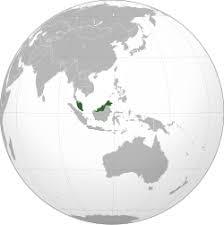
Southern Alliance Mining (SGX: QNS (opens in a new tab)) also know as “SAM” is no longer simply an iron ore miner dabbling in rare earths. Through its stake in MCRE Resources and the Gerik ionic clay operation in Perak, SAM is emerging as one of the few commercially producing ionic-adsorption clay (IAC) rare earth plays outside China. As Rare Earth Exchanges™ (REEx) has reported, that matters because ionic clays are one of the world’s most important sources of heavy rare earths such as dysprosium and terbium—critical inputs for high-temperature magnets used in EVs, defense systems, robotics, and wind turbines. But REEx readers should understand the deeper truth: Malaysia may possess the upstream geology, yet China still largely controls the midstream chemistry, refining, and magnet economics where the real power resides.
The Quiet Rise of a Southeast Asian Challenger
SAM’s acquisition of a 40% stake in MCRE transformed the company’s trajectory. Revenue surged nearly 95% year-over-year in 1HFY2026 as rare earth carbonate production ramped at the Gerik Mine. The asset itself is strategically intriguing.
Unlike hard-rock rare-earth projects that require expensive crushing, cracking, and radioactive waste handling, ionic clays can often be extracted using lower-intensity in-situ leaching methods. SAM executives emphasize lower environmental disruption and greater operational simplicity compared with many global peers. More importantly, the deposit reportedly contains meaningful amounts of heavy rare earths—exactly the category the West increasingly struggles to secure outside China.
The Catch Hidden Beneath the Headlines
Here is the industrial reality many investors miss: SAM currently stops at the rare-earth carbonate stage.
The material is still exported to China for separation and downstream processing. That means Malaysia participates primarily in the upstream layer of the supply chain, while China continues to capture much of the high-value midstream economics. Although the Southeast Asian nation now promulgates policies to export less and refine more.
This is the central tension of the Great Powers Era 2.0. Resource nations increasingly want value-added processing, refining, and industrial leverage—not simply mining royalties. Whether Malaysia can eventually build independent separation capability may determine whether SAM evolves into a strategic regional champion—or remains partially tethered to China’s industrial orbit.


0 Comments
No replies yet
Loading new replies...
Moderator
Join the full discussion at the Rare Earth Exchanges Forum →