
Highlights
- China is expanding heavy rare earth extraction operations into Laos as civil conflict in Myanmar disrupts existing feedstock supply corridors for critical materials like dysprosium and terbium.
- The strategic power in rare earths lies not in mining but in downstream processing—separation, refining, metallization, alloying, and magnet manufacturing capabilities that China dominates.
- Laos is emerging as a new frontier due to favorable ion-adsorption clay geology and weak regulatory enforcement, though supply chains involve fragmented networks rather than centralized control.
China continues to expand its heavy rare earth supply chain into Laos as instability in Myanmar disrupts existing feedstock corridors. A mission-critical topic given that dysprosium and terbium are essential for EV motors, wind turbines, robotics, semiconductors, and advanced defense systems. Investors should avoid simplistic narratives portraying this as merely a mining story. The real strategic power still sits downstream—in separation, refining, metallization, alloying, and magnet manufacturing. Rare Earth Exchanges™ (REEx) has previously warned that Laos was emerging as a new frontier in the heavy rare earth competition.
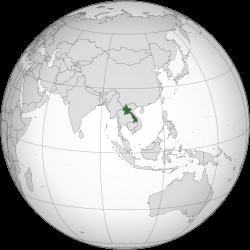
The Quiet Expansion of China’s Rare Earth Perimeter
Rare earth dominance is no longer confined to China’s borders. It is radiating outward.
A new article via Eurasia Report (opens in a new tab) points out that Chinese-linked operators are aggressively expanding heavy rare earth extraction across Laos as Myanmar’s civil conflict destabilizes a key supply corridor. The broader conclusion is difficult to dispute: China is regionalizing control over critical feedstocks essential to the modern industrial economy.
Rare Earth Exchanges previously explored this emerging trend in its analysis, “_Laos and the Heavy Rare Earth Frontier: Opportunity, Risk, and the Battle for Supply Chains_,” warning that Laos was becoming strategically important precisely because it combined favorable ion-adsorption clay geology with weak institutional enforcement.
The Mine Is Not the Empire
Much of the reporting is directionally accurate. Laos does possess geologic potential for ion-adsorption clay deposits containing dysprosium and terbium. Myanmar’s disruption has clearly intensified China’s search for alternative feedstock sources. The China-Laos Railway also materially improves logistics integration into Chinese refining systems.
But the article risks reinforcing a common misconception: that mining itself is the strategic prize.
It is not.
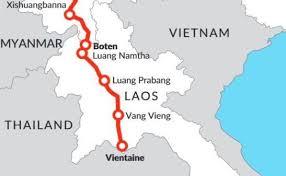
The true choke points remain solvent extraction, separation chemistry, metallization, alloying, and magnet manufacturing—industrial systems China spent decades building, while the West largely deindustrialized.
Where the Story Becomes Too Neat
The most recent account occasionally drifts toward portraying Laos as a fully controlled Chinese extraction colony. Reality is more fragmented. These supply chains often involve provincial actors, local political networks, private operators, informal permitting systems, and hybrid commercial arrangements—not simply centralized geopolitical orchestration.
Still,the deeper warning stands: the global energy transition increasingly depends on environmentally difficult extraction in jurisdictions selected partly because regulatory resistance remains weak. Investors who ignore that structural reality are not studying rare earths. They are studying headlines.


0 Comments
No replies yet
Loading new replies...
Moderator
Join the full discussion at the Rare Earth Exchanges Forum →