
Highlights
- Trump's May 2025 Beijing trip produced only vague promises on rare earths—not a deal—while China's export controls keep heavy rare-earth shipments 50% below pre-control levels.
- Geopolitical flashpoints over Taiwan arms sales and Iran could trigger China to maintain selective rare-earth licensing, especially for defense and advanced technology applications.
- Companies face a critical timeline: November 2026 tariff truce expiration and January 2027 DFARS rules banning China-sourced magnets for DoD contractors, requiring immediate inventory and compliance planning.
President Trump’s May 14–15 Beijing trip did not produce a rare-earth reset. The White House said only that China would “address” U.S. shortages of yttrium, scandium, neodymium, and indium, and would also address U.S. concerns over restrictions on rare-earth production and processing equipment and technologies. Reuters called that a small win, noting that the White House dropped the older language about eliminating China’s export-control regime altogether, while China’s Ministry of Commerce did not mention rare earths in its own summary. That is not a deal; it is a narrow, politically useful ambiguity.
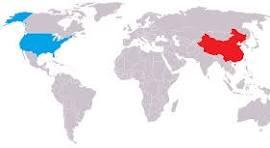
The Geopolitical Triggers
Rare Earth Exchanges™ (REEx) suggests the real watch list is geopolitical, not ceremonial. Trump said on May 15 that he discussed Taiwan arms sales with Xi and had not yet decided on a second U.S. package reportedly worth about $14 billion; Taiwan said on May 19 it remains only “cautiously optimistic.” Iran is the other fault line: the White House said Trump and Xi agreed Iran cannot have a nuclear weapon, while Secretary of State Marco Rubio said Washington wants Beijing to press Tehran.
At the same time, the U.S. has sanctioned China- and Hong Kong-linked firms over Iranian weapons procurement, and Reuters reported (opens in a new tab) last month that Beijing denied a Financial Times account (opens in a new tab) that Iran used a Chinese spy satellite to target U.S. bases. The implication is an inference, but a strong one: if Taiwan or Iran worsens, China has every incentive to keep rare-earth licensing selective, especially where defense or advanced-technology exposure is visible.
The Project Vault Paradox
That is why companies should watch licenses, not communiqués. China’s exports of key heavy rare earths such as yttrium, dysprosium, and terbium are still running roughly 50% below pre-control levels, while ex-China prices for some materials had surged sharply. In some cases many times what they would be procured in mainland China for. Project Vault may be a U.S.-backed reserve, and if it is mobilized likely materials will be procured via Hartree Partners, Traxys, and Mercuria—meaning it must still operate inside a market whose midstream and magnet economics remain overwhelmingly organized around China.
The November Cliff and the January Rule
The crucial dates are November 2026 and January 1, 2027. The November 2025 U.S.-China deal said China would suspend the broader October 2025 export-control package and issue general licenses, while the U.S. extended tariff suspensions until November 10, 2026. If that truce lapses, REEx has suggested China’s October rules could again matter—rules under which overseas defense users would not be granted licenses and advanced-chip applications would be reviewed case by case.
Then comes DFARS: effective January 1, 2027, DoD contractors cannot deliver covered magnets or related materials that were mined, refined, separated, melted, or produced in China unless an authorized official makes a nonavailability determination. That escape hatch matters because America’s mine-to-magnet buildout is still incomplete: MP Materials' (MP) next major magnet factory is slated for 2028, MP’s ore body is overwhelmingly light-rare-earth, and Lynas has warned its Texas project may not proceed. USA Rare Earth (USAR), while making bold acquisitions, remains developmental except for its midstream metallization play, Less Common Metals.
In plain English, companies should be building inventories, traceability files, alternative offtakes, and nonavailability packages now. The next signal will not be a summit photo. It will be whether the licenses actually move.


0 Comments
No replies yet
Loading new replies...
Moderator
Join the full discussion at the Rare Earth Exchanges Forum →