
Highlights
- The EU is creating its first coordinated stockpile of critical minerals, including tungsten, rare earths, gallium, magnesium, graphite, and germanium, to reduce dependence on Chinese-controlled supply chains.
- While stockpiles can cushion supply shocks, Europe still lacks sufficient downstream refining, metallization, and manufacturing capacity to meaningfully reduce China dependency in the near term.
- This initiative signals a broader geopolitical shift where governments now view critical mineral supply chains as instruments of national power in what's being called Great Powers Era 2.0.
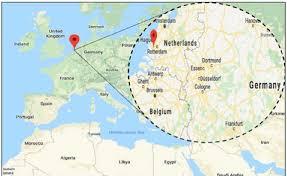
Europe is preparing its first coordinated stockpile of rare earths, tungsten, gallium, magnesium, graphite, and germanium as policymakers grow increasingly concerned about dependence on Chinese-controlled supply chains. According to Reuters reporters (opens in a new tab), the European Union is also discussing storage arrangements with major logistics hubs, including the Port of Rotterdam. The initiative reflects a broader geopolitical shift toward industrial self-protection amid fears that future export restrictions or geopolitical tensions could disrupt access to materials essential to defense, semiconductors, electric vehicles, and renewable energy systems. Yet the stockpiled discussion also exposes a harder truth: Europe still lacks sufficient downstream refining, metallization, alloying, and magnet manufacturing capacity to meaningfully reduce its near-term dependence on China.
Europe Finally Says the Quiet Part Out Loud
The age of frictionless globalization is beginning to crack.
Reuters reports the EU has shortlisted tungsten, rare earths, and gallium for its first coordinated critical mineral reserve, while magnesium, graphite, and germanium are also under consideration. The initiative reportedly involves ten EU member states, with planning groups led by France, Germany, and Italy.
For investors, this is not just a commodities story. It is a signal that governments increasingly view supply chains as instruments of national power. In what Rare Earth Exchanges™ calls the Great Powers Era 2.0, critical minerals are becoming the industrial equivalent of strategic oil reserves, naval chokepoints, and energy pipelines.
The Metals Beneath Modern Civilization
Much of the Reuters reporting is directionally accurate.
China dominates major portions of the critical mineral ecosystem, especially:
- Heavy rare earth separation
- NdFeB magnet manufacturing
- Gallium and germanium refining
- Graphite processing
Reuters correctly notes that many of these minerals sit on NATO’s list of strategically important defense materials.
And tungsten deserves particular attention. It remains indispensable for armor-piercing munitions, aerospace tooling, semiconductors, and advanced machining systems.
Stockpiles Buy Time — Not Sovereignty
Here is the deeper issue often missing from Western coverage: Stockpiles can cushion shocks. They cannot replace industrial ecosystems. Europe still faces major structural weaknesses:
- Slow permitting timelines and other overregulation factors
- Limited rare earth separation capacity
- Minimal large-scale magnet manufacturing
- High energy and labor costs
- Fragmented industrial coordination
- Demographic challenges
Reuters notes that even EU “Strategic Projects” continue to face permitting and infrastructure delays.
That detail matters more than many headlines suggest. Western governments increasingly understand the vulnerability intellectually. Building industrial capacity at a commercial scale remains the far harder challenge.
REEx Takeaway
Europe’s stockpile initiative is less about panic and more about geopolitical awakening. The West is slowly realizing that control over processing, metallurgy, magnets, and advanced materials increasingly defines economic sovereignty itself.
The challenge? China spent decades building this ecosystem. Europe is only beginning to inventory the dependency.


0 Comments
No replies yet
Loading new replies...
Moderator
Join the full discussion at the Rare Earth Exchanges Forum →