
Highlights
- Tanzania's Njombe region hosts newly identified neodymium and praseodymium deposits being explored by Hongji Mining across 280 square kilometers, potentially positioning the country as a strategic rare earth supplier for EVs and wind turbines.
- While the geological discovery is promising, true barriers remain in processing, separation, metallurgy, and downstream integration—areas where China continues to dominate the global rare earth value chain.
- Officials report use of in-situ leaching technology and ongoing environmental reviews, but investors should distinguish between mineral occurrence and commercial production readiness given long development timelines typical of rare earth projects.
Tanzanian officials say newly identified deposits of neodymium and praseodymium in the Njombe region could help position the country as an emerging supplier of strategic minerals tied to electric vehicles, wind turbines, electronics, and advanced technologies. According to reporting in The Citizen (opens in a new tab), Hongji Mining Co. Ltd (opens in a new tab) is advancing exploration across a 280-square-kilometer project area while assessing commercial viability and environmental impacts ahead of potential mining operations. The announcement underscores rising global interest in East Africa’s rare earth potential. But investors should distinguish between geological promise and commercial reality: discovering rare earth mineralization is only the first step. Processing, separation, financing, infrastructure, metallurgy, permitting, and downstream industrial integration remain the true barriers to long-term success.
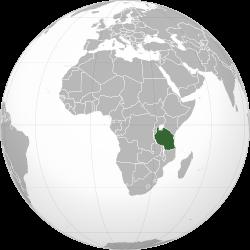
Beneath Tanzania’s Red Soil Lies Strategic Potential
The modern economy runs on metals most consumers never see.
According to Tanzanian officials cited by The Citizen, the Njombe discovery includes neodymium (Nd) and praseodymium (Pr), key rare earth elements used in high-performance permanent magnets powering EV motors, wind turbines, robotics, drones, and advanced defense systems.
That matters.
NdPr remains central to the global magnet economy and sits at the core of intensifying geopolitical competition over critical mineral supply chains.
Officials say Hongji Mining has completed an initial exploration phase and is now conducting more detailed assessments before any commercial-scale development begins. The report also notes ongoing environmental reviews and compensation payments to affected residents.
A quoted stakeholder is Lucas Mlekwa (opens in a new tab), Njombe Resident Mining Officer.
The Seduction of the Discovery Narrative
Much of the reporting appears directionally credible. Tanzania already hosts the internationally recognized Ngualla rare earth project, one of the largest undeveloped rare earth deposits outside China. East Africa clearly possesses meaningful geological potential.
However, the article blends together several very different concepts:
- Mineral occurrence
- Economic reserves
- Commercial production
- Downstream value creation
These are not interchangeable.
Rare earth headlines often imply that geology alone creates a strategic advantage. It does not.
The true bottlenecks remain:
- Rare earth separation
- Metallization
- Alloy production
- Magnet manufacturing
- Infrastructure and power
- Long-term customer qualification
China continues to dominate much of that downstream ecosystem.
The Chemistry Behind the Optimism
One detail deserves careful scrutiny: Hongji Mining’s reported use of in-situ leaching technology.
While potentially less disruptive than large-scale open-pit mining, in-situ leaching can still present significant environmental and water-management risks depending on ore composition, groundwater conditions, and operational standards.
The article also reflects understandable optimism from local officials seeking jobs, exports, and industrial growth. Yet globally, rare earth projects often face long development timelines, financing challenges, permitting hurdles, and commodity price volatility before reaching sustained production.
REEx Takeaway
Tanzania could emerge as an increasingly important upstream jurisdiction for rare earths over the next decade. But in Great Powers Era 2.0, the defining struggle is no longer simply who owns mineral deposits. It is who controls the chemistry, separation, metals, alloys, magnets, and industrial ecosystems built on top of them.


0 Comments
No replies yet
Loading new replies...
Moderator
Join the full discussion at the Rare Earth Exchanges Forum →