
Highlights
- China views the next five years as critical for rare earth technology breakthroughs, emphasizing “AI + materials science” integration to maintain global dominance beyond mining and refining.
- The symposium revealed China’s systematic approach to rare earth leadership through generational talent development, coordinated research ecosystems, and closed-loop innovation connecting universities, research institutes, and industry.
- Western nations face a talent gap crisis: rare earth dominance depends not just on mines and factories, but on decades of workforce development, operational expertise, and institutional knowledge that China has systematically built.
At a recent rare earth symposium in China, senior scientists and industry leaders delivered a message Western investors and policymakers should not ignore: Beijing views the next five years as a decisive window for breakthroughs in rare earth technology, artificial intelligence-driven materials science, and tighter integration between research laboratories and industrial production. While publicly framed as an academic mentoring event, the gathering revealed how seriously China continues to organize long-term technological leadership around rare earths, advanced materials, and industrial coordination.
Passing on the Torch, Striving for Innovation
Symposium Between Veteran Scientists and Young Scholars
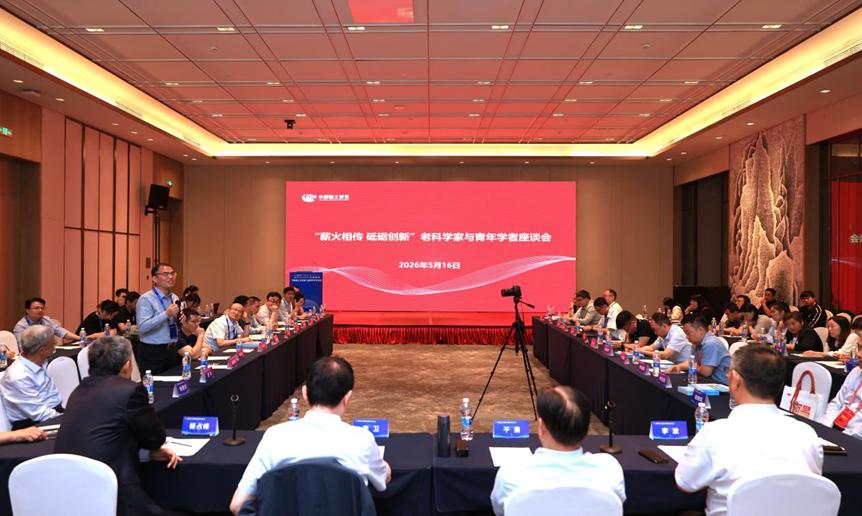
More Than a Ceremony—A Strategic Signal
On May 16, during the 7th Youth Academic Conference of the Chinese Society of Rare Earths led by Li Bo, three generations of Chinese rare earth scientists gathered under the theme “Passing on the Torch and Striving for Innovation.” At first glance, the event resembled a routine academic symposium. In reality, it offered a revealing glimpse into China’s broader strategic thinking around critical minerals, advanced manufacturing, and technological succession planning.
Senior figures from China’s rare earth establishment—including former Chinese Society of Rare Earths president Gan Yong and China Rare Earth Industry Association president Li Wei—used the event to reinforce a central message: China views rare earth technological leadership not merely as an industrial objective, but as a long-term national strategic priority.
Beijing’s Next Frontier: “AI + Materials Science”
One of the symposium’s most notable themes was artificial intelligence. Gan Yong stated that the next five years would represent a “critical period” for breakthroughs in original rare earth technologies. He specifically highlighted how artificial intelligence is reshaping materials research and development, describing “AI + materials science” as an emerging paradigm for innovation.
That matters.
China is no longer focused solely on dominating rare earth mining and refining. Increasingly, Beijing appears intent on integrating:
- AI-driven materials discovery
- Advanced industrial manufacturing
- Rare earth applications
- Academic research
- End-use product development
The symposium repeatedly emphasized building a “closed-loop” innovation ecosystem connecting universities, research institutes, enterprises, and downstream industrial applications.
The Quiet Machine Behind China’s Rare Earth Strategy
For American and European audiences, the deeper significance is institutional continuity.
China’s rare earth strategy increasingly appears designed not around quarterly market cycles, but around generational talent development, state-linked coordination, industrial succession planning, and vertically integrated innovation systems.
The event brought together senior industry leaders, academic researchers, enterprise representatives, doctoral students, and recipients of China’s Young Talents Support Program—all discussing the alignment of science, commercialization, manufacturing, and industrial policy. That level of organized long-term coordination remains difficult to replicate across fragmented Western supply chains and short-duration political cycles.
Importantly, the symposium itself did not announce a specific technological breakthrough or major commercial deal. The significance lies instead in what the event signals: China continues methodically building the human capital, institutional infrastructure, and coordinated research ecosystem necessary to sustain long-term dominance across strategically critical industries.
Why Talent Matters
Rare earth dominance is not simply a story about mines, processing plants, or magnets—it is fundamentally a story about people, expertise, and institutional continuity. China spent decades building a deep bench of metallurgists, solvent extraction chemists, magnet engineers, separation specialists, materials scientists, and industrial operators across the entire rare earth ecosystem. Much of the world’s operational knowledge now sits inside Chinese universities, state-linked laboratories, industrial institutes, and vertically integrated enterprises. By contrast, the United States and many allied nations largely hollowed out portions of their advanced industrial workforce during decades of globalization and offshoring.
Rare Earth Exchanges™ has repeatedly warned that Western industrial policy remains dangerously incomplete if it focuses only on financing mines or factories without simultaneously rebuilding talent pipelines, vocational training, university programs, apprenticeships, pilot-scale manufacturing expertise, and intergenerational knowledge transfer.
Industrial sovereignty ultimately depends not just on physical infrastructure, but on the human infrastructure capable of operating, innovating, scaling, and continuously improving these strategically critical supply chains over decades.
Disclaimer: This report originates from Chinese state-linked industry and academic organizations, including the Chinese Society of Rare Earths and affiliated media outlets. Statements, strategic claims, and interpretations should be independently verified where possible.


0 Comments
No replies yet
Loading new replies...
Moderator
Join the full discussion at the Rare Earth Exchanges Forum →