
Highlights
- China's Foreign Ministry signals that high-level U.S.-China military engagement may increasingly depend on Washington's Taiwan arms sales decisions, marking a strategic linkage between defense cooperation and weapons transfers.
- Taiwan dominates global semiconductor production with over 60% of foundry revenue and 90% of advanced chips, making TSMC and the island's chip ecosystem critical to AI, defense, and technology supply chains worth $165 billion annually.
- Growing geopolitical fragmentation positions strategic industries like semiconductors, rare earth magnets, and advanced manufacturing as instruments of national power, with Taiwan's distinct democratic identity complicating Beijing's reunification objectives.
A subtle but potentially important signal emerged from China’s foreign ministry this week: future high-level military engagement between Washington and Beijing may increasingly hinge on Taiwan arms sales. During a regular press briefing, Chinese Foreign Ministry spokesperson Guo Jiakun (opens in a new tab) responded to reports that a potential visit by the U.S. Deputy Secretary of Defense to Beijing this summer could depend on how the Trump administration handles pending weapons sales to Taiwan.
Cited via multiple media (opens in a new tab) in China, Guo avoided direct confirmation but reiterated Beijing’s “consistent and clear” opposition to U.S. arms sales to Taiwan, referring further questions to China’s Ministry of National Defense.
The timing matters. Following recent visits by Trump-aligned delegations and growing tensions around industrial policy, President Trump reportedly urged major semiconductor companies to reduce dependence on Taiwan and relocate portions of their operations elsewhere. Whether tactical negotiation or longer-term strategy, the message likely deepened anxieties in Taipei and reinforced Beijing’s belief that semiconductor supply chains are becoming inseparable from geopolitical leverage.
Experts within the Rare Earth Exchanges™ network, speaking on condition of anonymity, say the comments align with a broader pattern of rising strategic linkage between security tensions, industrial policy, semiconductors, rare earth supply chains, and defense manufacturing.
Importantly, Taiwan itself views the situation very differently from Beijing’s official position. Over several decades, Taiwan has evolved into a distinct political, economic, technological, and cultural system with its own democratic institutions, identity, semiconductor ecosystem, and increasingly separate civic consciousness. For many in Taiwan, the island already functions as a sovereign society regardless of Beijing’s claims. That widening divergence in identity and political expectations may make long-term reconciliation increasingly difficult.
For investors, the larger takeaway is growing geopolitical fragmentation around strategic industries tied to semiconductors, AI hardware, rare earth magnets, drones, defense technologies, and advanced manufacturing. In Great Powers Era 2.0, industrial ecosystems are no longer merely economic assets—they are instruments of national power.
A Pivotal Place, Space and Society
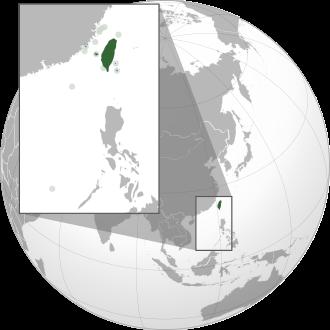
Taiwan sits at the center of the global semiconductor ecosystem, producing more than 60% of worldwide foundry revenue and over 90% of the world’s most advanced chips—the processors powering AI systems, smartphones, cloud computing, advanced weapons systems, and modern automobiles. The island’s importance stems largely from the dominance of Taiwan Semiconductor Manufacturing Company (opens in a new tab) (TSMC), which has achieved an engineering, manufacturing, and process-scale advantage that few, if any, competitors have been able to replicate.
Majortechnology firms including NVIDIA, Apple, AMD, Qualcomm, and countlessothers rely heavily on Taiwanese fabrication capacity to manufacture their most advanced designs.
Semiconductors generate roughly $165 billion annually for Taiwan and account for about one-fifth of its GDP. Because of this extraordinary concentration of manufacturing capability, any major disruption involving Taiwan—whether geopolitical, military, or infrastructural—could trigger severe global economic shockwaves across technology, automotive, defense, industrial automation, and AI supply chains.
Taiwan also remains a vibrant democratic and free-market society largely untethered from the political and economic control of the Chinese Communist Party. Over decades, the island has developed its own political identity, civic culture, institutions, and globally integrated innovation economy. Beijing, under President Xi Jinping, has made clear that altering that trajectory—and ultimately bringing Taiwan under mainland control—remains a central strategic objective during his era of leadership.


0 Comments
No replies yet
Loading new replies...
Moderator
Join the full discussion at the Rare Earth Exchanges Forum →