
Highlights
- Nth Cycle and Ionic Rare Earths announce joint development to reduce Western dependence on China for rare earth refining and critical processing chemicals like oxalic acid, targeting hidden supply chain vulnerabilities.
- Nth Cycle's electro-extraction technology aims to replace traditional oxalic acid precipitation in IonicRE's recycling flowsheet, though commercial scalability and economics remain unproven at industrial scale.
- Integration at Belfast facility expected Q4 2026, with critical questions remaining around cost competitiveness versus China, purity consistency, and customer qualification timelines for magnet-grade products.
Nth Cycle (opens in a new tab) and Ionic Rare Earths (opens in a new tab) (ASX: IXR) announced a joint development and licensing agreement aimed at reducing Western dependence on China not only for rare earth refining, but also for key processing chemicals such as oxalic acid. The partnership targets one of the least discussed vulnerabilities in the rare earth supply chain: chemical dependency inside the refining process itself. For investors, the announcement is strategically important—but still early-stage. The companies must now prove commercial scalability, economics, customer qualification, and industrial reliability at meaningful throughput.
The Hidden Bottleneck Few Investors Discuss
The companies claim they are developing a refining pathway capable of bypassing China for both rare earth recycling and critical precipitation chemicals used during refining. Specifically, Nth Cycle’s electro-extraction technology would replace portions of the traditional oxalic acid precipitation process within IonicRE’s recycling flowsheet. That matters more than many investors realize.
Rare Earth Exchanges™ has repeatedly warned that China’s dominance extends far beyond mining. The true bottlenecks increasingly sit in midstream chemistry, solvent extraction, metallization, alloying, and magnet manufacturing. Oxalic acid dependency is one of many hidden layers of exposure Western supply chains still face.
Where These Companies Sit on the Maturity Curve
Burlington, Massachusetts-based Nth Cycle remains an emerging midstream technology company rather than a fully proven industrial-scale refiner. Its electro-extraction platform appears technically promising and differentiated, particularly around modularity and lower capital intensity. However, investors should recognize that broad commercial deployment at meaningful rare earth scale remains largely unproven.
IonicRE occupies a more advanced position within the rare earth recycling ecosystem. Through Ionic Technologies in the UK and its Brazil joint venture tied to Viridis Mining’s Colossus Project, the company is building a vertically integrated recycling and refining strategy focused on magnet rare earths and heavy rare earths.
Still, neither company yet represents a fully mature large-scale Western magnet supply chain champion.
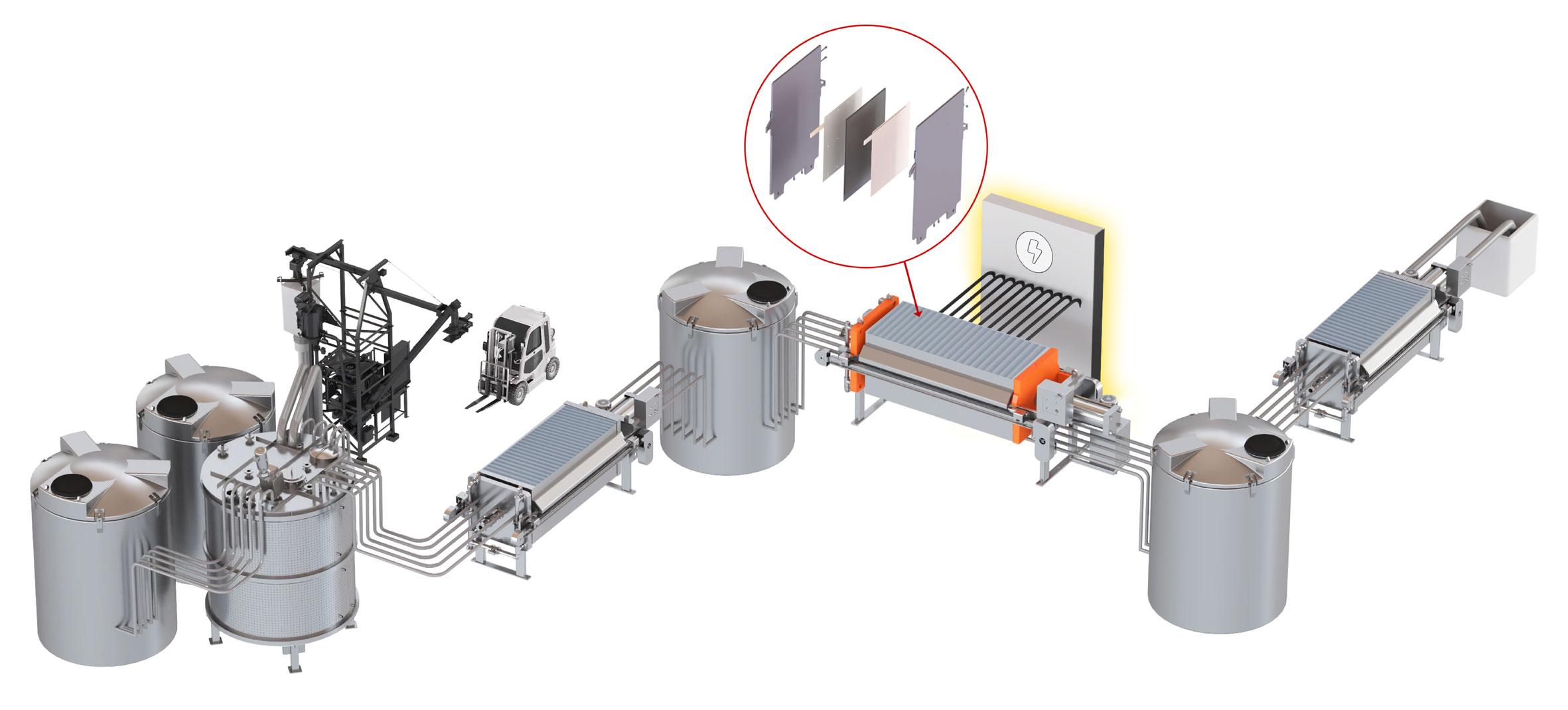
The patented electro-extraction is at the heart of Nth Cycle’s Oyster system. It produces the same chemicals metal refining uses today, but with electricity instead of fossil fuels. Each Oyster cell targets, separates and recovers a specific metal or group of metals needed to power the future.
The Critical Questions Investors Should Ask
The announcement contains promotional language that warrants scrutiny:
- Can electro-extraction scale economically at industrial throughput?
- Will purity levels remain consistent under commercial operating conditions?
- How dependent is the process on upstream feedstock quality?
- Can Western refiners truly compete on cost versus China?
- How quickly can customer qualification occur for magnet-grade products?
Importantly, the Belfast integration is expected beginning in Q4 2026—not immediate scaled production.
REEx Take
Rare Earth Exchanges believes this announcement aligns with a larger strategic reality: the West cannot rebuild rare earth supply chains while remaining dependent on China for refining chemistry itself. The partnership appears directionally credible and addresses a genuine vulnerability. But industrial chemistry is unforgiving. Investors should separate strategic importance from proven commercial execution.
Profile
Nth Cycle is a Massachusetts-based critical minerals refining and climate technology company focused on recovering high-purity metals—including nickel, cobalt, copper, and rare earth elements—from industrial waste, battery scrap, electronic waste, and mined ore. Founded in 2017 and headquartered in Beverly, Massachusetts, the company was established by CEO Megan O’Connor and CSO Chad Vecitis. At the center of its business model is “The Oyster,” a patented electro-extraction platform designed as a modular alternative to traditional smelting and chemical-heavy refining systems. According to the company, the process uses electricity and water to recover production-grade metals while significantly reducing capital intensity, emissions, and construction timelines for refining infrastructure.
Nth Cycle positions itself within what Rare Earth Exchanges often calls the “missing midstream” of the Western critical mineral supply chain—the refining and processing layer sitting between mining/recycling and downstream manufacturing. The company’s technology aims to help miners, recyclers, and battery supply-chain operators refine materials closer to the source, including processing black mass from lithium-ion battery recycling. Backed by more than $60 million in venture and strategic funding from investors including Caterpillar Venture Capital and Autodesk, Nth Cycle represents a new class of emerging U.S. refining technology companies attempting to localize portions of the critical mineral supply chain currently dominated by China and other Asian processing hubs.


0 Comments
No replies yet
Loading new replies...
Moderator
Join the full discussion at the Rare Earth Exchanges Forum →