
Highlights
- Central Asia is becoming a critical battleground in rare earth supply chains, positioned as a strategic corridor between China, Russia, Europe, the U.S., and Japan—but the real power lies in processing infrastructure, not just mineral deposits.
- The key industrial reality: China controls 90% of rare earth processing and magnet manufacturing capacity, meaning dependency becomes structurally embedded through midstream infrastructure, financing, and offtake relationships rather than ore ownership.
- Great Powers Era 2.0 is unfolding quietly through state-backed industrial policy and refining control—separation plants, metallization facilities, and customer qualification at scale will determine who wins the strategic materials race, not geographic mineral access alone.
What is the future of rare earth supply chains, industrial power, and strategic dependency in Central Asia? Rare Earth Exchanges™ reviews a recent report covering broad topics and rare earths only briefly. Yet the implications run far deeper. This piece separates grounded facts from narrative framing, helping investors understand where Central Asia may matter in the emerging “Great Powers Era 2.0.” And a critical industrial reality often missed in mainstream coverage: infrastructure, refining capacity, logistics, financing, and processing control—not simply mineral deposits—will determine who controls the next era of strategic materials.
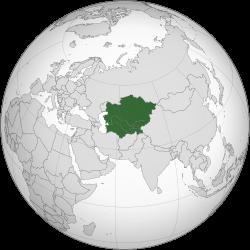
The New Silk Road Isn’t About Silk Anymore
Empires once fought over spices, ports, and oil. The next struggle may revolve around magnets, pipelines, transmission corridors, and solvent extraction plants. A recent Central Asia geopolitical roundup from the New Lines Institute (opens in a new tab) paints a region being pulled deeper into the gravitational field of great-power competition. Rare earths appear only briefly in the report—but that passing reference may be among the most strategically important observations in the entire piece. For investors, the signal matters.
Kazakhstan and Uzbekistan are increasingly positioning themselves as strategic transit and industrial corridors linking China, Russia, Europe, and potentially the United States and Japan. The report correctly identifies how rare earth supply chains and the so-called “Middle Corridor” are becoming geopolitical priorities for Washington and Tokyo. That assessment aligns with broader realities already reshaping the global critical minerals economy.
The Story Beneath the Story
But here is the key omission. The report largely frames rare earths as a geopolitical commodity story. In reality, the hardest bottlenecks sit elsewhere. Rare Earth Exchanges has repeatedly emphasized that mining alone does not confer industrial power. The true chokepoints are separation, refining, metallization, alloying, magnet manufacturing, and customer qualification at scale. Industrial ecosystems—not ore bodies alone—determine strategic leverage.
Central Asia may possess advantageous geography, growing diplomatic relevance, and potentially important mineral resources. None of that automatically translates into industrial sovereignty. China still dominates roughly 90% of rare earth processing and NdFeB magnet manufacturing capacity, while maintaining overwhelming control of heavy rare earth separation. The New Lines analysis correctly highlights Beijing’s expanding influence through infrastructure financing, pipelines, and industrial partnerships across Turkmenistan and Kazakhstan. But it understates how dependency can become structurally embedded once midstream infrastructure, financing, engineering expertise, and offtake relationships are externally controlled.
The Quiet Industrial War Investors Should Watch
What matters most may not be what the report explicitly says—but what is quietly emerging beneath it.
Central Asia is becoming another arena in Great Powers Era 2.0: a world increasingly shaped by state-backed industrial policy, strategic supply chains, refining control, capital alignment, and resource nationalism. The mines matter. But the processing plants may decide the future.


0 Comments
No replies yet
Loading new replies...
Moderator
Join the full discussion at the Rare Earth Exchanges Forum →