
Highlights
- China Rare Earth Group is deepening operations in Yunnan province, home to China's largest known medium and heavy rare earth deposit rich in dysprosium, terbium, and neodymium—critical for EVs, semiconductors, and military tech.
- Beijing is pushing vertical integration from mining through separation and processing, consolidating state control over the downstream infrastructure where Western alternatives remain limited and pre-commercial.
- The strategic coordination between state-owned enterprises and provincial governments signals China's tightening grip on global heavy rare earth supply chains at a time when Western industrial policy faces critical vulnerabilities.
China’s rare earth consolidation strategy continues pushing deeper into the country’s resource-rich southwest—and that could carry major implications for global supply chains and Western industrial policy. According to Chinese state-linked industry media, executives from China Rare Earth Group Co.,Ltd. met with Yunnan Vice Governor Liu Yong on May 15 to discussexpanded cooperation in rare earth exploration, separation, processing, and industrial development. The meeting highlights Beijing’s broader strategy of aligning powerful state-owned industrial groups with strategically important provincial resource bases.
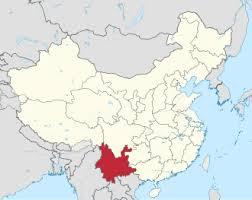
Why Yunnan Matters More Than Many Investors Realize
During the discussions, China Rare Earth Group Chairman Liu Leiyun emphasized Yunnan’s importance as one of China’s key medium and heavy rare earth provinces.
That point is strategically significant.
Yunnan, a vast southwestern province bordering Myanmar, Laos, and Vietnam, is increasingly viewed as one of China’s most important future heavy rare earth corridors. In early 2025, Chinese geological surveys identified what state-linked reports described as the country’s largest known medium and heavy rare earth deposit in the Honghe region.
Rich in Heavy Rare Earth Elements? Honghe Region of Yunnan
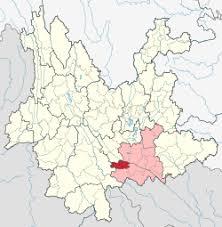
The deposit reportedly contains ion-adsorption clay resources rich in dysprosium, terbium, praseodymium, and neodymium—critical inputs for EV motors, advanced robotics, drones, semiconductors, aerospace systems, and military technologies. China already dominates global heavy rare earth separation capacity. Western alternatives remain limited and largely pre-commercial.
Beijing Pushes Vertical Integration
According to the report, China Rare Earth Group is accelerating:
- rare earth resource exploration,
- mining development,
- and construction of “green” smelting and separation facilities in Yunnan.
The company emphasized its vertically integrated capabilities spanning mining, separation, and advanced materials applications.
Meanwhile, Yunnan officials pledged strong provincial support, including industrial policy coordination, permitting assistance, and investment-friendly business conditions. Most notably, General Manager Li Zhihui said the company plans to accelerate separation projects and further mining development across the province.
Why the West Should Watch Closely
For the U.S. and Europe, the broader signal is difficult to ignore. China is not merely securing rare earth ore. It is consolidating control over the downstream processing, separation, and industrial infrastructure that remain among the West’s greatest vulnerabilities in critical minerals. At a time when ex-China heavy rare earth separation capacity remains in its infancy, Beijing continues tightening coordination between state-owned industrial champions, provincial governments, financing systems, and strategic resource development.
Disclaimer: This report is based on information published by the China Rare Earth Industry Association and sourced from China Rare Earth Group Co., Ltd., a state-owned enterprise in China. Additional contextual information regarding Yunnan rare earth deposits comes from public reporting and should be independently verified.


0 Comments
No replies yet
Loading new replies...
Moderator
Join the full discussion at the Rare Earth Exchanges Forum →