
Highlights
- Xi Jinping and Serbian President Vučić signed over 20 agreements covering infrastructure, AI, digital economy, and green energy, deepening Serbia's role as China's European gateway.
- Serbia's vast untapped lithium and critical mineral reserves remain a silent but strategically significant backdrop to China's expanding Belt and Road presence in the Balkans.
- China's industrial playbook—controlling full value chains from mining to export markets—mirrors the language and intent of cooperation frameworks agreed upon during the Belgrade summit.
- Xi awarded Vučić China's highest honor for foreign nationals, signaling Serbia's unique and enduring importance to Beijing's long-term European strategy.
- Investors in rare earths, critical minerals, and advanced manufacturing should monitor whether Serbia becomes a key node in China's effort to shape Europe's industrial future.
China and Serbia have significantly expanded their strategic partnership, with Chinese President Xi Jinping and Serbian President Aleksandar Vučić signing more than 20 cooperation agreements spanning infrastructure, technology, trade, education, legal affairs, and culture. While publicly framed as a celebration of "ironclad friendship," the visit reveals something larger: Beijing's continuing effort to build long-term economic, industrial, and political influence inside Europe through one of its closest partners on the continent. The agreements themselves may not be transformative individually, but collectively they reinforce Serbia's growing role as a strategic bridge between Chinese capital, technology, manufacturing ambitions, and European markets.
Chinese President Xi Jinping holds a ceremony to award Serbian President Aleksandar Vucic the Friendship Medal of the People's Republic of China at the Great Hall of the People in Beijing, capital of China, May 25, 2026
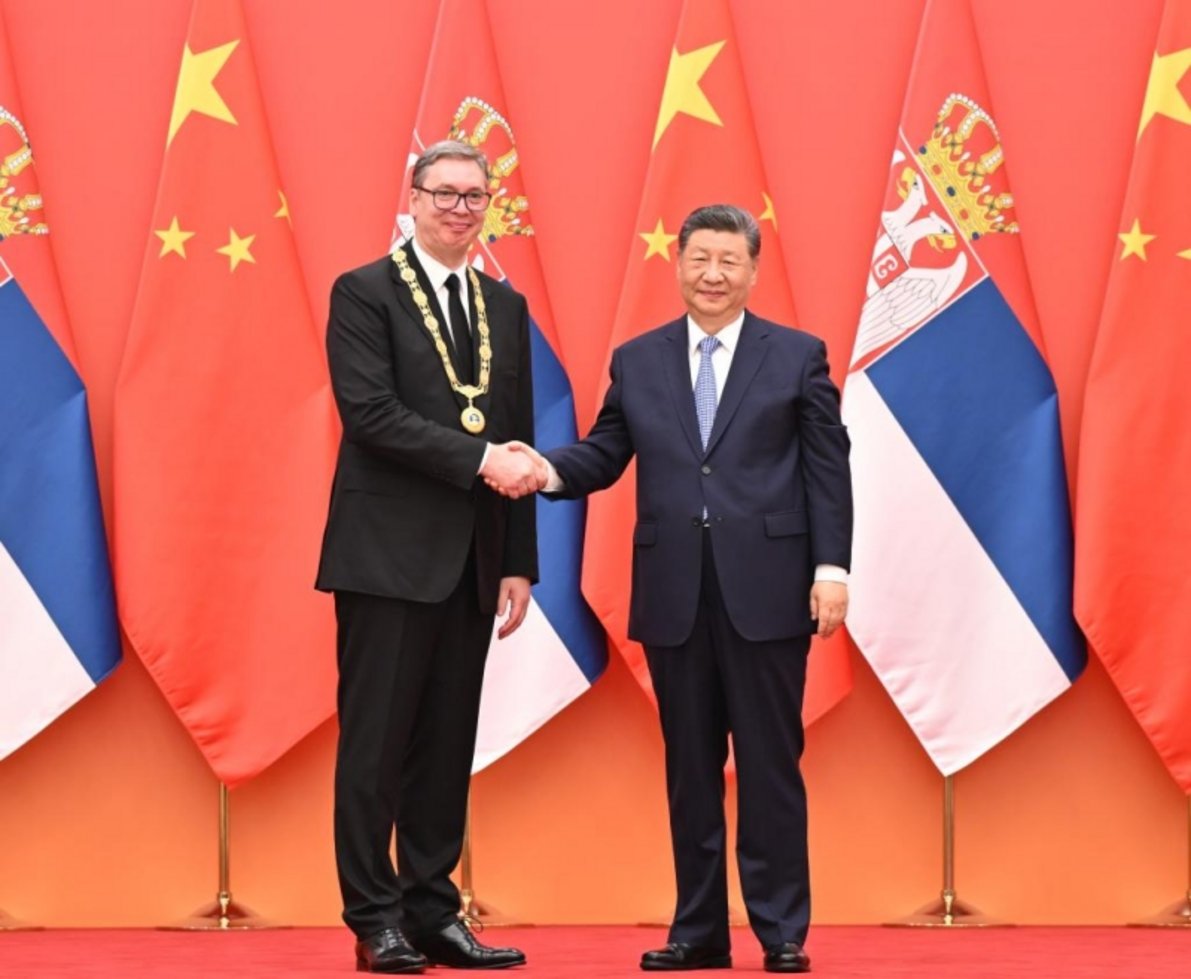
Source: Xinhua
A Belt and Road Gateway Into Europe
The most significant development for investors and policymakers is China's commitment to deepen cooperation in transportation, energy infrastructure, advanced manufacturing, artificial intelligence, digital economy, and green energy. Xi explicitly linked Serbia's future development to China's 15th Five-Year Plan (2026-2030), signaling that Serbia remains a priority node within Beijing's Belt and Road strategy. For Europe and the United States, this matters because Serbia increasingly serves as a geopolitical and economic gateway connecting Chinese industrial ambitions to the broader European marketplace.
Beyond Roads, Railways, and Construction
The most notable language from the summit concerns emerging technologies. Xi specifically called for expanded cooperation in artificial intelligence, advanced manufacturing, digital economy, and green energy. This marks an evolution from traditional Belt and Road infrastructure projects toward sectors likely to define future industrial competitiveness.
For Western observers, this raises questions about technology standards, industrial policy, supply chain resilience, and China's growing role in shaping Europe's future manufacturing ecosystem.
The Critical Minerals Question Lurking Beneath the Surface
No rare earth or critical mineral agreements were announced during the visit. Yet for Rare Earth Exchanges readers, this may be the most important angle. Serbia sits atop some of Europe's most strategically important undeveloped critical mineral resources, particularly lithium and other battery-related materials. While Beijing's public statements focused on infrastructure and technology cooperation, China's industrial strategy has historically centered on controlling entire value chains rather than isolated assets.
China's success in rare earths, batteries, solar panels, and electric vehicles emerged from a comprehensive ecosystem approach:
Mine → Processing → Materials → Components → Manufacturing → Export Markets
The language used during this visit mirrors that broader industrial model.
Why Investors Should Watch Closely
Several long-term possibilities emerge. Chinese firms could deepen participation in Serbian mining, processing, battery materials, manufacturing, or logistics projects. Serbia could evolve into a strategic industrial platform serving both Chinese and European markets. Alternatively, growing Chinese influence in strategic sectors could create future tensions with Brussels as Europe seeks greater supply chain autonomy.
No major breakthrough project was announced. However, more than 20 agreements were signed, China reaffirmed long-term infrastructure commitments, AI and advanced manufacturing were elevated as priority sectors, and Serbia publicly aligned itself with several major Chinese global initiatives.
The real significance of this visit is not today's contracts. It is the continued construction of a Eurasian industrial network connecting resources, manufacturing, technology, logistics, and markets. Investors in rare earths, critical minerals, batteries, and advanced manufacturing should watch carefully whether Serbia becomes another strategic node in China's long-term effort to shape Europe's industrial future.
The Symbolism Matters
Xi's decision to award Vučić the Friendship Medal—the highest honor China bestows on foreign nationals—underscores Serbia's unique standing in Beijing's European strategy. Chinese officials repeatedly highlighted Serbia's support for China's core interests and described the bilateral relationship as a model of state-to-state cooperation.
That symbolism alone suggests this relationship extends far beyond trade.
Disclaimer: This report is based primarily on information published by Chinese state media and official Chinese government sources. Such reporting reflects the priorities and perspectives of the Chinese government. Readers should independently verify specific claims, commitments, timelines, and project outcomes before relying on the information for investment, business, or policy decisions.


0 Comments
No replies yet
Loading new replies...
Moderator
Join the full discussion at the Rare Earth Exchanges Forum →