
Highlights
- China controls 85–90% of global rare earth separation and refining, including samarium-cobalt magnets critical to missile guidance and the F-35 fighter jet.
- The U.S. missile replenishment crisis stems not from a lack of raw minerals but from absent industrial-scale processing and magnet manufacturing outside China.
- Alternative supply chains through MP Materials, Lynas, and magnet makers are emerging, but the gap between political and industrial timelines poses serious risk.
- China's export controls on samarium and other rare earths have already forced Western defense suppliers to scramble for non-Chinese sources with limited success.
- Rebuilding a mine-to-magnet ecosystem after decades of neglect may rival the scale of Second World War industrial mobilization efforts.
Wars are often remembered for battles won and lost. Yet the lasting lesson of the Iran conflict may be something less dramatic and far more consequential: industrial capacity matters. Missiles can be fired in minutes. Replacing them can take years. Recent China-originating geopolitical chatter points out that America's depleted missile inventories reveal a deeper vulnerability—dependence on Chinese-controlled supply chains for rare earths, magnets, and strategic materials. While Rare Earth Exchanges™ suggests that China-leaning analysts tend to overstate key facts, a broader warning deserves careful consideration.
The Real Story Isn't the Missiles
The most compelling aspect of the recent Iran-critical perspective has little to do with that actual Middle Eastern nation. Rather, it concerns replenishment. Across Ukraine, the Middle East, and broader Indo-Pacific commitments, the United States has consumed significant quantities of advanced precision-guided munitions and missile interceptors. Independent analyses from defense think tanks, congressional testimony, and industry assessments have repeatedly warned that production capacity for systems such as Patriot, THAAD, SM-3, and Tomahawk missiles remains constrained.
The exact inventory levels remain classified. The depletion estimates circulating in public discourse should be treated cautiously. The Pentagon does not share such classified information. And anyone publishing so-called facts involving classified material is either misrepresenting the truth or, likely, could be in violation of various national security-related agreements, representing a whole different situation.
But the broader conclusion appears difficult to dispute: rebuilding inventories will likely require years rather than months.
For decades, Western defense procurement emphasized efficiency, cost reduction, and just-in-time supply chains. Those assumptions work well in peacetime. They become liabilities during sustained conflict.
The Midstream Problem Few Politicians Understand
The video correctly identifies a reality Rare Earth Exchanges has emphasized repeatedly. The greatest vulnerability is not mining.
It is midstream processing.
China controls approximately 85–90% of global rare earth separation and refining capacity and an even greater share of rare earth magnet manufacturing. This dominance extends across critical defense inputs including neodymium, dysprosium, terbium, and samarium.
Samarium-cobalt magnets deserve particular attention.
China effectively controls the global commercial supply chain for samarium, a rare earth element that plays an outsized role in advanced military systems. While samarium-bearing ores exist outside China, Beijing currently dominates the mining, separation, processing, metallization, and magnet manufacturing required to produce defense-grade samarium-cobalt magnets. These magnets retain their magnetic properties at extreme temperatures, making them indispensable for missile guidance systems, smart munitions, radar platforms, aerospace electronics, and advanced fighter aircraft such as the F-35, which reportedly contains roughly 50 pounds of samarium-cobalt (SmCo) alloy, equating to about 5.5 to 6.5 pounds of pure samarium.
Samarium
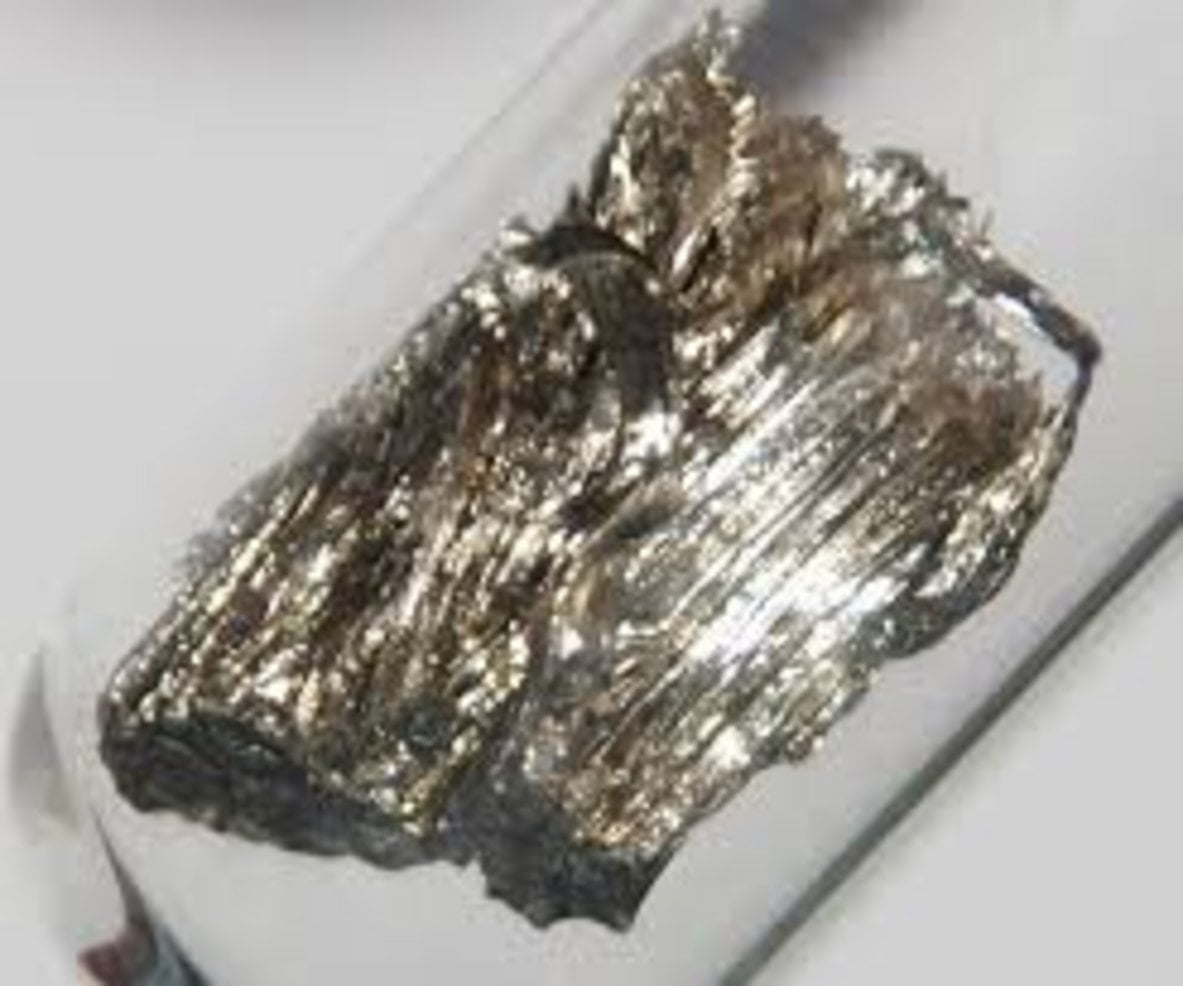
China's export controls and licensing requirements on samarium and other strategic rare earths have heightened concerns among Western defense planners, exposing a critical vulnerability in military supply chains. The challenge is not simply access to raw material, but the lack of alternative industrial-scale processing and magnet manufacturing capacity outside China, a dependency that could take years and billions of dollars to unwind.
Rare Earth Exchanges previously documented how U.S. defense suppliers scrambled to secure non-Chinese samarium supplies after Chinese export restrictions tightened. The lesson was unmistakable: The West possesses mineral resources. China possesses industrial capability.
Those are not the same thing.
Where the Video Goes Too Far
Several China-leaning sources repeatedly argue that America cannot build missiles without China.
That claim overstates the case. Alternative supply chains are emerging through efforts involving companies such as MP Materials, Lynas Rare Earths, Ucore Rare Metals, and ReElement Technologies. Magnet-focused players such as VAC, Noveon Magnetics, Permag, Arnold Magnetics, AML, and Bunting Magnetics are scrambling for alternative sources for such magnets.
The challenge is not physical impossibility. The challenge is time. Building mines is difficult. Building separation plants is harder. Building alloy production, metal-making, magnet manufacturing, workforce expertise, and customer qualification programs is harder still. The issue is scale, not feasibility. There are political timelines and then, of course, industrial timelines. That delta can result in significant trouble.
The Other Side of the Chessboard
There is another perspective largely absent from many China-leaning sources. China's dominance is formidable, but it is not immutable.
History suggests that strategic monopolies eventually attract competition. Japanese investment after the 2010 rare earth crisis weakened China's pricing power. Current investments across the United States, Australia, Canada, Europe, and South Korea aim to do the same.
China possesses leverage. The U.S. and allies from Japan and South Korea to Europe and Canada possess capital, technology, allied resources, and increasingly political urgency.
The outcome remains uncertain. What is clear is that Beijing spent three decades building industrial dominance while Washington largely assumed global markets would always remain open. That assumption is now being tested.
The Rare Earth Exchanges View
The most important takeaway is not that America is running out of missiles. It is that military power ultimately rests on industrial power, especially in what we have coined Great Powers Era 2.0. An emerging era President Trump helped accelerate. In this era, many more nations, blocs, and even multinationals will seek a piece of the supply chain action. The cost of doing business and making products may very well rise, and ironically this may impact China harder than any other nation. The days of quick, economical access to specialized commodities are coming to an end.
The Iran conflict did not create America's rare earth vulnerability. It exposed it. Missiles can be manufactured. Factories can be expanded.
Budgets can be increased. But rebuilding a mine-to-magnet ecosystem after decades of neglect may prove to be one of the most expensive industrial projects attempted by the Western alliance since the Second World War. And remember, in Great Powers Era 2.0, even the term “Western Alliance” may over time mean something entirely different.
The battlefield may be thousands of miles away. The real contest is unfolding inside refineries, separation plants, alloy furnaces, and magnet factories. As of today, China still holds the commanding ground.


0 Comments
No replies yet
Loading new replies...
Moderator
Join the full discussion at the Rare Earth Exchanges Forum →