
Highlights
- Researchers documented arsenic above 30 mg/L, lead above 10 mg/L, and cyanide seven times guideline thresholds in downstream waterways after a 2024 spill in Houaphanh Province.
- Field observations confirmed fish mortality, irrigation impacts, and community health concerns, with potential transboundary contamination pathways extending toward Vietnam.
- Mining operations in Laos appear to have advanced before environmental approvals were fully completed, exposing critical regulatory and oversight failures.
- Laos holds significant heavy rare earth potential in ion-adsorption clay deposits but captures little supply chain value due to absent domestic processing and refining capacity.
- The incident underscores that building non-Chinese rare earth supply chains requires strong institutions, environmental accountability, and downstream industrial investment, not just mineral deposits.
A new study led by Somchith Phetmany of Kunming University of Science and Technology (opens in a new tab), in collaboration with researchers from Souphanouvong University (opens in a new tab) and Laos' Institute of Industry, Commerce and Energy, (opens in a new tab) examines the environmental consequences of a reported 2024 chemical leakage associated with pilot rare earth mining operations in Houaphanh Province (opens in a new tab), northern Laos. The researchers documented elevated cyanide and heavy metal concentrations in downstream waterways, widespread ecological disruption, and regulatory shortcomings that complicated environmental oversight. Beyond the immediate environmental findings, the study highlights a larger challenge facing the global rare earth supply chain: how to expand production of the critical minerals needed for electric vehicles, wind turbines, advanced electronics, and defense systems without repeating the environmental mistakes that have accompanied rare earth development elsewhere.
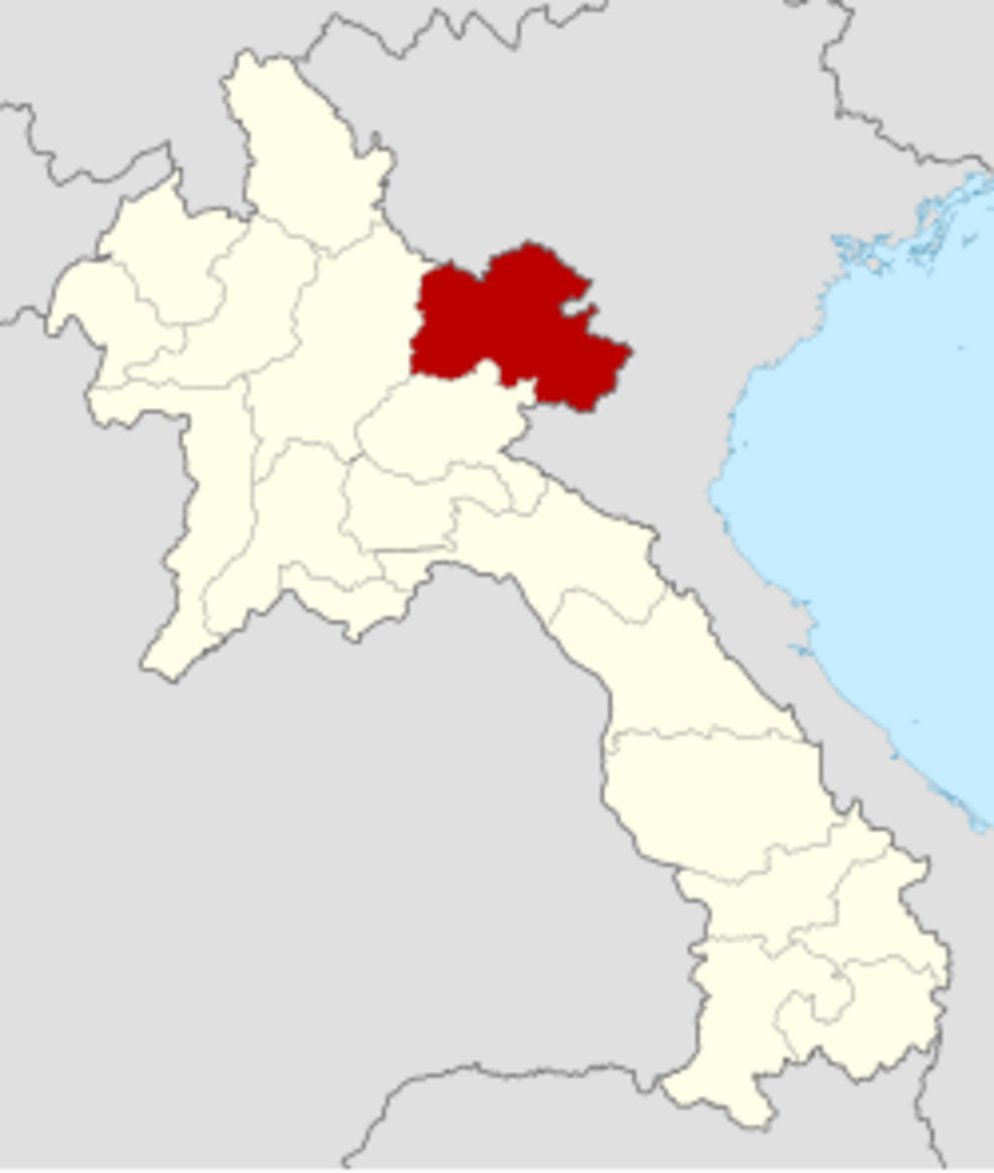
Houaphanh Province
When Green Technology Meets Environmental Reality
Rare earth elements are indispensable to modern civilization. They help power electric vehicle motors, offshore wind turbines, robotics, artificial intelligence infrastructure, advanced semiconductors, and many defense technologies. Yet obtaining these materials is often neither simple nor environmentally benign.
The study investigated a reported February 2024 chemical leakage linked to pilot in-situ rare earth mining activities in Houaphanh Province. Researchers sampled water at twelve downstream locations and found contaminant levels far above accepted standards. Arsenic concentrations exceeded 30 mg/L, lead surpassed 10 mg/L, and cyanide concentrations were approximately seven times higher than applicable guideline thresholds. Field observations documented fish mortality, degraded water quality, irrigation impacts, and concerns among local communities dependent on the river system.
What the Researchers Found
The team combined field monitoring, laboratory analysis, ecological risk assessments, and review of government documents.
Key findings included:
- Severe contamination in affected river systems.
- Acidic water conditions capable of increasing heavy metal mobility.
- Elevated ecological risks for aquatic organisms and fisheries.
- Potential downstream exposure pathways extending toward Vietnam through connected river networks.
- Evidence suggesting mining operations may have advanced ahead of fully completed environmental approval processes.
The study also points to a broader economic challenge. Laos possesses promising rare earth resources, yet captures relatively little downstream value because processing, separation, refining, and magnet manufacturing remain largely undeveloped.
The Supply Chain Lesson
For rare earth supply chains, the findings offer an important reminder. Building alternatives to China's dominant position requires more than discovering new deposits or issuing mining permits. Successful supply chains depend on environmental management, technical expertise, regulatory capacity, workforce development, and downstream industrial investment.
The authors argue that Laos would benefit from diversified foreign investment, stronger public-private partnerships, expanded technical training, and greater participation in downstream manufacturing activities that generate higher economic value.
Limitations and Unanswered Questions
The study has important limitations. Sampling occurred following a specific spill event rather than through long-term monitoring. Direct measurements outside Laos were not conducted, meaning potential transboundary impacts remain inferred rather than demonstrated. Reported human health effects were based primarily on community observations and field reports rather than clinical investigations.
The research also represents a post-incident environmental assessment rather than a forensic investigation. Additional independent monitoring and longer-term studies would help clarify the full extent, persistence, and sources of contamination.
REEx on Laos
In March REEx pointed out that Laos possesses credible geological potential to become an important source of heavy rare earth elements—particularly dysprosium, terbium, and yttrium—from ion-adsorption clay deposits in northern provinces such as Houaphanh and Xieng Khouang. However, despite growing exploration activity and increasing strategic interest, the country currently captures little value from the rare earth supply chain. Most investment is tied to Chinese companies and processing networks, while Laos lacks domestic separation, refining, magnet manufacturing, and broader downstream industrial capacity.
In a study reviewed by REEx, researchers led by Phouphet Kyophilavong (opens in a new tab) concluded that without stronger policies, diversified foreign investment, improved governance, and investment in local technical expertise, Laos risks remaining primarily a raw-material supplier feeding external supply chains rather than developing a competitive domestic rare earth industry.
REEx also highlighted significant environmental and geopolitical challenges. Ion-adsorption clay deposits are among the world's most important sources of heavy rare earths but are also among the most environmentally controversial due to chemical leaching methods that can contaminate groundwater and river systems if poorly managed.
As covered in this most recent investigation, river contamination linked to rare earth mining activities in Houaphanh Province underscores these concerns and raises questions about regulatory oversight and environmental enforcement.
As global demand for heavy rare earths grows amid efforts to diversify supply chains away from China, Laos finds itself at a strategic crossroads. The country's future role in the critical minerals sector will depend not only on the quality of its geology, but also on its ability to strengthen institutions, enforce environmental standards, attract diversified investment, and build domestic processing capabilities that create lasting economic value.
Conclusion
The Houaphanh incident illustrates a central paradox of the energy transition. The world needs more rare earths to support electrification, advanced manufacturing, and national security. Yet expanding production without adequate safeguards can generate significant local environmental and social costs.
Laos possesses meaningful geological potential and could become an increasingly important participant in Southeast Asia's critical minerals economy. But the study suggests that long-term success will require more than mineral resources alone. Strong institutions, transparent governance, environmental accountability, technical expertise, and downstream industrial development may prove just as important as the ore itself.
The lesson extends far beyond Laos. Building resilient non-Chinese rare earth supply chains requires not only mines, but also the institutions capable of managing them responsibly.
Register today: REEx Marketplace™ (opens in a new tab)
Discover companies, projects, pricing intelligence, and opportunities across the global rare earth value chain at the REEx Marketplace: https://marketplace.rareearthexchanges.com/signup (opens in a new tab)


0 Comments
No replies yet
Loading new replies...
Moderator
Join the full discussion at the Rare Earth Exchanges Forum →