
Highlights
- China Rare Earth Industry Association officials visited Beijing's Humanoid Robot Innovation Center to explore integration of rare earth magnets with humanoid robotics.
- Humanoid robots require dozens of compact NdFeB permanent magnet motors containing neodymium, praseodymium, dysprosium, and terbium rare earth elements.
- China is establishing a permanent communication mechanism linking government, rare earth producers, motor manufacturers, and robotics developers across the full value chain.
- The strategy mirrors China's earlier coordinated industrial pushes in solar panels, EV batteries, and rare earth processing—aligning supply chains before demand fully materializes.
- For Western investors, this signals humanoid robotics could become a major new demand driver for NdPr magnets and heavy rare earth elements used in advanced motor systems.
China's rare earth sector is moving closer to one of the country's most strategically important emerging industries: humanoid robotics. According to a June 16 announcement from the China Rare Earth Industry Association, senior officials visited the Beijing Humanoid Robot Innovation Center (opens in a new tab) to explore deeper integration between rare earth permanent magnet materials and next-generation humanoid robot technologies. The exchange brought together representatives from government, industry, and research organizations, including officials from Beijing's Tongzhou District (opens in a new tab) and leaders from China Iron & Steel Research Institute Group (opens in a new tab). While no major technological breakthrough was announced, the meeting offers a revealing look at how China is organizing critical supply chains around future industries.
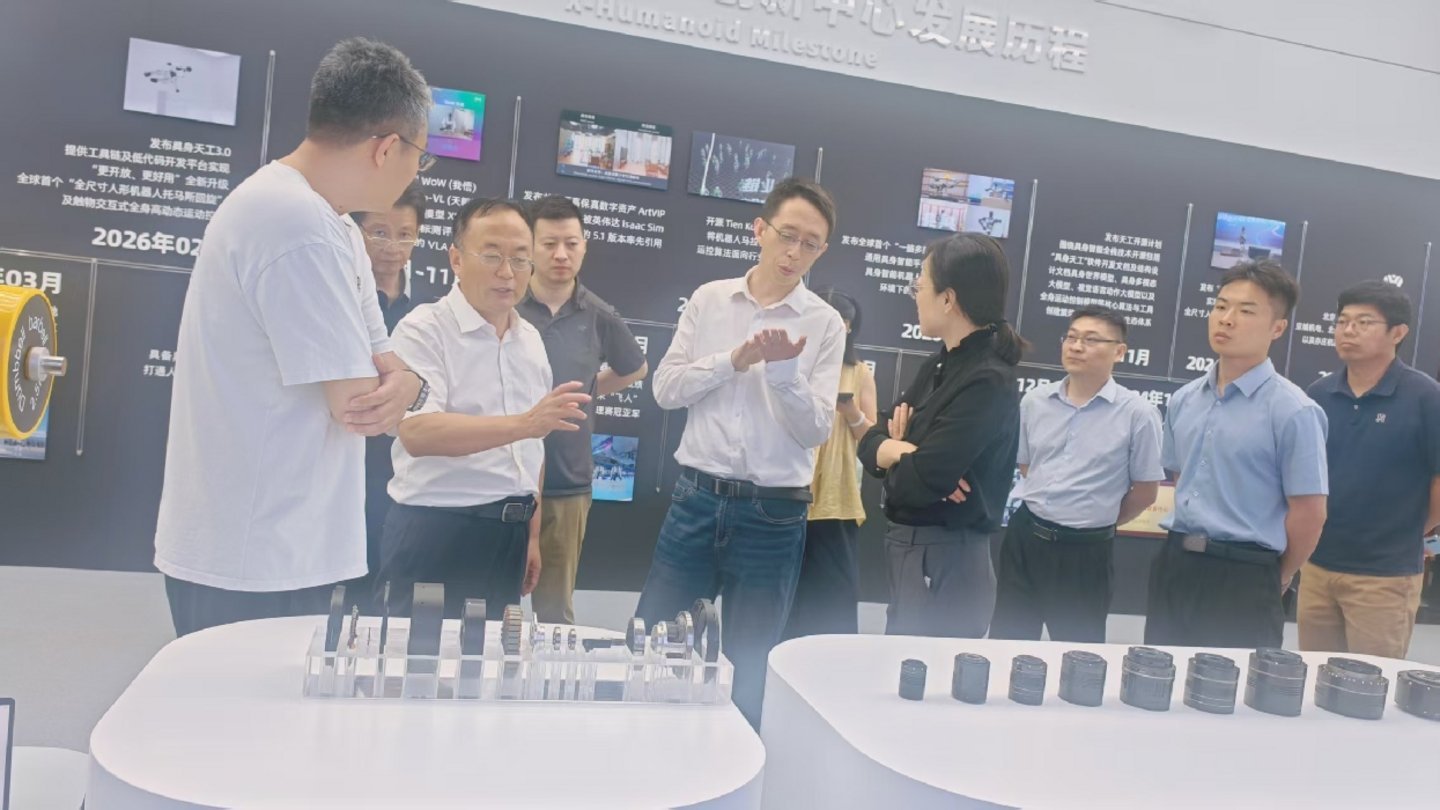
Building the Industrial Ecosystem Before the Market Arrives
The most important takeaway was not a new robot or a new material. It was the effort to connect the entire value chain.
Participants discussed how to overcome bottlenecks between:
- Rare earth permanent magnet producers
- High-performance motor manufacturers
- Joint actuator developers
- Humanoid robot assemblers
Engineers from the innovation center outlined technical requirements for future robotic joint modules, including high-torque permanent magnet motors, specialized rare earth magnetic materials, miniaturization, durability, weather resistance, and advanced magnetic and mechanical performance.
For Western observers, the significance lies in China's effort to align upstream materials suppliers with downstream robotics manufacturers before large-scale commercialization occurs.
Why Rare Earths Matter to Humanoid Robotics
Humanoid robots require numerous compact, high-performance motors to replicate human movement. Many of these motors depend on neodymium-iron-boron (NdFeB) permanent magnets containing rare earth elements such as neodymium, praseodymium, dysprosium, and terbium. Chinese participants highlighted applications involving high-torque permanent magnet motors, intelligent motor-control systems, and specialized industrial and mining robots.
The discussions also identified common challenges, including material compatibility, technical integration, and the absence of unified industry standards.
The Strategic Signal for Investors
Perhaps the most important element of the meeting was the call for a permanent communication mechanism linking government agencies, rare earth producers, materials scientists, motor manufacturers, and robotics developers.
This reflects a hallmark of China's industrial strategy: coordinating entire supply chains around strategic technologies before demand fully materializes.
If humanoid robotics scales successfully, it could emerge as a significant new source of demand for NdPr magnets and heavy rare earth elements used in advanced motor systems. A single humanoid robot may contain dozens of motors, actuators, and motion-control components requiring high-performance magnetic materials.
For the United States and Europe, the message is clear. China is not treating robotics as a standalone technology sector. It is integrating robotics into a broader industrial strategy that links minerals, materials science, manufacturing, automation, and artificial intelligence.
The approach mirrors earlier Chinese efforts in solar panels, batteries, electric vehicles, and rare earth processing.
Bottom Line
No breakthrough technology was unveiled. However, something potentially more important was on display: China is systematically organizing the industrial ecosystem needed to support the next generation of humanoid robotics. Rare Earth Exchanges® continues to track this example of industrial policy. The focus is not merely on inventing new technologies. It is on ensuring that every link in the supply chain—from rare earth magnets to robot joints—develops in coordination. For investors tracking the future of rare earth demand, this may be one of the more consequential signals emerging from China in 2026.
Disclaimer: This report is based on information published by a Chinese industry association and related state-linked organizations. The claims, plans, and strategic objectives described should be independently verified. As with many official Chinese industrial policy communications, the direction of travel is often clearer than the ultimate commercial outcome.
Register for REEx Marketplace™: https://marketplace.rareearthexchanges.com (opens in a new tab)


0 Comments
No replies yet
Loading new replies...
Moderator
Join the full discussion at the Rare Earth Exchanges Forum →