
Highlights
- Jiangxi Province launched a government-backed innovation competition prioritizing rare earth magnets, phosphors, infrared laser crystals, and superconducting ceramics.
- China's strategy focuses on high-value downstream rare earth technologies—not just mining—including NdFeB permanent magnets, ultra-high-purity oxides, and SCR catalysts.
- The competition integrates universities, entrepreneurs, and manufacturers into a coordinated pipeline to accelerate commercialization of next-generation rare earth materials.
- Western critical mineral strategies focused on mines and refineries may be missing the higher-margin battlefield where China is building durable intellectual property advantages.
- The initiative reinforces that long-term industrial power in rare earths is increasingly determined by downstream materials engineering and manufacturing ecosystems.
China's Jiangxi Province has launched the Rare Metals Division of its Second High-Level Talent Innovation and Entrepreneurship Competition, a government-backed initiative aimed at attracting scientists, entrepreneurs, startups, and technology developers into strategically important industrial sectors. On its face, the competition resembles a regional economic development program. A closer look suggests something more significant. The technologies being prioritized provide a window into where China intends to strengthen its position across the rare earth value chain.
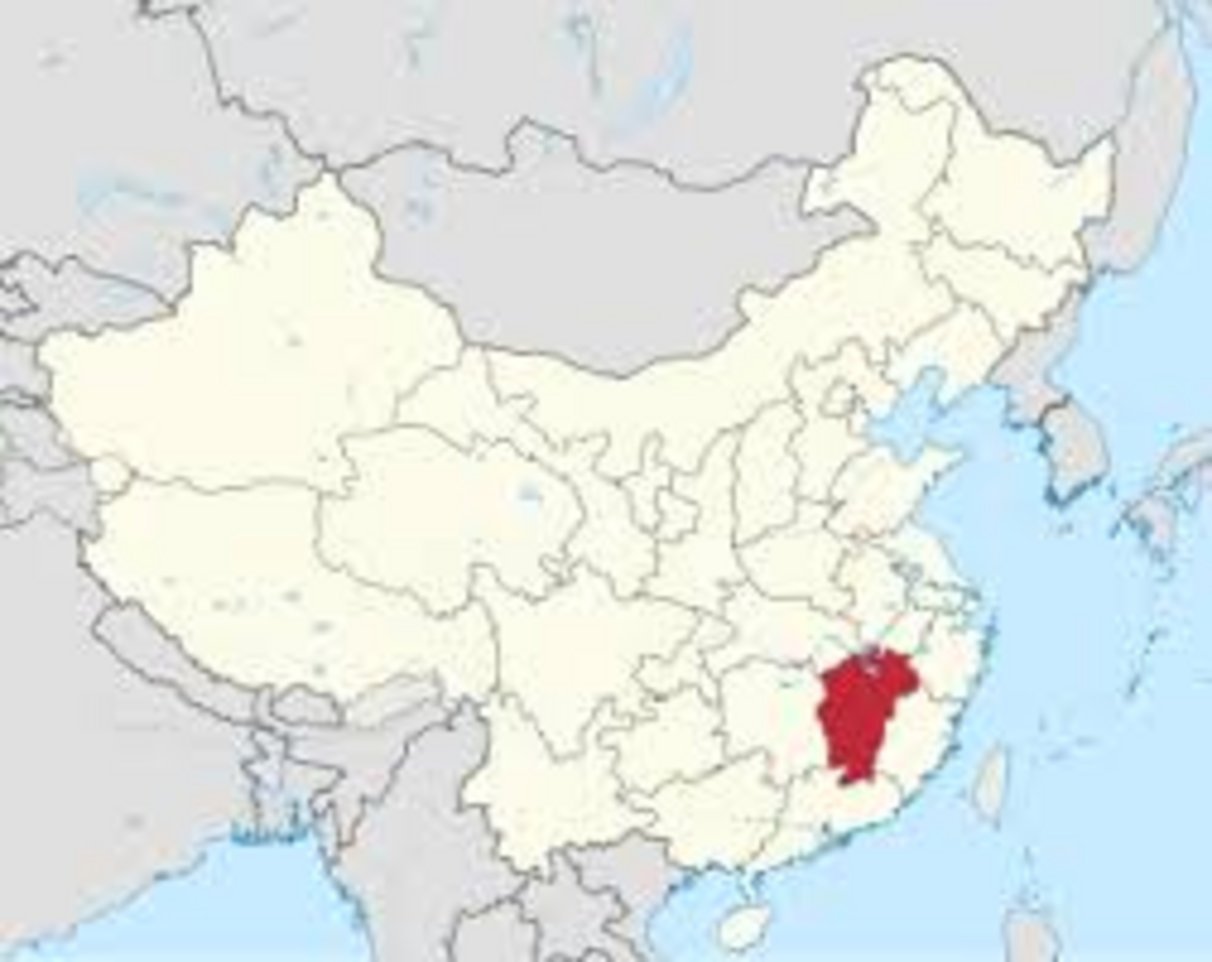
The competition supports Jiangxi's industrial modernization strategy and broader manufacturing development goals, focusing on six sectors: electronic information, nonferrous metals, advanced equipment manufacturing, new energy, advanced materials, and biopharmaceuticals.
Follow the Technology Priorities
The rare earth category is particularly revealing.
Organizers identified a series of targeted technology areas, including:
- Ultra-fine rare earth oxides
- Ultra-high-purity rare earth oxides and metals
- High-performance rare earth polishing powders
- Barium-lanthanum-copper oxide and yttrium-barium-copper oxide superconducting ceramics
- NdFeB permanent magnets and next-generation rare earth magnetic materials
- Narrow-band rare earth phosphors for ultra-wide-color-gamut displays
- High-efficiency non-visible-light rare earth luminescent materials
- High-performance infrared rare earth laser crystals
- Cerium-zirconium composite oxides
- SCR catalyst materials used in diesel emissions-control systems
This is not a list centered on mining. It is concentrated in advanced processing, materials engineering, magnets, catalysts, photonics, superconductivity, and specialized manufacturing applications. In other words, China is directing attention toward the highest-value portions of the rare earth ecosystem.
The Real Signal: Building the Next Layer of Competitive Advantage
Perhaps the most important takeaway is how talent development is being integrated into industrial strategy.
The competition allows participation by both established companies possessing intellectual property and entrepreneurial teams with emerging technologies and commercialization plans. The goal is to accelerate the conversion of scientific research into industrial production.
This reflects a recurring feature of China's industrial model: connecting universities, researchers, entrepreneurs, manufacturers, and government programs into a coordinated innovation pipeline. For Western observers, the announcement reinforces an important reality. China's competitive position in rare earths increasingly depends not only on resource ownership or processing capacity, but also on its ability to develop the next generation of materials, products, and manufacturing technologies.
The REEx View
The significance of this announcement lies less in the competition itself than in the technology priorities it reveals.
Western governments often focus on mines, separation plants, and refining capacity when discussing critical mineral security. Jiangxi's competition highlights a different battlefield: advanced materials, magnets, photonics, catalysts, superconductors, and other downstream technologies where intellectual property, technical know-how, and manufacturing ecosystems create durable competitive advantages.
The lesson for investors is straightforward. China is continuing to invest across the entire rare earth value chain—not just upstream resource production, but the high-margin technologies that transform rare earth elements into strategic products.
In Great Powers Era 2.0, control of critical minerals may begin in the mine, but long-term industrial power is increasingly determined downstream.
Key Takeaways
- Jiangxi Province launched a high-level innovation and entrepreneurship competition focused on strategic industries.
- Rare earth technologies receive dedicated attention within the nonferrous metals category.
- Priority areas include NdFeB magnets, ultra-high-purity rare earth materials, phosphors, infrared laser crystals, catalysts, and superconducting ceramics.
- The initiative seeks to accelerate commercialization of new technologies by linking talent, intellectual property, and industrial development.
- The announcement highlights China's continuing focus on strengthening high-value downstream segments of the rare earth supply chain.
Disclaimer: This report is based on information published by the Jiangxi High-Level Talent Innovation and Entrepreneurship Competition and republished by the China Rare Earth Industry Association. The information originates from entities operating within China's state-directed industrial ecosystem and should be independently verified where possible.
Register for REEx Marketplace™: https://marketplace.rareearthexchanges.com (opens in a new tab)


0 Comments
No replies yet
Loading new replies...
Moderator
Join the full discussion at the Rare Earth Exchanges Forum →