
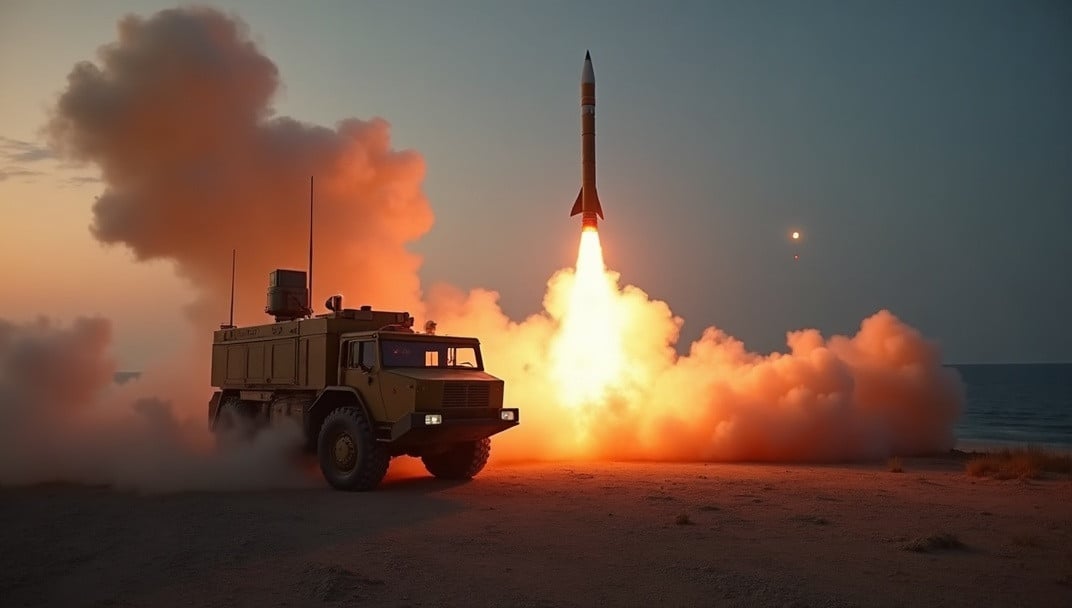
Before modern missile defense systems, defenders often relied on unguided anti-aircraft fire or early guided missiles with limited sensors and computing, which made intercepting fast, high-altitude targets unreliable and highly situational. Today's systems combine precision seekers, high-power radar, fast data links, and networked command-and-control so an interceptor can be steered onto a small, rapidly moving target at long range or in the terminal seconds. Rare earth elements matter because many of the enabling parts depend on them: high-strength magnets in actuators and guidance hardware, optics and laser-related materials in sensors and test equipment, phosphors in displays and imaging chains, catalysts for materials processing, and specialty alloys that keep performance stable under heat and vibration. This article explains where rare earths appear inside the detection-to-intercept chain, how the mine-to-component supply chain works, which chokepoints shape production, what recent 2025 to 2026 policy and industrial moves are changing availability, and what realistic limits and future design trends look like.
Table of Contents
How Did Missile Defense Systems Change Modern Air and Missile Defense—and Why Do Rare Earths Matter?
Before modern missile defense systems existed, defenders relied on unguided anti-aircraft fire or early guided missiles with limited sensors and basic computing. Intercepting a fast, high-altitude target was unreliable and often a matter of luck as much as skill. A defender might fire dozens of rounds or missiles and still miss.
Today's systems are fundamentally different. They combine precision seekers, high-power radar, fast data links, and networked command-and-control platforms. An interceptor can now be steered onto a small, rapidly moving target at long range or in the final seconds before impact. The "kill chain"—detect, track, discriminate, engage, assess—happens in compressed timeframes that would have been unimaginable a generation ago.
What many people do not realize is that rare earth elements play a quiet but important role in making these systems work. High-strength magnets in actuators and guidance hardware, specialty optics in sensors, phosphors in displays, and heat-resistant alloys all depend on a small group of elements mined and processed through a fragile global supply chain. Understanding where rare earths appear inside the detection-to-intercept chain, how the supply chain functions, which chokepoints shape production, and what recent policy moves are changing the picture is essential for anyone trying to grasp the full story behind missile defense.
Rare Earth Role in Missile Defense Systems
Which Elements Are Used and Why
Several rare earth elements show up repeatedly in missile defense hardware, each chosen for specific physical properties.
Neodymium and praseodymium provide the high magnetic strength behind NdFeB magnets, the most powerful permanent magnets commercially available. According to U.S. Department of Energy Critical Materials Assessments, these magnets are central to compact, high-torque motors used throughout defense electronics.
Dysprosium and terbium are added in smaller amounts to raise coercivity—the magnet's resistance to losing its magnetism at high temperatures or under demagnetizing stress. For an interceptor enduring extreme heat and vibration during flight, this thermal stability is not optional. Materials Research Society reviews on magnet performance confirm that even small additions of these heavy rare earths can significantly extend a magnet's useful temperature range.
Samarium is the backbone of SmCo magnets, which trade some raw magnetic strength for exceptional heat tolerance and radiation resistance. These magnets are sometimes preferred in environments where NdFeB would degrade.
Yttrium, europium, and terbium appear in phosphors used for visible and near-visible emission in ruggedized displays and imaging chains. According to U.S. Geological Survey mineral commodity summaries, these elements enable stable brightness and precise color reproduction even under harsh conditions. (opens in a new tab)
Cerium and lanthanum play more indirect roles. Ceria-based polishing powders are essential in manufacturing optical-grade surfaces, and lanthanum-based catalysts support certain industrial processing steps. These elements may not sit inside the final interceptor, but the interceptor could not be built without them.
How It Works
The connection between rare earths and system performance becomes clearer when you trace the path from element to function.
In actuation and control surfaces, NdFeB or SmCo magnets sit inside compact servo motors. These magnets generate strong magnetic torque in a very small volume. That means fin surfaces can respond faster and more precisely, tightening guidance and reducing miss distance even under high-g loading.
For seeker stabilization, magnet-based motors and resolvers provide precise angular positioning with almost no backlash. When tracking a maneuvering target, even tiny pointing errors can mean a miss. Magnets containing neodymium and praseodymium, with dysprosium or terbium added for thermal margin, help keep that pointing error small.
In command-and-control interfaces, rare-earth-activated phosphors in high-reliability displays maintain stable brightness and color across a wide temperature range. This may sound minor, but during a time-critical engagement, clearer operator displays reduce misinterpretation risk.
Thermal constraints tie these choices together. Interceptors and radars face intense heating, mechanical shock, and vibration. Heavy rare earths improve coercivity in NdFeB magnets at elevated temperatures. When heat tolerance and long-term stability outweigh concerns about cost and brittleness, SmCo magnets may be selected instead, as described in DOE and IEEE materials reliability discussions.
Journey from Mine to Product
Supply Chain Steps
The path from raw ore to a functioning missile defense component is long and technically demanding.
It typically runs in this order: ore mining, physical beneficiation to concentrate the rare earth minerals, chemical separation into individual rare earth oxides, conversion of those oxides into metals, alloying into magnet compositions like NdFeB or SmCo (or preparation of phosphor powders), fabrication into finished components such as sintered magnets or coated phosphors, integration into subsystems like motors, sensors, and displays, and finally assembly and qualification testing of the complete system.
Defense-grade parts add several extra layers. According to U.S. Department of Defense industrial base reviews and Government Accountability Office reporting on defense supply chains, these include full traceability of materials, tighter impurity controls, and environmental and thermal screening designed to catch early-life failures. These steps can increase reliance on a small number of specialized midstream processors who have the certifications and expertise to meet defense requirements.
Typical Chokepoints
Three chokepoints consistently appear in supply chain analyses.
First, separation capacity is a major bottleneck. Turning mixed rare earth concentrate into high-purity individual oxides requires complex solvent-extraction circuits and strict waste handling. The International Energy Agency's critical minerals analysis and DOE supply chain assessments have repeatedly flagged this step as a vulnerability.
Second, heavy rare earth availability—notably dysprosium and terbium—can be significantly tighter than light rare earth supply. According to USGS production data, heavy rare earth deposits are less common and harder to develop economically. When supply is constrained, manufacturers face design compromises or must invest in lengthy requalification work to use alternative magnet grades.
Third, specialized manufacturing steps like magnet sintering, phosphor coating, and optical crystal growth can be constrained by intellectual property, accumulated know-how, and a limited pool of qualified suppliers. DoD industrial base assessments and IEEE reliability literature describe how the loss of even one qualified supplier can ripple through multiple defense programs.
Statistics and Societal Impact
Quantitative Snapshot
The global air and missile defense market has expanded substantially. According to analysis cited by Defense News and informed by the International Institute for Strategic Studies Military Balance, the integrated air and missile defense sector was estimated to exceed 30 billion dollars annually by 2025, with growth rates in the mid-to-high single digits driven by increased procurement across NATO members, Indo-Pacific allies, and the Middle East.
On the procurement side, U.S. Missile Defense Agency budget documents for fiscal years 2025 and 2026 show continued funding for Patriot system upgrades, additional Terminal High Altitude Area Defense batteries, and the next phase of the Next Generation Interceptor program. The Congressional Research Service reported in 2025 that Japan's Ministry of Defense had approved expanded Aegis-equipped destroyer deployments, and NATO communiqués referenced new integrated air and missile defense investments by multiple European allies.
Estimating rare earth content per subsystem requires caution. Based on IEEE Transactions on Industry Applications data on magnet mass-per-kilowatt relationships and DOE magnet supply chain reports, engineering estimates suggest that a single high-performance actuator motor may contain roughly 100 to 500 grams of NdFeB magnet material, depending on torque class. Display phosphor masses are smaller but still meaningful across a full system. These figures should be treated as engineering estimates, not exact classified quantities.
Price volatility for key rare earth oxides remained a concern through 2025 and into 2026. According to USGS mineral commodity summaries and commodities reporting referenced by the OECD and IEA, neodymium-praseodymium oxide prices fluctuated with policy announcements and demand surges, while dysprosium and terbium oxides saw sharper swings due to their tighter supply base.
Downstream Effects
Improvements in sensor clarity, actuator responsiveness, and system reliability can raise the probability of a successful intercept in controlled tests. However, as emphasized in Missile Defense Agency test reporting and GAO oversight narratives, real-world performance remains constrained by engagement geometry, available warning time, and the number of interceptors that can be fired per incoming threat.
The societal impacts are indirect but real. Better defense readiness can reduce the expected damage from limited attacks and give decision-makers more time and options during a crisis. At the same time, reports by RAND and CSIS have noted that improved defenses can prompt adversary countermeasures—such as larger salvos, decoys, or maneuvering warheads—that increase costs and raise instability concerns. The relationship between defense capability and strategic stability is not straightforward.
Innovators and History
Key Breakthroughs
The story of rare earths in missile defense is really two stories converging.
The first is a materials story. The commercialization of SmCo magnets in the 1970s enabled smaller, higher-temperature motors for military applications. Then, in the 1980s, the NdFeB magnet revolution dramatically increased energy density. According to Materials Research Society historical reviews, NdFeB magnets offered roughly ten times the energy product of traditional ferrites, helping miniaturize guidance and actuation hardware that had previously been bulky and heavy.
The second story involves phosphors and display technology. Advances in rare-earth-doped phosphors improved the ruggedness and clarity of visualization systems used across defense electronics. Journal of Luminescence review literature and IEEE display technology proceedings document how europium and terbium activators enabled sharper, more stable displays that could survive the shock and temperature extremes of field use.
These two developments merged in the modern "hit-to-kill" interceptor concept. Precision guidance maturity depended on tighter sensor-to-actuator loops and higher computing performance, which in turn demanded compact, high-performance electromechanical components. U.S. Missile Defense Agency historical summaries and CRS primers describe how these material advances were necessary preconditions for the interceptor accuracy that hit-to-kill demands.
From Lab to Product
Translating laboratory magnet chemistry into manufacturable components required breakthroughs in powder metallurgy, sintering control, and quality assurance. ASM International materials handbooks detail how these methods made magnet properties repeatable at production scale.
Early commercialization was led by specialized magnet producers who later entered defense supply chains through rigorous qualification standards and long-term contracting. GAO defense supplier base reporting describes how this pathway created a small, concentrated group of qualified magnet manufacturers—a structure that persists today.
Why It Matters Now
Current Drivers
In 2025 and 2026, demand for integrated air and missile defense rose sharply. The demonstrated battlefield role of drones and cruise missiles in recent conflicts, the continued modernization of ballistic missile forces by several nations, and heightened interest in layered defenses that combine short-, medium-, and high-altitude intercept options all contributed. IISS analyses and NATO defense planning statements from 2025 reflect this accelerating demand.
Modernization also pushes more sensors, more computing, and faster actuation into each defensive unit. That means more high-performance magnets and specialty materials per system. DOE critical materials discussions highlight that magnet demand growth is being driven simultaneously by defense, electric vehicles, wind turbines, and industrial robotics—sectors that compete for the same limited supply.
Security and Policy Context
Processing and separation concentration risk remains a central concern. According to the International Energy Agency, U.S. Department of Energy, and European Commission critical raw materials updates, China continued to hold a dominant share of global rare earth refining and magnet manufacturing capacity through 2025.
Policy responses in 2025 and 2026 included expanded domestic and allied processing efforts, (opens in a new tab)recycling pilots for magnet scrap, tighter procurement traceability requirements, and selective export controls or licensing regimes affecting high-performance materials. U.S. DoD industrial base announcements described new investments in domestic separation and magnet production. European Commission policy documents outlined critical raw materials regulations aimed at diversifying supply. Major financial press coverage, summarized by think tanks, tracked the geopolitical friction these moves created.
The net effect is a push toward more allied midstream capacity, but with near-term friction from qualification timelines, capital costs, and the reality that existing supply chains took decades to build.
Future Outlook
Materials and Design Trends
Engineers are working to reduce rare earth intensity without sacrificing performance. One of the most promising approaches is grain-boundary diffusion, which concentrates heavy rare earths like dysprosium and terbium near the critical grain boundaries inside a magnet rather than distributing them throughout the entire volume. According to DOE magnet research and development roadmaps and peer-reviewed magnet materials reviews, this technique can maintain high coercivity while using significantly less heavy rare earth material.
Substitution efforts are also underway. Where performance margins allow, ferrite magnets or redesigned actuation architectures can replace rare-earth-based components. Improved thermal management—better cooling, heat-shielding, or duty-cycle optimization—can help NdFeB magnets survive hotter conditions without heavy rare earth additions. IEEE motor design literature and DOE materials programs describe these as incremental but meaningful gains.
Recycling is expected to grow, but slowly. According to IEA and DOE circularity analyses, the collection, sorting, and reprocessing of magnet-containing assemblies are technically feasible. The challenge is logistics: defense hardware is long-lived, scattered across global installations, and subject to security restrictions that complicate end-of-life recovery.
Five-to-Ten-Year Scenario
Demand for high-performance magnets is likely to rise across defense and civilian sectors at the same time, tightening competition during any supply disruption. IEA critical minerals forecasts and OECD supply chain resilience work describe this as a structural risk rather than a one-time event.
The most likely bottlenecks remain in the midstream: separation capacity, metal and alloy production, and qualified magnet manufacturing. Mitigation will depend on whether new projects come online on schedule, qualification pipelines keep pace, and strategic stockpiles provide a buffer during disruptions. Government accountability and industrial base reports describe progress on each of these fronts, but none is guaranteed.
Policy-driven diversification could meaningfully improve resilience by the early-to-mid 2030s. However, timelines are sensitive to permitting delays, financing challenges, and environmental compliance requirements. The outlook should be understood as probabilistic—likely improvement, not certainty—consistent with the risk language used by GAO and DOE in their program assessments.
Glossary
NdFeB (neodymium-iron-boron magnet): The strongest type of commercially available permanent magnet. Chosen for applications where maximum magnetic force in a small volume is essential. Can lose performance at high temperatures unless modified with heavy rare earths.
SmCo (samarium-cobalt magnet): A permanent magnet that tolerates higher temperatures and harsher environments than standard NdFeB, at the cost of being more brittle and expensive. Often selected where thermal stability and radiation resistance are priorities.
Coercivity: A measure of a magnet's resistance to being demagnetized by heat, opposing magnetic fields, or mechanical shock. Higher coercivity means the magnet holds its strength under more demanding conditions.
Phosphor: A material that absorbs energy and emits visible light. Rare earth activators like europium or terbium control the color and efficiency of the emitted light, enabling precise, stable displays.
Sintering: A manufacturing process that compresses and heats powdered material into a dense, solid form. For magnets, sintering controls density, strength, and the consistency of magnetic properties from one part to the next.
Grain-boundary diffusion: A technique that deposits heavy rare earths like dysprosium or terbium along the boundaries between crystal grains inside a magnet, concentrating them where they have the most effect. This reduces total heavy rare earth usage while preserving high-temperature performance.
Heavy rare earths vs. light rare earths: Light rare earths (such as neodymium, praseodymium, cerium, and lanthanum) are more abundant and easier to extract. Heavy rare earths (such as dysprosium, terbium, and yttrium) are scarcer, harder to separate, and often carry higher supply risk despite being used in smaller quantities.
Qualification testing: The environmental, thermal, and reliability screening that defense-grade components must pass before they are approved for use in a weapon system. This process can take months or years and limits how quickly new suppliers or materials can enter the supply chain.
FAQs
Do missile defense systems require rare earths to function?
Many subsystems can be built without rare earths, but rare earth magnets and phosphors are common in high-performance actuators, sensors, and displays because they enable compact size and stable operation under heat and vibration. The dependence is usually strongest where torque density, precise pointing, and thermal margin are limiting factors rather than in basic structural parts.
Which rare earth elements are most critical for missile defense systems?
Neodymium and praseodymium matter for high-strength permanent magnets, while dysprosium and terbium can be critical when magnets must retain strength at higher temperatures or under demagnetizing stress. Samarium is important when SmCo magnets are selected for demanding thermal or stability environments, and yttrium, europium, and terbium may appear in phosphors used in ruggedized visualization and instrumentation.
Why are heavy rare earths like dysprosium and terbium a supply concern?
Heavy rare earths are generally less abundant in economically recoverable deposits and can be harder to separate and refine at scale, which makes supply more sensitive to disruptions. They also play an outsized role in improving magnet coercivity for high-temperature use, so small changes in availability can force design tradeoffs or requalification work.
Are there realistic substitutes that remove rare earths from key components?
Substitutes exist in some cases, such as ferrite magnets or redesigned actuation approaches, but they often increase size and weight or reduce performance margins. In practice, many programs focus on reducing heavy rare earth intensity and improving thermal management rather than fully eliminating rare earths.
How do policy changes in 2025 to 2026 affect rare earth availability for defense manufacturing?
Policy actions emphasized diversifying processing and magnet manufacturing, increasing traceability, and supporting recycling pilots, while export controls and licensing regimes added uncertainty to cross-border flows for certain materials. The net effect is a push toward more allied midstream capacity, but with near-term friction from qualification timelines and concentrated existing supply chains as described in DOE, DoD, and European Commission reporting.
Conclusion
Rare earth elements are deeply embedded in the high-performance components that make modern missile defense systems effective, from the magnets driving guidance actuators to the phosphors illuminating operator displays. The supply chain from mine to qualified defense component is long, technically demanding, and concentrated at critical midstream steps such as separation and magnet manufacturing. Policy actions in 2025 to 2026 have accelerated efforts to diversify processing, improve traceability, and develop recycling pathways, but meaningful resilience gains will take years to materialize. Design trends focused on reducing heavy rare earth intensity and improving thermal management offer partial relief, while full substitution remains limited by performance tradeoffs. Understanding these material dependencies and supply chain realities is essential for defense planners, policymakers, and industry stakeholders working to sustain and improve air and missile defense capabilities in an era of rising demand and persistent supply concentration risk.
