
Highlights
- Kazakhstan has 15 known rare earth deposits and major resources in uranium, beryllium, gallium, and tungsten, but lacks commercial-scale REE separation or magnet manufacturing.
- Key discoveries like Zhana Kazakhstan and Shok-Karagay show geological promise, but none have been validated under internationally recognized standards like JORC or NI 43-101.
- The government has launched a $470M exploration initiative and $1B critical minerals financing program to accelerate refining and higher-value production.
- Kazakhstan's Ulba Metallurgical Plant and Kazatomprom uranium operations provide a rare foundation of existing advanced processing infrastructure outside China.
- Investors should watch for separation plant commissioning, solvent extraction capacity, domestic rare-earth metal output, and Western offtake agreements as true milestones.
Kazakhstan as reported by Rare Earth Exchanges® is rapidly positioning itself as one of the most important critical-mineral jurisdictions outside China. The country possesses substantial rare earth element (REE), uranium, beryllium, tantalum, niobium, tungsten, titanium, gallium, lithium, and rare-metal resources, while simultaneously courting Western capital, technology, and industrial partnerships. Yet investors should avoid confusing geological potential with industrial capability.
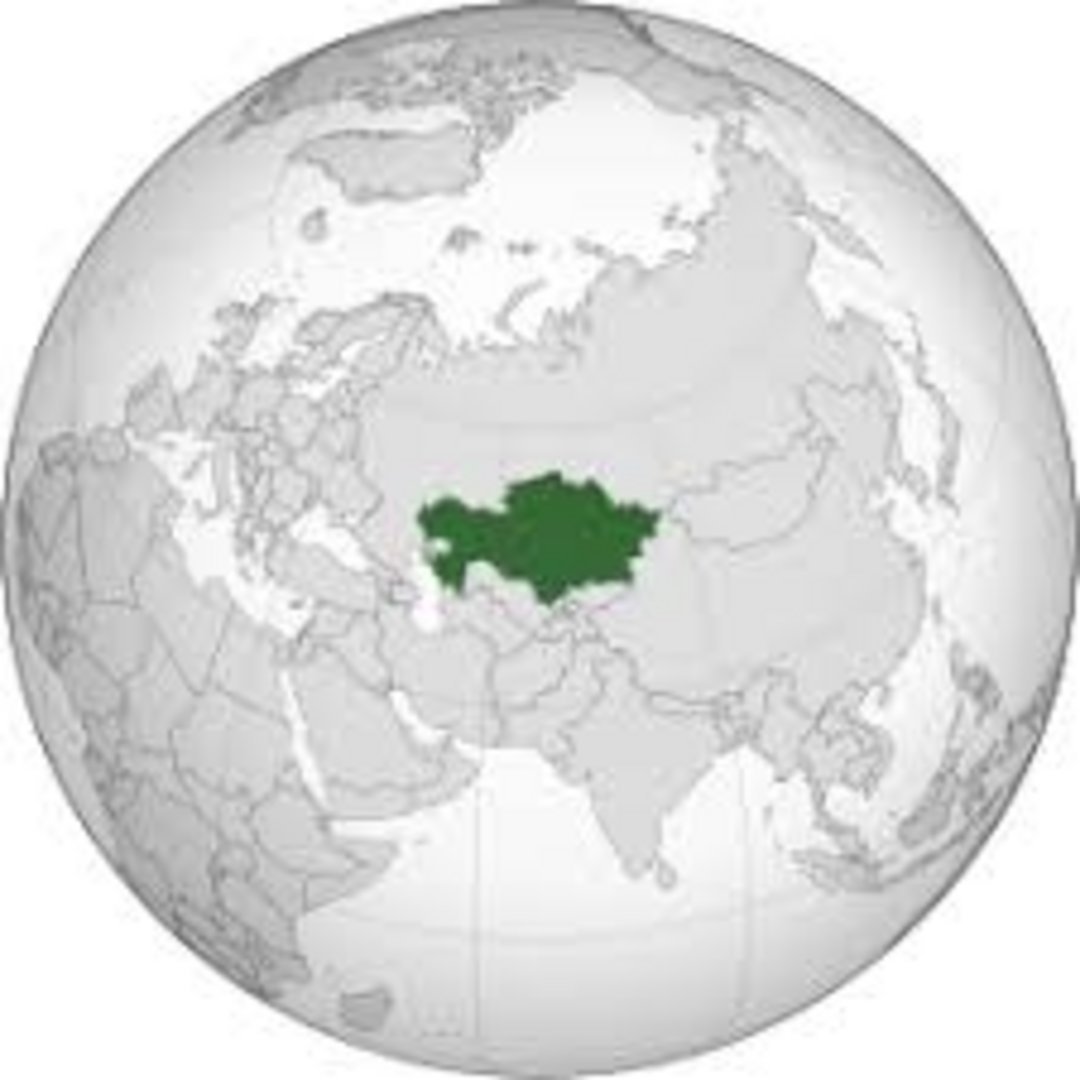
As Rare Earth Exchanges has repeatedly emphasized, the strategic value in rare earths is not found in the mine—it is created through separation, refining, metallurgical processing, alloy production, magnet manufacturing, and downstream industrial integration. Kazakhstan increasingly understands this reality. The central question is no longer whether the country possesses minerals. It is whether Kazakhstan can build enough processing capacity to capture value before those minerals are once again absorbed into China's dominant industrial ecosystem.
Why Kazakhstan Matters Now
The June 2026 C5+1 Critical Minerals Dialogue and Astana Mining & Metallurgy Congress (opens in a new tab) revealed a notable shift in Kazakhstan's posture. Government officials repeatedly stressed that future partnerships must include:
- Processing facilities
- Technology transfer
- Metallurgical expertise
- Research centers
- Workforce development
- High-value manufacturing
This mirrors a theme Rare Earth Exchanges highlighted in its June 2026 analysis, Kazakhstan Wants More Than Mines—It Wants a Seat at the Industrial Table. Kazakhstan is no longer seeking merely to export ore. It seeks to move up the value chain.
The Geology Is Real
Kazakhstan's mineral endowment is substantial.
Government sources report more than 9,000 mineral deposits representing over 100 commodity types. The country already supplies Europe with critical materials including:
- Titanium
- Chromium
- Copper
- Beryllium
- Tantalum
- Manganese
- Phosphorus
Rare earth potential is increasingly attracting attention.
Official sources and reports (opens in a new tab) indicate approximately 15 known rare earth deposits, with 11 currently under some form of subsoil-use licensing. As cited by government sources (opens in a new tab), many occur alongside uranium systems, where REEs historically remained uneconomic to extract because uranium drove project economics.
The Most Important Rare Earth Targets
Kuirektykol
Among Kazakhstan's most discussed rare earth prospects.
Government estimates suggest approximately 28.2 million tonnes of rare-earth-bearing material. Infrastructure and development planning are reportedly underway. Examples include the Shok-Karagay Ore Fields (opens in a new tab) and Karaganga (opens in a new tab).
However, investors should exercise caution.
The resource has not yet been validated under internationally recognized standards such as:
- JORC
- NI 43-101
Until such work is completed, these figures should be viewed as indicative rather than bankable.
Zhana Kazakhstan Discovery
Announced (opens in a new tab) in 2025, this discovery generated significant international attention.
Reported figures include:
- More than 20 million tonnes of REE-bearing material
- Average grades near 700 ppm rare earth oxides
- Presence of neodymium, yttrium, cerium, and lanthanum
Again, the challenge is verification.
The discovery demonstrates geological potential, but investors should await detailed metallurgical studies and internationally compliant resource statements before assigning meaningful project value.
Shok-Karagay
As cited above, perhaps the most academically significant REE target.
Recent peer-reviewed research describes Shok-Karagay as an ion-adsorption clay-style rare earth system containing:
- Monazite
- Xenotime
- Yttrium-bearing phases
The deposit style matters.
China's southern ion-adsorption clay deposits have historically supplied much of the world's heavy rare earth elements. Consequently, any credible clay-hosted REE discovery outside China immediately attracts strategic interest.
Beyond Rare Earths: The Hidden Critical-Mineral Story
The investment case for Kazakhstan extends far beyond rare earths.
Uranium
Kazakhstan remains the world's largest uranium producer through Kazatomprom and its network of in-situ recovery operations.
Beryllium, Tantalum, and Niobium
The Ulba Metallurgical Plant already operates one of the most sophisticated rare-metals processing facilities outside China.
Gallium
Kazakhstan may soon emerge as one of the world's most important non-Chinese gallium suppliers through initiatives associated with Eurasian Resources Group.
Tungsten
State-backed processing initiatives now seek domestic conversion into higher-value ammonium paratungstate rather than simple concentrate exports.
The Reality Check: There Is No Chinese-Scale REE Industry Yet
This is the single most important takeaway for investors.
Despite promising deposits and growing government support, Kazakhstan does not currently possess:
- Large-scale commercial REE separation
- Commercial REE metal production
- Magnet alloy manufacturing
- NdFeB magnet manufacturing
- Integrated mine-to-magnet supply chains
In fact, public commentary from Kazakhstan's own metallurgy experts stated as recently as 2024 that no meaningful commercial rare-earth production was occurring domestically. That distinction matters enormously, as a rare earth deposit is not a rare earth industry.
China spent nearly four decades building its dominant position through processing expertise, environmental tolerance, technical workforce development, and relentless downstream investment. Kazakhstan is still in the early innings of that journey. Yet not only is the potential in place, the historical factors and forces are driving toward the nation.
Signs That Processing Is Finally Becoming a National Priority
The encouraging news is that Kazakhstan appears to understand the challenge.
Recent initiatives include:
$470 Million Exploration Initiative
Government funding aimed at accelerating geological exploration, digitization, and AI-assisted resource mapping.
$1 Billion Critical Minerals Financing Program
Launched through the Development Bank of Kazakhstan to support extraction, refining, and higher-value production.
EU Technology Partnerships
Collaborations involving hydrometallurgy, solvent extraction, pilot-scale refining, and sustainable metallurgy.
SARECO Revival
As cited by Rare Earth Exchanges, renewed interest in the Stepnogorsk processing facility could provide Kazakhstan with a rare foundation of existing REE processing infrastructure.
REEx Assessment: Opportunity Meets Execution Risk
Rare Earth Exchanges has consistently argued as part of its Great Powers Era 2.0 thesis that the next decade will be defined not by who owns deposits, but by who controls processing.
Kazakhstan has several advantages:
- Strong geological endowment
- Strategic location between Europe and Asia
- Political willingness to industrialize
- Growing Western support
- Existing metallurgical expertise
- Established uranium and rare-metals sectors
However, significant challenges remain:
- Limited separation capacity
- Lack of commercial magnet manufacturing
- Unproven REE project economics
- Need for technical workforce expansion
- Dependence on foreign technology and capital
- Competition from China's established ecosystem
The opportunity is real. So is the execution risk.
Investor Bottom Line
Kazakhstan should not be viewed as a replacement for China today. It should be viewed as one of the most credible long-term diversification opportunities emerging outside China. The country already possesses strategic importance in uranium, beryllium, tantalum, niobium, tungsten, and gallium. Rare earths could become the next pillar—but only if Kazakhstan succeeds in building the midstream and downstream capabilities that ultimately determine who captures value.
For investors, the key indicators to watch are no longer exploration announcements.
Watch for:
- Funding for separation planning projects.
- Separation feasibility initiatives.
- Separation plants commissioned.
- Solvent extraction capacity built.
- Rare-earth metals produced domestically.
- Magnet-alloy capability established.
- Long-term Western offtake agreements signed.
- Internationally compliant resource statements published.
When those milestones begin appearing, Kazakhstan's rare earth story moves from geological promise to industrial reality.
Until then, Kazakhstan remains one of the most promising—but still unfinished—critical mineral stories in Great Powers Era 2.0.
Did You Know
Did you know that Rare Earth Exchanges (REEx) has launched the REEx Marketplace (opens in a new tab)—the first platform purpose-built to bring greater transparency, accessibility, and connectivity to the global rare earth element and critical minerals supply chain? Our mission is straightforward: accelerate diversification away from concentrated supply-chain dependencies by helping miners, processors, manufacturers, traders, investors, and end users connect more efficiently. Beyond the marketplace, REEx is building what we believe will become the world's most comprehensive database of critical mineral participants, mapping the entire value chain from upstream exploration and mining, through midstream separation, refining, and metal production, to downstream magnet manufacturing, advanced technologies, defense, energy, and industrial end markets. In an era where supply chains have become strategic assets, REEx is creating the infrastructure needed to improve visibility, strengthen partnerships, and support the development of resilient, non-China-centric critical mineral ecosystems.
Register today: REEx Marketplace™ (opens in a new tab)


0 Comments
No replies yet
Loading new replies...
Moderator
Join the full discussion at the Rare Earth Exchanges Forum →