
Highlights
- CREIA reported NdPr oxide at US$99–102/kg and terbium metal as high as US$1,121/kg on June 22, 2026
- Heavy rare earth exports from China remain severely constrained, with near-zero shipments of key materials to Japan in May
- The ex-China rare earth market lacks transparency, with most deals done via private bilateral contracts that may not reflect real market-clearing prices
- The US$110/kg NdPr floor set by the MP Materials DoD deal does not constitute an industry-wide benchmark despite widespread assumptions
- Mining alone cannot solve Western supply-chain vulnerability—separation, metallization, and magnet manufacturing remain the critical chokepoints
Today we cover Beijing’s price signal, yet not a global or “ex-China” benchmark. The China Rare Earth Industry Association (CREIA) reported its June 22, 2026 Rare Earth Price Index at 259.5, using 2010 as the base year of 100. The number signals that Chinese rare earth prices remain elevated, especially for heavy rare earths, but investors should not mistake this for a clean global market price. China’s rare earth market is shaped by quotas, state stockpiles, export licensing, environmental controls, national security policy, and industrial direction. In other words, the index is best read as a state-linked industrial signal, not true free-market price discovery.
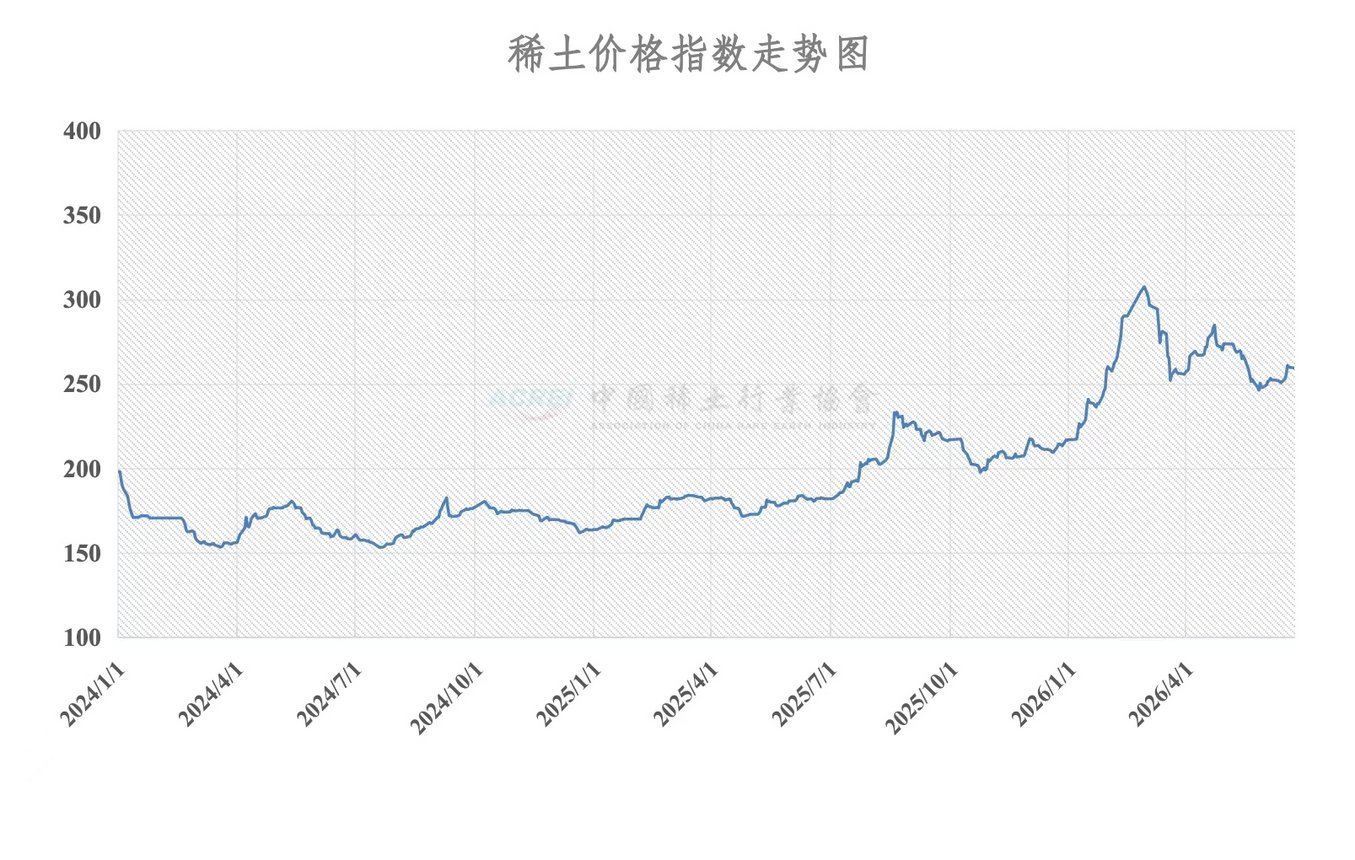
June 22 China Prices, Converted to U.S. Dollars
Using ¥7.15 = US$1.00, CREIA reported NdPr oxide at ¥707.7–727.7/kg, or about US$99–102/kg. NdPr metal was ¥865.8–885.8/kg, or US$121–124/kg. Heavy rare earths remain far more stressed. Dysprosium oxide was ¥1,390–1,430/kg, or US$194–200/kg. Dysprosium metal was ¥1,760–1,780/kg, or US$246–249/kg. Terbium oxide stood at ¥6,405–6,465/kg, or US$896–904/kg, while terbium metal reached ¥7,915–8,015/kg, or US$1,107–1,121/kg. Yttrium oxide was listed at ¥55–59/kg, or only US$7.70–8.25/kg, but availability can be a very different question from posted price.
The Western Price Gap Can Be Severe
For U.S., European, and Japanese buyers, the China number may not be executable. Some products, particularly dysprosium, terbium, and yttrium, can be difficult to secure outside China at posted China-equivalent levels or, in some cases, at any price. Recent restrictions have left some heavy rare earth flows highly constrained, including near-zero Chinese exports of key heavy rare earths to Japan in May.
That is one reason why Western buyers may face prices several times higher than China’s domestic reference prices once scarcity, qualification, delivery risk, financing, purity, magnet-grade specifications, and geopolitical premiums are included.
The Ex-China Pricing Mirage
The ex-China market is also not transparent. Only a minority of rare earth separation and refining occurs outside China, and most deals are private, bilateral, over-the-counter contracts with bespoke terms. A “weekly” or “monthly” ex-China price can therefore exaggerate certainty.
Pricing agencies may collect snapshots from traders, consumers, and producers, but those samples can be thin, skewed, or non-executable. Traders in particular may skew a particular price point.
Corporate buyers should be cautious: paying for a pricing report is not the same as discovering a real market-clearing price.
The U.S. government’s MP Materials deal established a US$110/kg NdPr price floor for MP’s NdPr products under a 10-year Department of Defense arrangement, but that does not automatically create an industry-wide benchmark, although many people talk as though it does.
Why This Matters
The business story is not simply that China’s index rose to 259.5. It is that rare earth pricing is now inseparable from industrial policy, defense policy, and supply-chain leverage. For the West, the lesson is blunt: mining alone does not solve the problem. Separation, metallization, alloying, magnet manufacturing, and trusted price discovery remain the real chokepoints.
Source disclaimer: This item originates from the China Rare Earth Industry Association, a state-linked industry body operating within China’s state-directed rare earth system. Its pricing should be independently verified and should not be treated as a neutral global benchmark.
Register today: REEx Marketplace™ (opens in a new tab)


0 Comments
No replies yet
Loading new replies...
Moderator
Join the full discussion at the Rare Earth Exchanges Forum →