
Highlights
- China built a commanding two-decade lead in African critical minerals by financing mines, roads, refineries, and export infrastructure, creating integrated supply chains from African deposits to Chinese manufacturing.
- African governments are demanding value-added processing over raw extraction, with Zimbabwe restricting lithium exports, the DRC promoting local refining, and South Africa pushing to move up the value chain.
- The U.S. and G7 are accelerating efforts to counter Chinese dominance through the Lobito Corridor, DRC-Zambia partnerships, and a broad critical minerals coalition launched since early 2025.
- Environmental incidents, community displacement, and labor disputes at Chinese-backed operations are elevating social license as a strategic variable that can make or break major mining projects.
- In Great Powers Era 2.0, ore is only the opening move—the real prize is controlling the full value chain combining geology, refining, infrastructure, capital, and community trust.
Great Powers Era 2.0 is not the old imperial scramble redrawn with new flags. It is a contest built around supply chains, industrial policy, export controls, subsidized capital, refining capacity, logistics corridors, and market access. Military power still matters, but the immediate battlefield is economic: who controls the mine, who finances the road and power plant, who owns the refinery, who secures the offtake, and ultimately who controls the materials needed for batteries, semiconductors, defense systems, and permanent magnets.
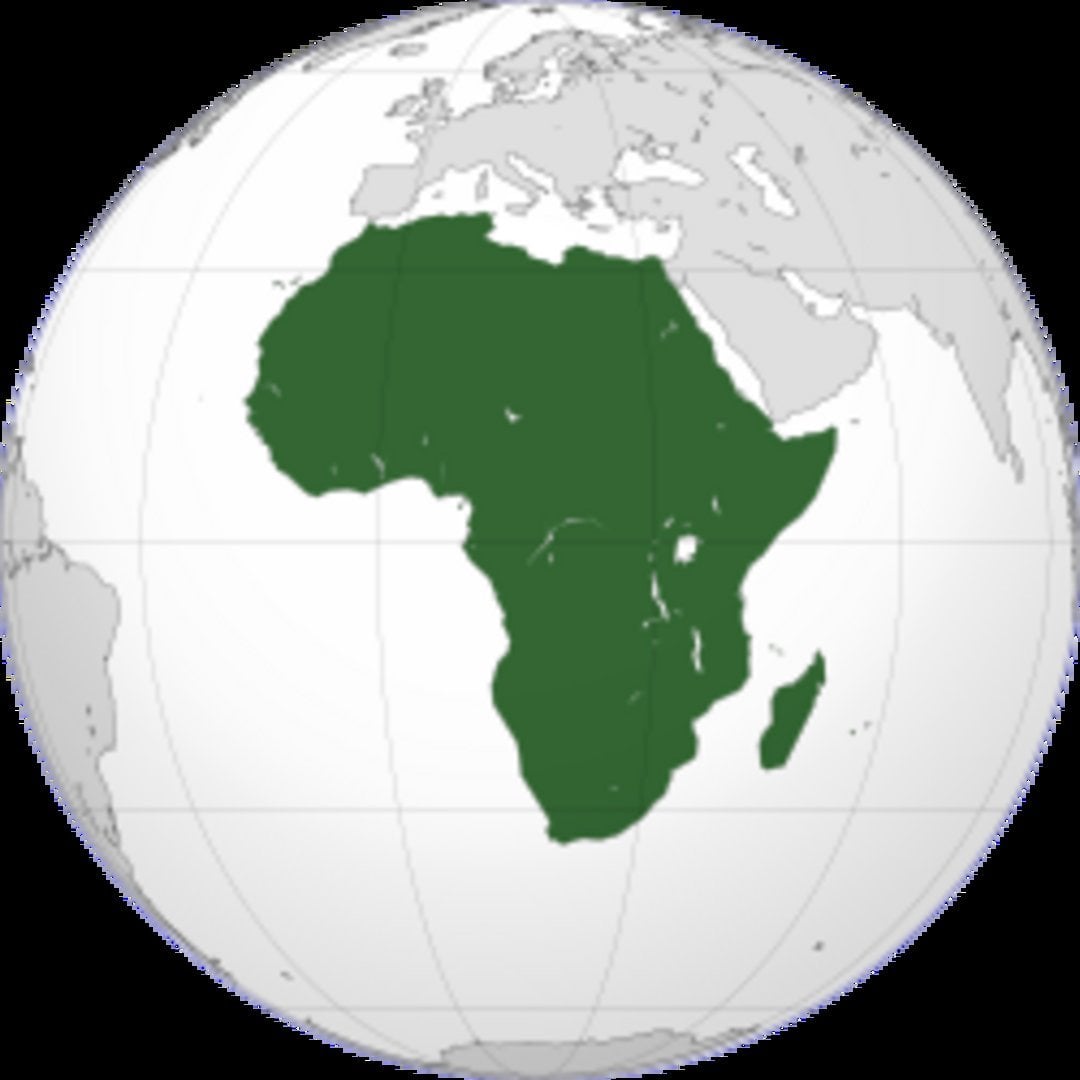
As Rare Earth Exchanges® has highlighted, Africa sits at the center of this contest. The continent is no longer viewed merely as a source of raw materials. It has become a strategic bargaining ground where governments, companies, labor, and communities are negotiating the terms of the next industrial order. Critical minerals—including cobalt, lithium, graphite, manganese, copper, and rare earths—have become geopolitical assets.
China entered this phase with a commanding lead. For two decades, Chinese companies and state-backed financiers built a position few competitors could match. Beijing did not simply acquire mineral deposits. Chinese firms financed roads, power projects, concentrators, refineries, and export infrastructure while accepting political and operational risks many Western investors avoided. The result was the creation of an integrated supply chain linking African mines directly to Chinese processing and manufacturing.
The Democratic Republic of Congo (DRC) illustrates the scale of that advantage. Chinese firms now dominate much of the country's copper and cobalt production, while Zimbabwe has emerged as a major Chinese-linked lithium hub. By 2025, Zimbabwe supplied roughly 15% of China's imported lithium concentrate, and Chinese firms controlled many of the country's most important lithium projects. Yet China's dominance is no longer uncontested.
Three forces are reshaping the landscape.
First, African governments increasingly want access to value-added activity such as processing, not just extraction. Zimbabwe has moved to restrict lithium concentrate exports in favor of domestic processing. The DRC has promoted local refining and downstream investment. South Africa has openly stated that it wants to move up the value chain rather than remain a supplier of raw materials.
Second, new competitors have entered the field. Since the beginning of the Trump administration's second term, the United States has accelerated efforts to secure alternative supply chains. Washington has deepened engagement with the DRC and Zambia, supported the Lobito Corridor, pursued processing partnerships in Kenya, and convened a broad critical minerals coalition. The G7 has similarly launched initiatives aimed at reducing dependence on dominant suppliers of rare earths and critical minerals.
Third, Chinese companies themselves are adapting. Rather than retreating, many are investing in local processing facilities, power infrastructure, and industrial partnerships designed to align with African governments' development priorities.
The deal flow since January 2025 reflects this transition.
Among the most important developments:
- Chinese-backed investors continued expanding Zimbabwe's lithium industry, including major processing investments at Sandawana, Arcadia, and Bikita.
- Shenghe Resources moved to secure control of Tanzania's Ngualla rare earth project, one of the world's largest undeveloped rare earth deposits.
- Sinomine Resource Group accelerated development of Zambia's Kitumba copper project.
- Chinese-backed lithium processing plants moved forward in Nigeria, signaling a shift from extraction toward industrialization.
- Zijin advanced the Manono lithium project in the DRC, positioning the country to become an emerging lithium producer.
- Mozambique inaugurated a major Chinese-backed graphite processing facility, expanding Africa's role in battery-material supply chains.
Perhaps the most underappreciated trend is that Chinese investment is increasingly shifting from simple resource acquisition toward a broader model combining mining, processing, power generation, and logistics infrastructure. And they have competition. Players from the West such as Pensana Plc now develop rare earth mining integrating local capital and talent in the Huambo Province of central Angola.
Importantly, Great Powers Era 2.0 is producing friction as well as investment.
In Zambia, a major spill at the Chinese-owned Sino-Metals Leach operation triggered environmental and political controversy (opens in a new tab). In the DRC, regulators suspended activities at a Huayou subsidiary following an industrial discharge incident (opens in a new tab). Environmental groups and community organizations have also raised concerns regarding pollution, displacement, compensation, labor practices, and water access at several major projects. These disputes matter because social license has become a strategic variable. Mines increasingly face risks not only from commodity prices and geology but also from local opposition, environmental scrutiny, and political backlash. REEx refers to the environmental and community stakeholders as a form of community capital: key for success.
Meanwhile, Beijing has strengthened its commercial position through trade policy.
China's decision to grant zero-tariff access to exports from African countries with diplomatic relations represents a significant development. What began as a diplomatic commitment has now been formally implemented through Chinese tariff policy. The move provides African exporters with preferential access to the world's largest manufacturing economy and reinforces China's broader economic influence across the continent.
Yet tariffs alone cannot solve Africa's central challenge. The real bottlenecks remain power, transportation, refining capacity, financing, and industrial capability, not to mention levels of corruption in some places that are not sustainable.
This is where the next phase of competition will be fought. The United States, Europe, Gulf states, India, Japan, and South Korea are all seeking greater access to African resources. Some are offering infrastructure financing. Others are pursuing processing partnerships, long-term offtakes, or supply-chain alliances. African governments increasingly recognize that they possess leverage and are attempting to use competition among major powers to secure greater local value creation.
China is not losing Africa. But Africa is raising the price of access. That’s one prediction that rides along with this next form of globalism in Great Powers Era 2.0: one that emphasizes resilience and security as much as efficiency. And therein lies America’s—and the broader West’s—opportunity for transformative industrial renewal.
For investors, policymakers, and industry leaders, that may be the defining reality of Great Powers Era 2.0. The winners will not be determined solely by who owns the best deposits. They will be determined by who can combine geology, refining, infrastructure, capital, political relationships, and community trust into resilient value-added supply chains. In this new era, ore is only the opening move. Control of the value chain is the real prize.
Register today: REEx Marketplace™ (opens in a new tab)


0 Comments
No replies yet
Loading new replies...
Moderator
Join the full discussion at the Rare Earth Exchanges Forum →