
Highlights
- Nigeria announced a polymetallic province in Kaduna State containing platinum group metals, rare earths, lithium, nickel, copper, and gold, but no NI 43-101 or JORC-compliant resource estimate has been published.
- Governance risk remains a critical barrier: federal mineral ownership does not guarantee land access, and artisanal mining, patronage networks, and security challenges complicate project execution.
- Community Development Agreements are a legal requirement under Nigerian mining law, and companies that neglect them face delays, protests, litigation, and threats to project economics.
- Investors should demand independent technical reports, metallurgy, processing flowsheets, and security assessments before treating the Kaduna discovery as a viable investment thesis.
Nigeria has announced the discovery of what it describes as a world-class polymetallic province in Kaduna State containing platinum group metals, rare earth elements, lithium, nickel, copper, and gold. The announcement is strategically important, but investors should distinguish government optimism from independently verified mineral economics. No internationally compliant resource estimate, metallurgy, economic assessment, or development plan has yet been released. Rare Earth Exchanges' key takeaway: the geology may prove significant, but Nigeria's governance challenges—including the gap between federal authority and local realities—remain among the country's largest investment risks.
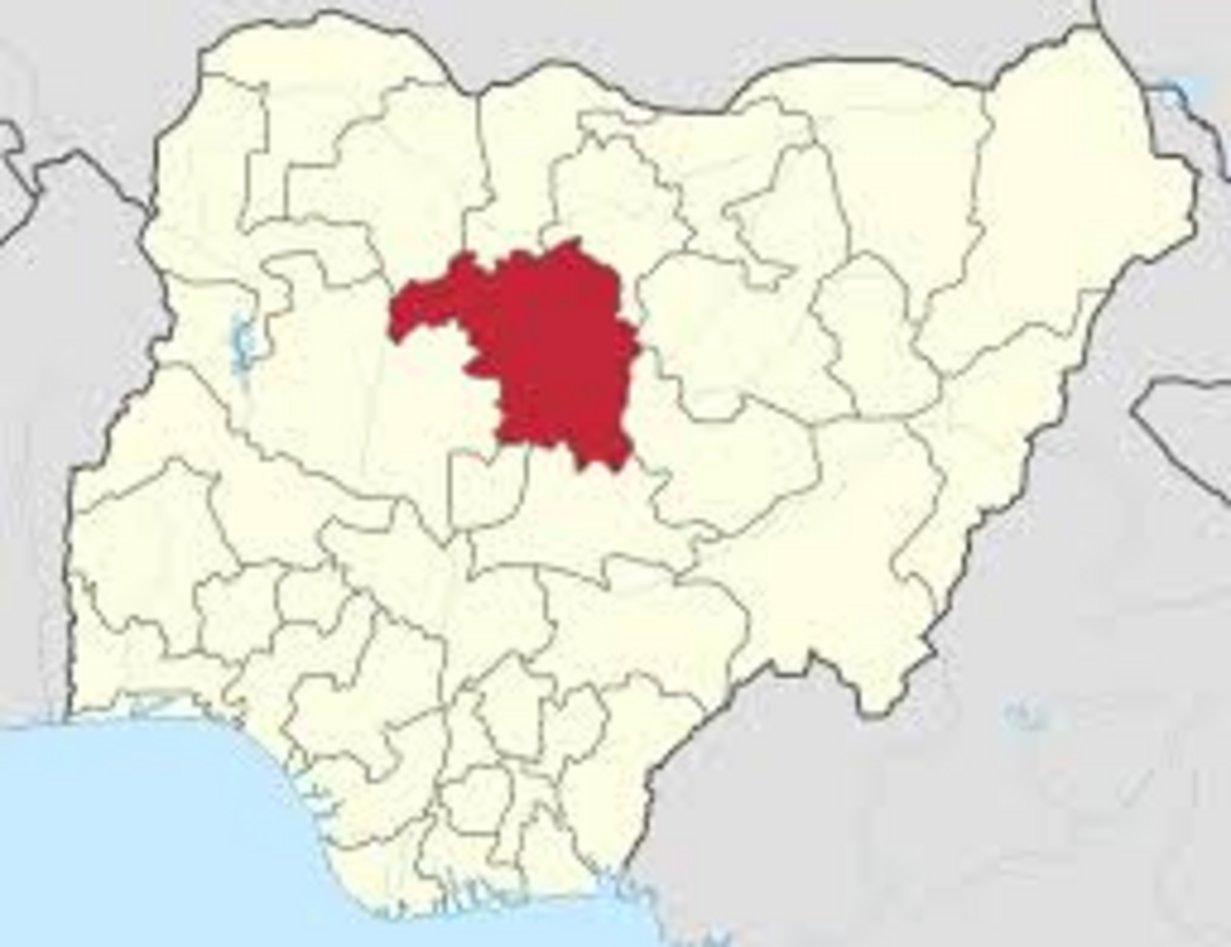
The State
Kaduna State lies in Nigeria's Northwest geopolitical zone but occupies a strategic position along the country's religious and commercial frontier, where the predominantly Muslim north meets the more Christian south. Home to more than 9 million people, Kaduna is governed by Uba Sani (opens in a new tab) of the All Progressives Congress (APC) (opens in a new tab) and has long served as one of Nigeria's military, educational, and industrial centers.
Agriculture remains the state's economic backbone—particularly cotton, maize, sorghum, groundnuts, and livestock—but Kaduna also supports manufacturing, defense industries, logistics, and an emerging mining sector.
Politically, influence is distributed across a complex network of federal institutions, the state government, traditional emirates and chiefdoms, local governments, business elites, and religious leaders.
The state is highly diverse, with the Hausa-Fulani (opens in a new tab) forming the largest population alongside more than 50 ethnic minorities, making Kaduna both culturally rich and periodically vulnerable to ethnic and religious tensions.
Although Nigeria's Constitution vests ownership of mineral resources in the Federal Government, mining projects frequently depend on cooperation from state authorities, traditional rulers, local communities, and land users.
Artisanal and illegal mining remains a persistent challenge across Kaduna and the wider northwest, often intertwined with informal patronage networks, local elites, organized criminal groups, and broader security concerns, including banditry and kidnapping. For investors, Kaduna offers genuine geological promise, but project success will depend as much on political stability, community engagement, and security as on the quality of the underlying ore body.
A Discovery Is Not Yet a Mine
Every mining boom begins with an exciting announcement. Far fewer become profitable mines.
Nigeria's Federal Government has unveiled what it calls a "world-class" polymetallic province in Kaduna State containing platinum group metals, lithium, rare earth elements, nickel, copper, and gold. Officials say exploration results were verified by the Nigerian Geological Survey Agency (opens in a new tab) and could elevate Nigeria's position in the global race for critical minerals.
That may ultimately prove true. But today, investors possess a headline—not yet an investment thesis.
Where the Data Ends—and the Marketing Begins
The announcement covered in Nigerian media such as PunchNg (opens in a new tab) deserves attention, but caution is warranted. No NI 43-101 or JORC-compliant mineral resource has been published. No ore grades, tonnage, mineralogy, metallurgical recoveries, preliminary economic assessment, or feasibility data have been released for independent review.
Likewise, while rare earth elements are listed among the discoveries, there is no indication of which rare earths are present, their concentrations, recoverability, or whether they represent an economically significant portion of the deposit.
Describing a project as "world-class" before these fundamentals are available is a political statement—not yet an investment conclusion.
The Hardest Ore Body Is Governance
Nigeria's mining challenge extends beyond geology. Under Nigeria's Constitution, mineral ownership resides with the Federal Government. In practice, however, successful mining projects often depend on cooperation from state governments, local communities, traditional authorities, landowners, and regional security actors. Across parts of Nigeria, illegal and artisanal mining continues despite federal oversight, with local patronage networks and informal operators often complicating enforcement.
Rare Earth Exchanges® maintains a network of mining and related contacts in Nigeria who confirm challenges with governance at local levels.
For investors, this creates an important distinction between legal authority and operational control.
Until governance becomes as predictable as geology, project execution will continue carrying above-average political and jurisdictional risk.
The REEx Investor Verdict
Nigeria deserves credit for pursuing domestic mineral processing rather than remaining solely a raw-material exporter. New lithium processing plants and refining investments suggest the government understands that long-term value lies in the midstream, not simply extraction. But announcements do not replace due diligence.
Investors now need compliant resource estimates, independent technical reports, metallurgy, processing flowsheets, financing strategies, infrastructure plans, security assessments, and evidence that federal reforms can be implemented consistently at the state and local levels.
Only then can markets determine whether Kaduna represents a genuine critical minerals breakthrough—or simply another promising discovery still waiting to become a mine.
Did You Know? Nigeria's Mining Licenses Don't Guarantee Mining Access
While Nigeria's Federal Government owns all mineral resources under the Constitution and the Nigerian Minerals and Mining Act, obtaining a federal mining license is only the beginning. Successful projects also depend on cooperation from state governments, traditional rulers, local communities, and surface landowners. State governors influence land access under the Land Use Act, companies must negotiate Community Development Agreements with host communities, and compensation must be agreed with affected land users before mining begins. For investors, this means that a federal mineral title grants rights to the minerals—but not automatic access to the land. Projects that fail to build local support frequently encounter delays, litigation, community opposition, or operational disruptions.
What About Community Development Deals?
Dentons ACAS Law, a premier, full-service commercial law firm based in Nigeria, emphasizes (opens in a new tab) that CDAs have become a legal requirement for qualifying mining projects in Nigeria under the Nigerian Minerals and Mining Act (opens in a new tab) and accompanying regulations. Rather than treating a CDA as a corporate social responsibility exercise, the firm argues that it should be viewed as a strategic, legally binding framework that defines the relationship between a mining company and its host community. A well-structured agreement should identify community priorities, establish measurable commitments for local employment, infrastructure, education, healthcare, environmental stewardship, and grievance resolution, while creating mechanisms for regular consultation and transparent implementation.
Omolola Coker, Dentons

Source: Dentons
Dentons further warns that companies that fail to negotiate, implement, or periodically review effective CDAs face more than regulatory non-compliance. Poor community engagement can lead to operational delays, protests, litigation, reputational damage, and increased security costs that threaten project economics. Conversely, companies that approach CDAs as part of their long-term social license to operate can reduce project risk, strengthen relationships with local stakeholders, improve investor confidence, and create a more stable environment for sustainable mining operations.
Register today: REEx Marketplace™ (opens in a new tab)


0 Comments
No replies yet
Loading new replies...
Moderator
Join the full discussion at the Rare Earth Exchanges Forum →