
Highlights
- Chinese firms Chifeng Jilong Gold Mining and Xiamen Tungsten acquired a 90% stake in the Mengkang rare earth project in Laos' Xiangkhouang Province for US$19 million.
- A 2024 wastewater discharge by Laos-China Rare Mineral Development Company North 2 Ltd. contaminated two rivers, affected 36 villages, and triggered government inspections.
- The Stimson Center has identified nearly 800 suspected unregulated mining sites across Laos, Myanmar, and Cambodia, with 77 rare earth mines draining into the Mekong basin.
- Japan signaled growing strategic interest in Laos through its POWERR Asia initiative, positioning itself as a potential counterweight to China's dominant mining influence.
- Laos' opaque disclosure regime means critical project data surfaces through Chinese corporate filings, NGO research, and satellite imagery rather than official government channels.
Rare Earth Exchanges® has been closely tracking developments in Laos and sees a clear pattern emerging: the government is tightening its oversight of the nation's mining sector just as Chinese investment and cross-border mineral activity continue to expand. Publicly available Lao government sources (opens in a new tab) point to a coordinated push in 2026, with the Ministry of Industry and Commerce's Department of Geology and Mines issuing a steady stream of mining-related announcements. That effort has coincided with an April visit by a Chinese mining investor delegation, a Lao-Chinese seminar on mining and environmental management in May, and heightened government attention in June to illegal mining, river protection, and environmental enforcement. Taken together, these developments suggest Laos is seeking to balance increased mineral development with stronger governance, greater environmental scrutiny, and closer oversight of one of its most strategically important industries.
Chinese Investors Delegation and Laos Ministry of Industry and Commerce
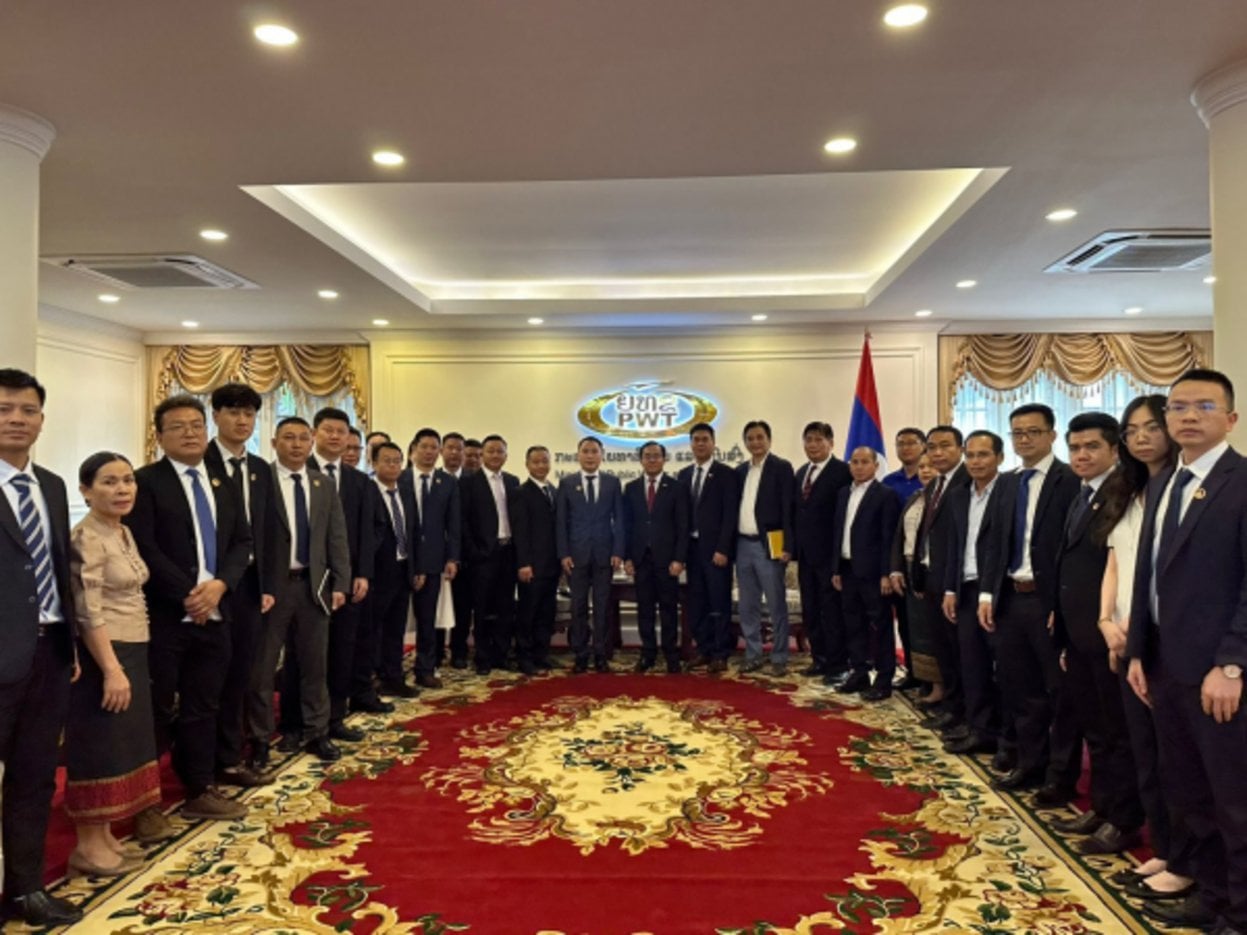
Source: Lao News Agency
Japan and Laos Getting Closer
During Prime Minister Sonexay Siphandone's (opens in a new tab) June 2026 visit to Tokyo, Laos and Japan reaffirmed their Comprehensive Strategic Partnership (opens in a new tab), agreeing to deepen cooperation in trade, investment, and economic development. Both governments identified agriculture, advanced manufacturing, clean energy, mining, tourism, and technology as priority sectors while also emphasizing Japan's continued support for Laos through infrastructure, healthcare, human resource development, UXO clearance, and technical assistance. The visit also included meetings with Japanese business leaders and parliamentary representatives, underscoring both nations' interest in expanding commercial ties.
Prime Minister Sonexay Siphandone and Prime Minister Sanae Takaichi Meet in Tokyo
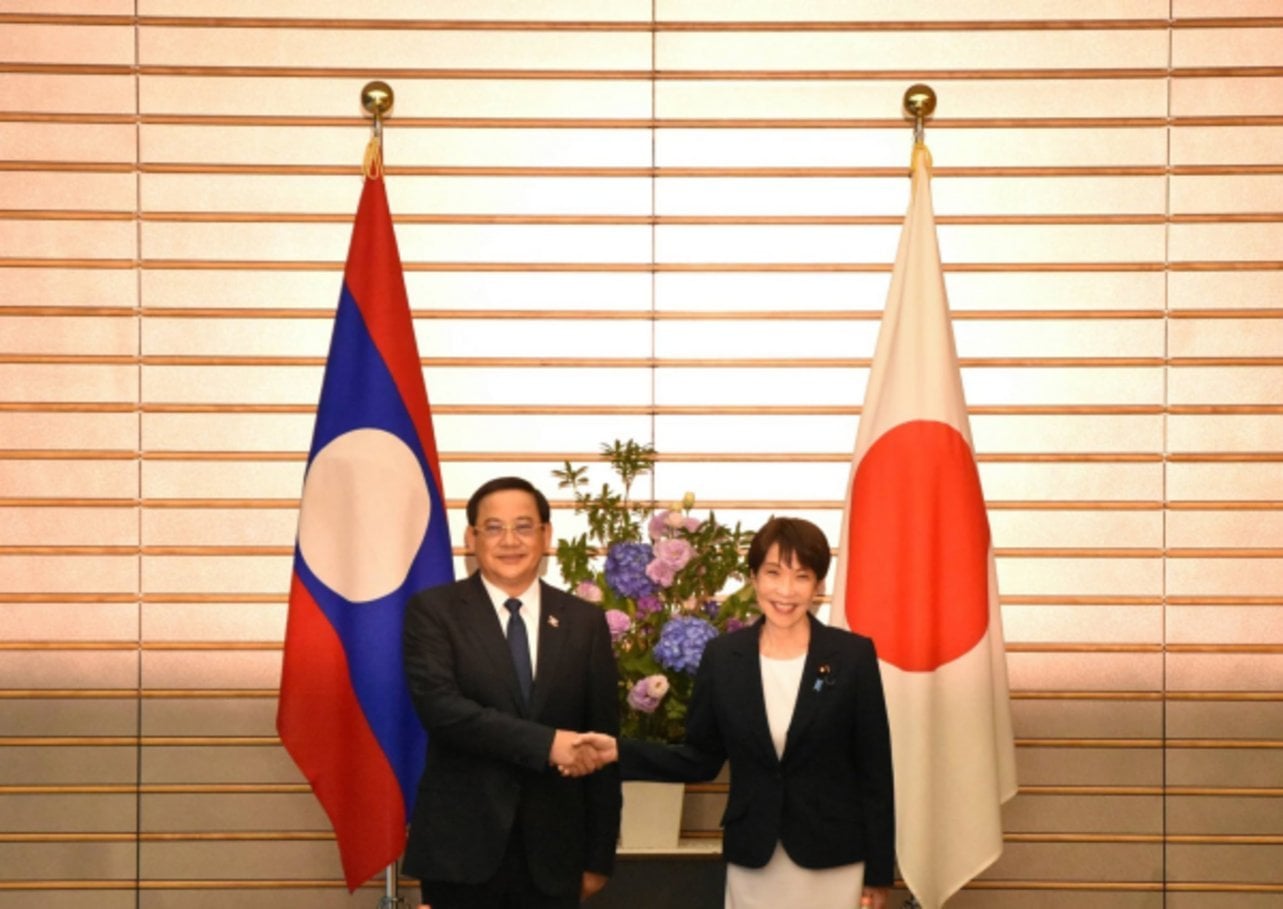
Source: Lao News Agency
On the Ground in Laos
The named rare-earth operators are still easier to identify through older public-interest reporting and Chinese corporate disclosures than through fresh Lao official notices. The clearest named Houaphanh operator remains Laos-China Rare Mineral Development Company North 2 Ltd (opens in a new tab)., while the clearest Xiangkhouang/Muang Kham project trail runs through China Investment Mining Laos, China Investment Rare Earth Mining Co., China Investment Rare Earth Mining Xiangkhuang Co., and a Chinese ownership chain involving Shanghai Chijin Xiawu, Chifeng Jilong Gold Mining (opens in a new tab), and Xiamen Tungsten.
In March 2024, Chinese mining company Chifeng Jilong Gold Mining and state-backed Xiamen Tungsten strengthened China's rare earth supply chain by acquiring a 90% stake in China Investment Mining Laos Sole Co. through their joint venture, Shanghai Chijin Xiawu Metal Resources (opens in a new tab). The US$19 million transaction gave the partners control of the Mengkang rare earth project in Laos' Xiangkhouang Province (opens in a new tab), a mine designed to produce approximately 3,675 tonnes of mixed rare earth oxides annually from reserves totaling more than 15,000 tonnes. The deal is strategically significant because it extends China's vertically integrated rare earth ecosystem beyond its borders, securing additional upstream resources that can feed Chinese separation, refining, and magnet manufacturing. It also underscores Laos' growing importance as a source of heavy and medium rare earths at a time when Beijing is seeking to diversify raw material supplies while maintaining its dominant position in the global rare earth value chain.
In early 2024, Laos-China Rare Mineral Development Company North 2 Ltd., operating in northeastern Laos, contaminated the Van and Xam Rivers after discharging polluted wastewater (opens in a new tab), causing a major fish kill and affecting 36 villages. Water tests detected cyanide, zinc, copper, iron, and elevated acidity, prompting villagers to demand government action. After more than two months of cleanup, Lao authorities announced that repeated testing indicated the rivers were again safe for farming and household use, while the mining company agreed to meet with affected residents to negotiate compensation for damaged crops, livestock, and other losses.
The company also pledged stronger environmental safeguards and said it would face permanent closure if a similar incident occurred again. Although many villagers welcomed the company's unusual willingness to accept responsibility—a rarity in Laos, where foreign mining projects often face criticism for weak oversight and inadequate compensation—some remained skeptical about the long-term environmental impacts and awaited further water testing.
The incident underscores both the environmental risks associated with rare earth mining and the growing scrutiny of Chinese-backed resource projects in Laos, a country that has become increasingly important to China's critical minerals supply chain.
What's News
The Lao state is visibly active around mining, but based on the last few months we have not found any new Lao–Chinese rare-earth JV or concession. This update is based on our framing of Houaphanh (opens in a new tab) and Xiangkhouang as the key pressure points, but with firmer identification of the Chinese corporate structures around the Muang Kham project.
On April 23, a delegation from 12 leading Chinese firms met Public Works and Transport Minister Leklai Sivilay (opens in a new tab), and the firms were drawn from infrastructure, energy, and mining. On April 30, Lao News Agency reported Mekong River Commission monitoring and specifically said intensified monitoring was underway in Bokeo and Luang Prabang. On May 12, the Lao-language Ministry of Industry and Commerce portal said its Department of Geology and Mines had jointly held an international seminar with a Chinese industry association on managing and reducing mining-related environmental impacts. On June 23 and 24, Lao News Agency reported a national dialogue on sustainable mining governance and a provincial crackdown on illegal mining in Savannakhet.
Sampling of Events
| Lao-side actor | Chinese counterpart or JV | Activity | Location | Start/recent date |
|---|---|---|---|---|
| Ministry of Industry and Commerce and its Department of Geology and Mines | China Inorganic Salts Industry Association | Mining governance and environmental-impact management seminar | Vientiane | 12 May 2026 |
| Ministry of Public Works and Transport, led by Leklai Sivilay | Delegation from 12 Chinese firms | Investment scoping across infrastructure, energy, and mining | Vientiane | 22–23 Apr 2026 |
| Prime Minister Sonexay Siphandone | Japanese investors, not Chinese | Competing external capital outreach in infrastructure, manufacturing, logistics, renewables | Tokyo / Laos policy signaling | 14 Jun 2026 |
| National Assembly Vice President Kongkeo Xaysongkham, NIESS, WWF-Laos | No named company | Policy dialogue on mining governance, law, and river integrity | Vientiane / Mekong tributaries | 23 Jun 2026 |
| Houaphanh provincial and Xam Neua district authorities; People’s Council of Houaphanh Province | Laos-China Rare Mineral Development Company North 2 Ltd. | Rare-earth mining, pollution response, inspections, compensation process | Xam Neua and Houamuang districts, Houaphanh | pollution incident 22 Feb 2024; still the clearest named Houaphanh operator |
| Lao mining regulator cited in 2024 reporting | Laos-China Rare Mineral Development Company North 2 Ltd. | Suspension threat pending inspection/testing | Houaphanh | May 2024 |
| Xiangkhouang / Muang Kham project area under Lao rare-earth licenses | Shanghai Chijin Xiawu, backed by Chifeng Jilong Gold Mining and Xiamen Tungsten | Experimental mining and processing plus prospecting | Muang Kham area, Xiangkhouang | licenses from Dec 28 2022; acquisition announced Mar 4 2024 |
| Phaxay district authorities in Xiangkhouang | Tong Lee Seung Industrial Development Company | Rare-earth digging / land compensation dispute | Phaxay district, Xiangkhouang | 2022 |
| Northern Lao monitoring agencies working with the MRC framework | No Company named | Arsenic and river-quality monitoring in downstream Lao stretches | Bokeo and Luang Prabang | Feb–Mar 2026 monitoring, reported 30 Apr 2026 |
Key Players
The principal Lao government institution overseeing mining is the Ministry of Industry and Commerce (opens in a new tab), whose Department of Geology and Mines has emerged as the country's primary public-facing mining authority. Throughout 2026, the ministry has published mining policy updates, highlighted northern mineral opportunities, and co-hosted a Lao-Chinese mining and environmental seminar. Minister Malaythong Kommasith has featured prominently in these initiatives.
Mining also intersects with the Ministry of Public Works and Transport (opens in a new tab). In April 2026, Minister Leklai Sivilay hosted a delegation representing 12 Chinese mining and energy companies, underscoring Beijing's continued engagement with Laos' infrastructure and resource sectors. While the meetings did not announce new rare earth agreements, they demonstrate that Chinese mining interests remain closely connected to senior Lao policymakers.
At the national level, Prime Minister Sonexay Siphandone is pursuing a broader foreign investment strategy, strengthening ties with Japan as cited above, while continuing to engage Chinese partners. This reflects Laos' effort to diversify international investment without displacing China's dominant role in mining and logistics.
Rare Earth Projects
The best-documented project in Houaphanh Province is operated by Laos-China Rare Mineral Development Company North 2 Ltd., a joint venture approximately 55% controlled by Chinese investors. The company reportedly holds a 500-hectare concession within a broader 198-square-kilometer rare earth project and has invested roughly US$41 million. Following a reported wastewater discharge in 2024, villagers petitioned provincial authorities, prompting inspections and a temporary suspension pending environmental testing.
Xiangkhouang Province presents a clearer corporate picture through public filings by Chifeng Jilong Gold Mining. Those documents show that CHIXIA Laos Holdings acquired 90% of China Investment Mining Laos Sole Co., which controls major interests in China Investment Rare Earth Mining Co. and China Investment Rare Earth Mining Xiangkhouang Co.
Shanghai Chijin Xiawu Metal Resources Co. Ltd., established in 2022, is jointly owned by Chifeng Gold (51%) and state-backed Xiamen Tungsten (49%). The venture was created specifically to develop gold and rare earth assets in Laos and operates through CHIXIA Laos. Corporate filings identify Zhao Qiang as head of CHIXIA Laos, Fu Xusheng as legal representative of Shanghai Chijin Xiawu, Dai Jianliang as head of CI Properties, and Chen Yonghai as legal representative of China Investment Mining Laos.
The filings indicate the Laos portfolio includes rare earth prospecting rights in Xiangkhouang along with processing and experimental mining licenses. Independent Chinese reporting has likewise described the joint venture as a strategic platform for developing medium- and heavy-rare-earth resources in cooperation with the Lao government.
The venture has also drawn growing environmental scrutiny. Investigations and satellite imagery have linked affiliated operations in Myanmar to alleged toxic runoff and cross-border pollution, while rare earth activities in Laos have generated increasing attention over their potential environmental and community impacts. Together, these projects illustrate both China's expanding critical minerals strategy in Southeast Asia and the governance challenges accompanying that expansion.
Satellite corroboration, transparency, and risk
Independent and NGO sources significantly strengthen the case that northern Laos is not a rumor market but an active rare-earth zone. AP reported (opens in a new tab) in April that the Stimson Center has identified nearly 800 suspected unregulated rare-earth and other mining sites (opens in a new tab) across Laos, Myanmar, and Cambodia, with 26 Laos sites tracked by Regan Kwan.
Reuters separately summarized Stimson's broader mine-tracking work and said satellite analysis identified 77 rare-earth mines draining into the Mekong basin. For project-level corroboration, the most important image-backed evidence is the Houaphanh pollution case and the Muang Kham/Xiangkhouang corporate chain. Radio Free Asia's reporting on the Houaphanh spill names Laos-China Rare Mineral Development Company North 2 Ltd. and specifies its villages and concession size. SHRF, while an NGO rather than an official source, goes further by linking recent satellite imagery near Muang Kham to China Investment Mining Company and tying that company to the Chinese ownership chain later visible in the Chifeng announcement.
From this ongoing survey it is apparent that Laos offers Chinese partners three things at once: geology, frontier-style permitting space, and strong outbound logistics to China.
But the country also presents serious due-diligence problems: public disclosure is patchy, permit status is hard to verify, provincial and community impacts can surface through RFA or NGOs before they appear in official channels, and downstream water-quality monitoring is increasingly salient in Bokeo and Luang Prabang. That combination raises regulatory, ESG, and off-take risk even where a Chinese corporate filing makes the ownership chain look clean.
What about USA
The United States is currently represented in Laos by Chargée d'Affaires ad interim Michelle Y. Outlaw (opens in a new tab), following the completion of Ambassador Heather Variava's (opens in a new tab) mission in January 2026. No new U.S. ambassador to the Lao PDR has yet been confirmed.
While the United States has not entered into a major standalone bilateral critical minerals agreement with Laos, it has increasingly engaged the country through broader regional initiatives focused on supply chain resilience, responsible mining, and reducing dependence on China's dominance in critical minerals. Washington has promoted these objectives through multilateral efforts such as the Forum on Resource Geostrategic Engagement (FORGE)—a U.S.-led international initiative that succeeded the Minerals Security Partnership—and regional Critical Minerals Ministerials (opens in a new tab) involving ASEAN partners.
Although the U.S. has signed formal critical minerals agreements with several Southeast Asian countries, comparable bilateral arrangements with Laos have not yet emerged.
Nevertheless, given the Great Powers Era 2.0 thesis, Laos has become increasingly relevant to U.S. policymakers because of its growing role in regional mineral production and the rapid expansion of Chinese-backed rare earth mining. Research organizations, including the Stimson Center, have highlighted concerns over illegal rare earth extraction, environmental degradation, and China's expanding influence over Laos' mineral sector.
Beyond rare earths, Laos is an important producer of bismuth, potash, silicon, and tin, commodities that feed into global technology and industrial supply chains, making the country an increasingly important—if still underappreciated—part of the broader critical minerals landscape.
Conclusion
Laos is no longer an obscure frontier in the global rare earth story—it is rapidly becoming a strategic extension of China's heavy rare earth supply chain. Our investigation found no evidence of major new rare earth concessions or joint ventures over the past several months. Instead, the more significant development is the steady institutionalization of Chinese influence through government engagement, infrastructure integration, established mining operations, and vertically aligned corporate ownership.
While China remains Laos' dominant mining and infrastructure partner, Japan, as delineated above, signaled its intention to become a more significant strategic counterweight. During high-level bilateral meetings in Tokyo in May and June 2026, Japanese and Lao leaders agreed to strengthen cooperation on energy security, critical minerals, and resilient supply chains under Japan's POWERR Asia initiative (opens in a new tab) (Partnership on Wide Energy and Resources Resilience Asia). Prime Minister Sonexay Siphandone simultaneously encouraged greater Japanese investment in renewable energy, manufacturing, logistics, and infrastructure, while the Lao Ministry of Energy and Mines advanced green gas projects with Japanese firms, including Hitachi Zosen. Although these initiatives do not yet represent direct Japanese investment in Laos' rare earth mining sector, they demonstrate that Tokyo increasingly views Laos as an important partner in diversifying regional critical mineral supply chains and reducing dependence on any single source of strategic materials.
Laos' public disclosure regime remains somewhat opaque. Much of what investors know about operating companies, ownership structures, environmental incidents, and project expansion comes not from official Lao disclosures, but from Chinese corporate filings, investigative journalism, satellite imagery, and NGO research or, importantly, human networks.
Such a transparency gap does raise concern. As demand for dysprosium, terbium, and other heavy rare earths accelerates, Laos is positioned to become an increasingly important upstream supplier. Whether the country evolves into a responsible participant in the global critical minerals and rare earth element economy—or remains primarily a source of raw materials feeding China's refining and magnet industries—will depend on stronger governance, greater transparency, more rigorous environmental oversight, and a willingness to diversify investment beyond a single dominant partner. It will also take active engagement from other nations as we enter the Great Powers Era 2.0. Other than the interesting recent Japan-Laos discussions, for now, the evidence suggests Beijing is succeeding in extending its rare earth ecosystem across the border while retaining control of the highest-value stages of the supply chain.
Did You Know? Japan has launched the POWERR Asia (Partnership on Wide Energy and Resources Resilience Asia) initiative, a proposed $10 billion framework designed to strengthen energy security and supply chain resilience across Asia. Announced at the Asia Zero-Emission Community (AZEC) Plus Summit, the initiative aims to help partner nations finance emergency fuel imports during global disruptions while investing in strategic petroleum reserves, LNG, biofuels, next-generation clean energy, and more diversified supply chains. Backed by Japanese financial institutions including JBIC and NEXI, the program reflects Tokyo's broader strategy to reduce geopolitical energy risks while deepening economic partnerships across the region.
Did you know Rare Earth Exchanges® is developing REEx Connect? Meaning the world's rare earth and critical mineral deal makers are going into a global database. Register today: REEx Marketplace™ (opens in a new tab)


0 Comments
No replies yet
Loading new replies...
Moderator
Join the full discussion at the Rare Earth Exchanges Forum →