
Highlights
- America produces only ~600 Tomahawk missiles annually at $2.6M each, exposing deep manufacturing gaps highlighted by recent conflicts.
- Modular missile factories are emerging, but permanent magnets requiring neodymium, dysprosium, and terbium still depend heavily on Chinese supply chains.
- Heavy rare earths critical to missile guidance and motors are nearly 100% bottlenecked in China, a vulnerability factory innovation alone cannot solve.
- Defense qualification requirements mean missile components cannot be swapped without extensive testing, adding further delays to any supply chain pivot.
- In Great Powers Era 2.0, controlling mine-to-magnet supply chains is as strategically vital as controlling the weapons assembly lines themselves.
America is racing to reinvent missile manufacturing by borrowing techniques from commercial manufacturing: modular assembly, commercial off-the-shelf components, and scalable production. But there are real Pentagon concerns associated with this important mission—capacity. Rare Earth Exchanges® view: prominent media begins to capture this manufacturing revolution, however, largely ignoring the upstream constraint that ultimately determines whether thousands of missiles can actually be built. Is it the case that production lines can multiply far faster than the necessary rare earth and critical mineral supply chains?
America's Missile Factory Dream Meets a Geological Reality
Wars are won by logistics as much as technology. UK-based Financial Times (opens in a new tab) (FT) reports that U.S. defense startups are pursuing a "McDonald's model" for missile manufacturing. That is, simple, modular factories capable of rapidly producing thousands of lower-cost precision weapons using commercial components. The Pentagon increasingly recognizes that future conflicts may depend less on exquisite weapons and more on manufacturing depth. For investors, that story is only half complete.
As Jacob Judah reports, replacing the missile inventory expended during the recent conflict with Iran would take the United States years—not months—even if production ran at full capacity. The numbers are sobering: America manufactures only about 600 Tomahawk cruise missiles annually, each carrying a price tag of roughly $2.6 million.
Cited in the piece is Michael Horowitz, a former US Deputy Assistant Secretary of Defense who went on the record for FT: “The American arsenal is based exclusively on expensive, exquisite and hard-to-produce weapons systems.” And as we have witnessed in Ukraine and now in Iran, Horowitz shared, “We have entered a different era of warfare, and now the US needs to change.”
The Missing Ingredient Isn't the Assembly Line
The latest accounting via England correctly highlights America's missile production bottleneck. It accurately notes efforts by companies including Co-Aspire (opens in a new tab) and Castelion (opens in a new tab) to simplify manufacturing while the Pentagon expands procurement.
Co-Aspire Team
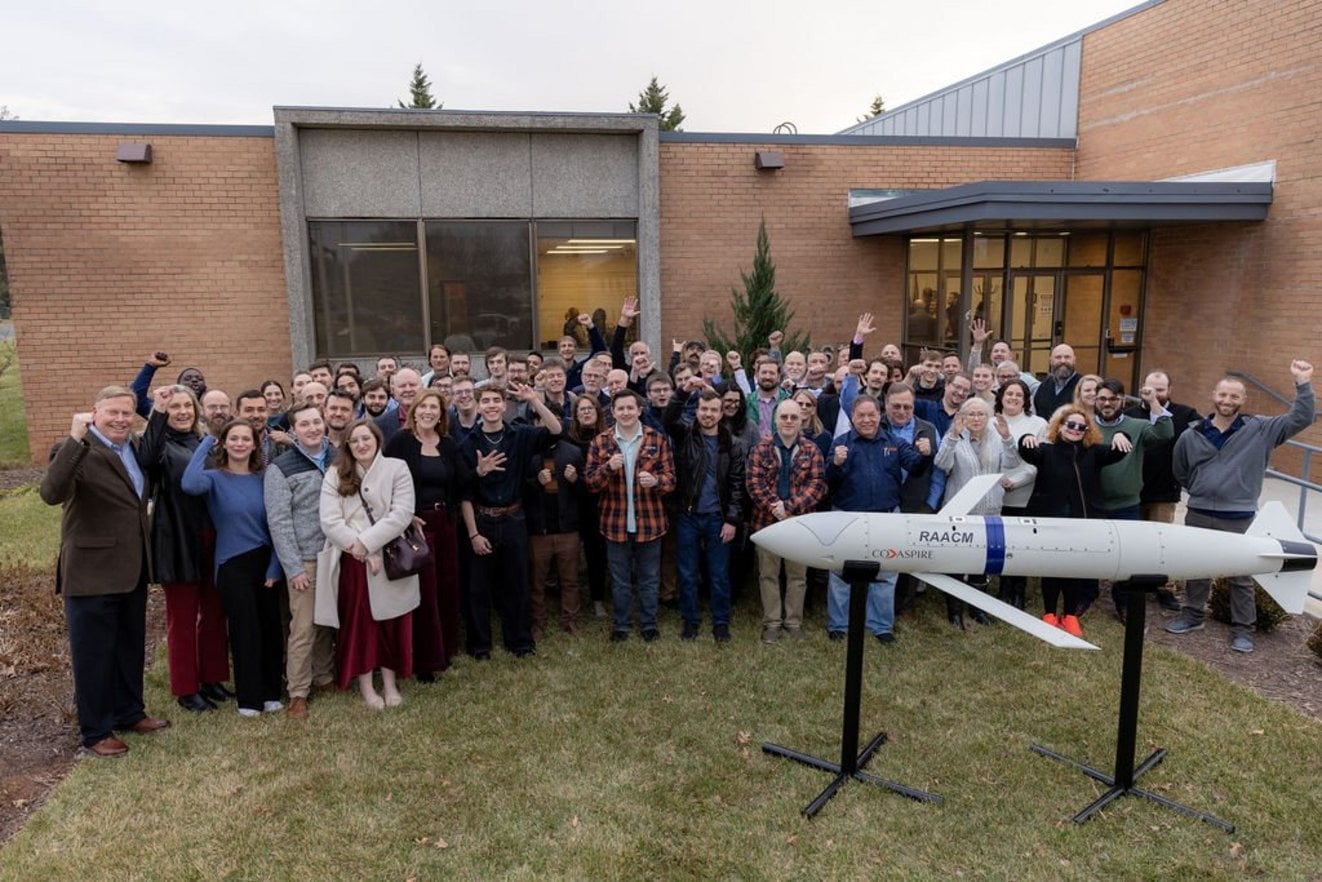
Source: Co-Aspire
What receives almost no attention is the supply chain beneath the factory floor. Modern precision missiles, drones, guidance systems, electric actuators, radar assemblies, sensors, and motors depend on permanent magnets containing neodymium, praseodymium, dysprosium, terbium—and in some applications samarium-cobalt. Building assembly facilities is relatively straightforward. Building independent mine-to-magnet supply chains takes years, billions of dollars, and extensive qualification, as Rare Earth Exchanges continues to emphasize.
Where the Story Stops
So does the narrative assume manufacturing capacity alone solves the problem?
It does not. Even if modular missile factories proliferate, many critical materials—separated rare earth oxides, metals, alloys, and sintered magnets—remain heavily concentrated in China. In the case of much-needed heavy rare earths, nearly 100% of product is bottlenecked in China. That upstream dependency—not factory layout—remains the strategic vulnerability. The latest business reporting also omits another reality: defense qualification. Missiles cannot simply substitute critical components without extensive testing, certification, and reliability validation.
Rare Earth Exchanges' Take
The FT accurately captures a major shift inside the Pentagon—and frankly, America needs it. The companies now trying to simplify, modularize, and accelerate missile production are no longer peripheral innovators. They are becoming strategic infrastructure. Greater efficiency, lower cost, and higher output can strengthen deterrence and, all things equal, help preserve global stability.
But investors must not confuse manufacturing innovation with supply-chain resilience. The latter is the deeper foundation of Great Powers Era 2.0. America may soon learn to assemble missiles at wartime speed. That would be a real breakthrough. But whether it can source the strategic materials—rare earth magnets, metals, alloys, guidance components, and qualified inputs inside those weapons—fast, reliably, and at scale—remains the harder question based on our understanding of the unfolding situation. The factory floor matters. The supply chain beneath it may matter even more.
What is Great Powers Era 2.0 and Why is it Important?
Rare Earth Exchanges coined the term Great Powers Era 2.0 to describe the emerging world in which geopolitical competition is increasingly determined not by ideology alone, but by industrial capacity, technological leadership, and control of strategic supply chains. In this new era, economic security has become national security. Critical materials such as rare earth elements and critical minerals, semiconductors, advanced manufacturing, energy systems, artificial intelligence, quantum computing, and defense production are no longer separate industries—they are strategic assets. Governments are reshaping trade, investing billions in domestic production, restricting exports, and competing for technological advantage.
For investors, understanding Great Powers Era 2.0 means looking beyond quarterly earnings to identify who controls the bottlenecks across critical industries. This missile story is a textbook example. America can redesign factories and accelerate assembly, but unless it also secures resilient mine-to-magnet supply chains, the speed of its factories will ultimately be constrained by the availability of the critical materials that power modern weapons. In Great Powers Era 2.0, supply chains are no longer back-office logistics—they have become instruments of national power and among the world's most valuable strategic investments.
Register today: REEx Marketplace™ (opens in a new tab)


0 Comments
No replies yet
Loading new replies...
Moderator
Join the full discussion at the Rare Earth Exchanges Forum →