
Highlights
- Serra Verde became the first commercial ionic adsorption clay rare earth producer outside Asia, later acquired by USA Rare Earth in a $2.8 billion deal backed by U.S. government support.
- A cluster of advanced projects—Meteoric Resources, Viridis, Brazilian Rare Earths, and Aclara—is transforming Brazil from an isolated producer into a globally significant rare earth district.
- Geology alone does not guarantee success; investors must scrutinize metallurgical recovery, separation capacity, financing, permitting, and downstream integration beyond the mine gate.
- Brazil leads South America's rare earth race, while Chile is its closest challenger and Venezuela's world-class Cerro Impacto deposit remains effectively un-investable due to sovereign risk.
- The continent's rare earth future will be decided not by who discovers the next deposit, but by who builds the first fully integrated mine-to-magnet supply chain outside China.
For two decades, South America's rare earth story was defined by geological promise and commercial disappointment. That has changed. Brazil now hosts the continent's first commercial producer of magnet rare earths outside Asia—Serra Verde—and an extraordinary pipeline of ionic clay projects led by Meteoric Resources, Viridis Mining & Minerals, Brazilian Rare Earths (BRE), and Aclara Resources. Rare Earth Exchanges® view: Brazil's opportunity is genuine, but investors should avoid the industry's oldest mistake: confusing world-class deposits with world-class supply chains. Mining is only the first link. Separation, metals, alloys, magnets, financing, and commercial execution remain the true battleground.
South America
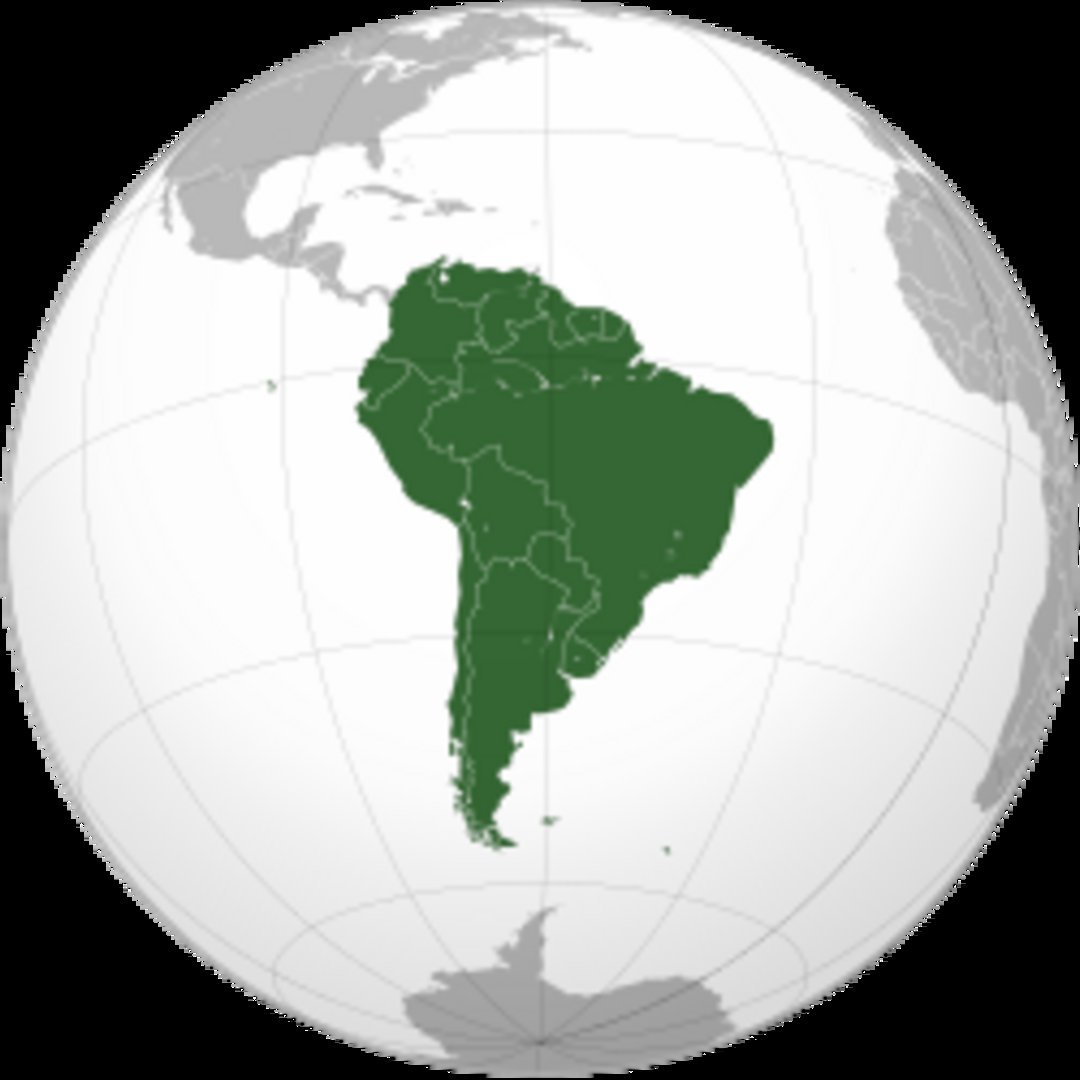
The Sleeping Giant Awakens
For years, investors chasing rare earths looked almost exclusively to Australia, Canada, Africa, and, reluctantly, China.
Brazil waited. The irony is striking. The country possesses the world's second-largest reported rare earth reserves, abundant low-cost renewable power, established mining expertise, and geological provinces that rival the best ionic clay districts in southern China. Yet until recently, Brazil remained largely absent from discussions about rebuilding Western rare earth supply chains.
That silence has ended. Today, Brazil has become arguably the most important rare earth jurisdiction outside China, not because of one discovery, but because an entire district is emerging.
Twenty-Five Years in the Making
Brazil's modern rare earth story did not begin with today's headlines. Government geological surveys and academic research identified significant rare earth potential across Goiás, Minas Gerais, Bahia, and other regions decades ago. During the early 2000s, however, China flooded global markets with inexpensive rare earth oxides, collapsing prices and discouraging investment across nearly every competing jurisdiction.
The industry's first awakening came after China's 2010 export restrictions. Western governments began searching urgently for alternative supply, but financing remained elusive. Most projects stalled before reaching commercial scale.
Brazil quietly continued mapping its geology while waiting for economics—and geopolitics—to change.
They finally did.
The Project That Changed the Conversation
The breakthrough belongs to Serra Verde (opens in a new tab). Its Pela Ema operation in Goiás became the first commercial-scale ionic adsorption clay rare earth producer outside Asia capable of producing all four magnet rare earth elements—neodymium, praseodymium, dysprosium, and terbium. Commercial production began in 2024, fundamentally changing investor perceptions of Brazil's potential.
Although Rare Earth Exchanges has suggested the ionic-based product out of Southeast Asia is more soluble and potentially easier to mine economically. The project's strategic importance became unmistakable in 2026 when USA Rare Earth agreed to acquire Serra Verde in a transaction valued at approximately $2.8 billion, creating one of the largest rare earth transactions in Western history. The acquisition followed substantial U.S. government financial support and reflected Washington's determination to secure non-Chinese supplies of heavy magnet rare earths. For the first time, Brazil was no longer viewed simply as a mining jurisdiction.
It had become a strategic geopolitical asset in the Great Powers Era 2.0, a term coined by Rare Earth Exchanges.
A District Emerges
Serra Verde is no longer standing alone. Perhaps the most overlooked development is the emergence of Poços de Caldas (opens in a new tab) as a rare earth district rather than a single project.
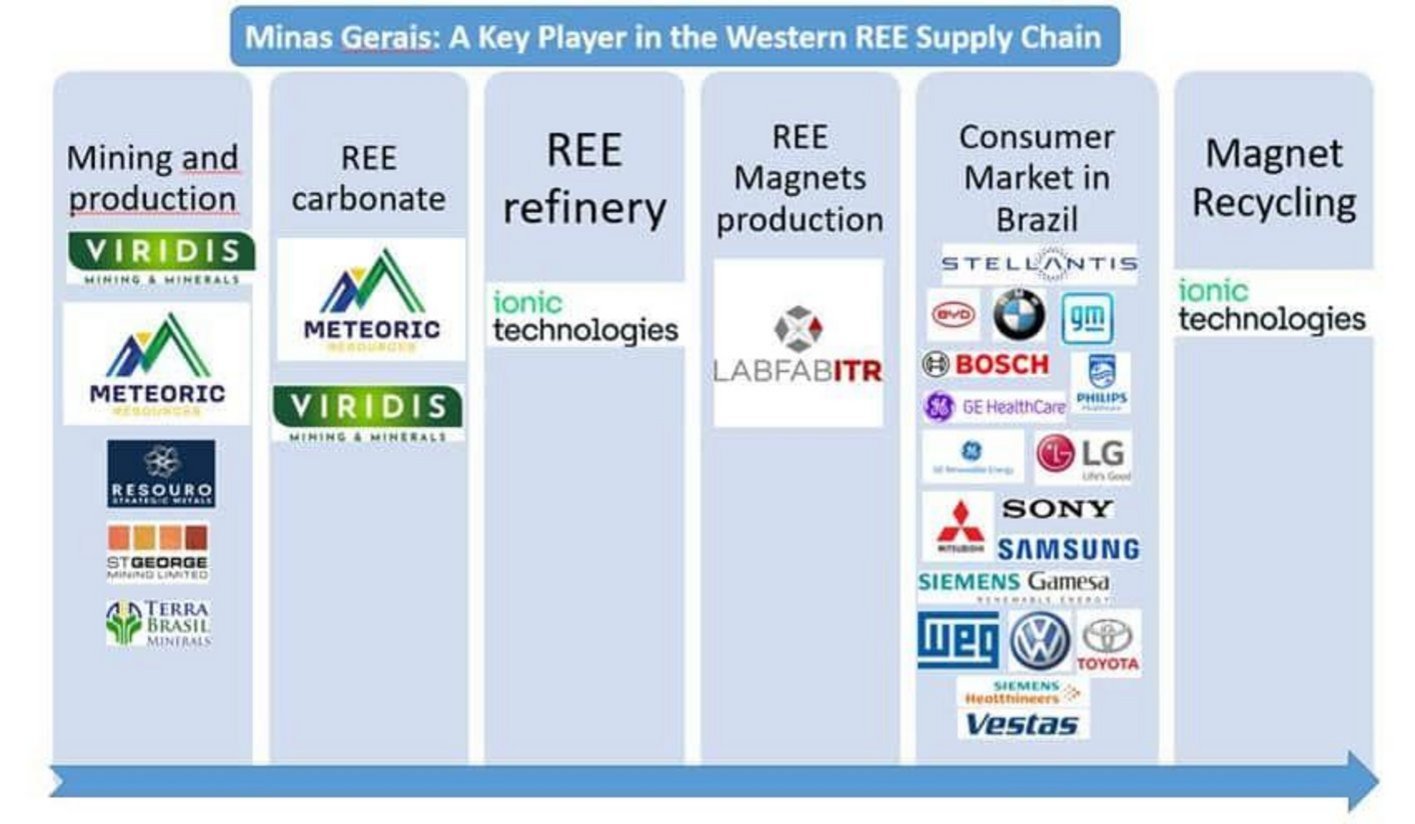
Meteoric Resources' (opens in a new tab) (METOF) Caldeira Project (as discussed in a Rare Earth Exchanges podcast (opens in a new tab)) has rapidly evolved into one of the world's largest ionic adsorption clay rare earth developments outside China. Nearby, Viridis Mining & Minerals' (opens in a new tab) Colossus Project continues advancing toward pilot-scale processing while deliberately pursuing Western—not Chinese—customers for future production. Rare Earth Exchanges interfaced with the State of Minas Gerais covering this attempt at an integrated ecosystem. See "Minas Gerais On the Move, Developing a Vertically Integrated Rare Earth Complex." While the integrated supply chain vision is good, the effort is in the early innings of a long game. Plus, the state is not well enough capitalized for funding the infrastructure, based on what we were told by resources within the state.
Meanwhile, Brazilian Rare Earths (opens in a new tab) (BRE) is assembling an expansive exploration portfolio across Bahia, targeting both hard-rock rare earth mineralization and monazite-rich systems that provide additional optionality. See Rare Earth Exchanges' interview with Bernardo Da Veiga, Managing Director and Chief Executive Officer. (opens in a new tab)
Adding another major participant, Aclara Resources (opens in a new tab) (ARA.TO) entered Brazil with its Carina project while simultaneously planning downstream separation capacity in North America. Rare Earth Exchanges also interviewed Hugh Broadhurst (opens in a new tab), Chief Operating Officer. Unlike many juniors focused solely on mining, Aclara's strategy recognizes that value increasingly lies beyond the mine gate. See "Aclara Resources Quietly Building Potential Heavy Rare Earth Powerhouse."
Collectively, these projects suggest Brazil is evolving from an isolated producer into a globally significant rare earth cluster.
Brazil's Emerging Rare Earth Landscape
| Project | Company | Deposit | REE Focus | Development Stage | Investor Question |
|---|---|---|---|---|---|
| Pela Ema | Serra Verde/USAR | Ionic adsorption clay | Nd, Pr, Dy, Tb | Early Commercial production | Can production scale profitably? |
| Caldeira | Meteoric Resources | Ionic adsorption clay | Magnet REEs | Pre-feasibility | Financing and construction execution |
| Colossus | Viridis Mining & Minerals | Ionic adsorption clay | Magnet REEs | Pilot development | Commercial processing at scale |
| Carina | Aclara Resources | Ionic adsorption clay | Magnet REEs | Development | Integration with downstream separation |
| Rocha da Rocha District | Brazilian Rare Earths | Hard rock & monazite | Magnet REEs | Exploration | Resource definition and metallurgy |
What unites these companies is not simply geography. Each is attempting to build an alternative to China's overwhelming dominance of the rare earth supply chain. Yet that ambition introduces the industry's most difficult challenge.
Did You Know: Brazilian Rare Earths (BRE) is emerging as one of the most closely watched rare earth developers outside China because it combines exceptional geology with strategic infrastructure and technical expertise. In Bahia's Rocha da Rocha District, BRE is exploring a district-scale system featuring ultra-high-grade hard rock monazite, weathered saprolite, and monazite-rich sands, with selective rock samples from Monte Alto exceeding 45% Total Rare Earth Oxides (TREO) and multiple targets—including Sulista, Pelé, and Velhinhas—under active drilling. Just as important, the projects benefit from proximity to Bahia's industrial corridor, including chemical processing infrastructure and deep-water export ports. BRE has also partnered with Carester, the French rare earth engineering firm recognized as one of the world's leading ex-China separation and refining specialists, while Australian mining billionaire Gina Rinehart is a major investor. Although permitting, metallurgy, financing, and commercial processing remain key milestones, BRE stands out as one of the few rare earth companies pairing world-class geology with credible mine-to-market advantages. While still early days, investors tell REEx they are watching this asset.
Why Geology Alone Never Wins the Rare Earth Race
The Clay Beneath the Opportunity
Brazil's emergence is not an accident of geography. It is a product of geology.
Many of the country's most promising projects are ionic adsorption clay (IAC) deposits—the same deposit style that helped China build its dominance in heavy rare earth production. Unlike conventional hard-rock deposits, ionic clays are typically shallow, weathered, and free-digging, reducing mining costs and environmental disturbance. They also tend to contain higher proportions of the magnet rare earths investors value most, including dysprosium and terbium.
But investors should resist a dangerous assumption: ionic clay does not automatically mean low risk.
Recovering rare earths economically depends on far more than the grade reported in a drill hole. Recovery rates, impurity rejection, reagent consumption, water management, residue handling, and ultimately solvent extraction determine whether a promising discovery becomes a profitable mine.
Did You Know: Southeast Asia's ionic adsorption clay (IAC) rare earth deposits—particularly those in southern China and Myanmar, with emerging prospects in Malaysia, Laos, Thailand, and Vietnam—have long attracted attention because the rare earth elements are ionically adsorbed onto weathered clay minerals rather than locked inside hard crystalline ores. This often allows mining with little or no drilling or blasting and, in favorable deposits, enables relatively simple ion-exchange leaching processes that can reduce capital and operating costs compared with conventional hard-rock mining.
Investors, however, should not assume all ionic clay deposits are economically equivalent. Differences in heavy versus light rare earth distributions, clay mineralogy, impurity levels, adsorption chemistry, recovery rates, permeability, environmental regulations, and access to downstream separation capacity can dramatically alter project economics. The geological advantages of ionic clays are real, but commercial success ultimately depends on metallurgy, permitting, environmental management, and integration into a competitive mine-to-magnet supply chain.
The Supply Chain Investors Too Often Ignore
The mining industry loves to celebrate discoveries. Manufacturers care about something entirely different.
Permanent magnets require a long industrial chain:
Mine → Concentrate → Separation → Rare Earth Oxides → Metals → Alloys → Magnets
Most junior mining companies focus almost exclusively on the first step.
China dominates nearly every step that follows.
That distinction explains why the United States, Europe, Japan, and Australia are increasingly supporting projects that integrate mining with downstream processing. The strategic prize is not simply producing ore—it is producing qualified magnet materials outside Chinese control.
Brazil is beginning to recognize that reality. Several developers are already discussing downstream partnerships, while projects such as Aclara's integrated strategy and USA Rare Earth's acquisition of Serra Verde point toward mine-to-magnet business models rather than stand-alone mines.
Separating the Facts from the Promotion
Brazil's rare earth opportunity is substantial, but investors should maintain discipline. Several recurring claims deserve careful scrutiny. First, project presentations frequently emphasize low operating costs based on ionic clay mining. While mining may indeed be simpler than conventional hard rock, commercial economics ultimately depend on metallurgical recovery, product specifications, separation costs, and long-term rare earth pricing—not mining costs alone. And as we cite above, ionic clay deposits in places like Serra Verde may be harder and more difficult to extract elements from compared to the material in parts of Asia.
Second, many companies highlight TREO resources. TREO can obscure the economic picture. Deposits rich in cerium and lanthanum have fundamentally different economics than those enriched in neodymium, praseodymium, dysprosium, and terbium. Element-by-element distribution matters far more than headline tonnage.
Finally, production targets remain projections. Investors should place greater weight on pilot-plant reproducibility, feasibility studies, financing commitments, permitting milestones, and binding offtake agreements than on conceptual production schedules.
Why Brazil Matters More Than Any Single Project
Perhaps the most important development is not Serra Verde, Caldeira, Colossus, Carina, or Brazilian Rare Earths individually.
It is their concentration. The emergence of multiple advanced projects within Brazil creates the possibility of shared infrastructure, specialized chemical processing, engineering expertise, research partnerships, skilled labor, and ultimately downstream manufacturing. Mining districts—not isolated mines—have historically produced the world's most durable mineral industries. Brazil may be approaching that tipping point.
The Rare Earth Exchanges Bottom Line
Brazil has moved beyond exploration. It is entering industrial development.
That does not mean success is guaranteed. The country still must prove that multiple projects can navigate permitting, construct processing facilities, secure financing, establish non-Chinese separation capacity, and ultimately feed competitive metal, alloy, and permanent magnet manufacturing.
Those are formidable challenges. They are also precisely where strategic value will be created.
The next decade will determine whether Brazil becomes another exporter of mineral concentrates—or the foundation of the Western Hemisphere's first fully integrated rare earth supply chain.
For investors, that distinction may prove worth billions.
Beyond Brazil: The Rest of South America's Rare Earth Frontier
Brazil has emerged as South America's clear rare earth leader, but the rest of the continent tells a more complicated story. Chile has developed the region's second most advanced rare earth pipeline through Aclara Resources. Venezuela hosts one of South America's most intriguing rare earth occurrences at Cerro Impacto (opens in a new tab) but remains effectively closed to institutional investment. Peru, Argentina, Bolivia, Colombia, and the Guiana Shield all possess encouraging geology, yet none currently approaches Brazil's combination of advanced projects, financing, government support, and commercial momentum. A Rare Earth Exchanges' view: South America is rapidly becoming a two-speed rare earth continent. Brazil is building an industry. Its neighbors are still building geological stories.
The Rest of the Map
Brazil dominates today's headlines, but rare earth mineralization extends across nearly every corner of South America.
The difference is not geology. It is execution. Since 2000, governments and exploration companies have identified alkaline complexes, carbonatites, heavy mineral sands, and weathered clay systems throughout the continent. Yet only a handful have progressed beyond exploration. Rare earth mining has repeatedly demonstrated that discovering ore is relatively easy. Building profitable supply chains is exceptionally difficult.
Chile: The Closest Challenger
If Brazil is South America's leader, Chile is its closest competitor.
Aclara Resources, located near Concepción, has become one of the Western Hemisphere's most advanced ionic adsorption clay developments. Unlike many junior miners, Aclara has pursued an integrated strategy that extends beyond mining to separation, alloy production, and eventual magnet manufacturing partnerships. Chile also offers investors something equally valuable: regulatory predictability. Environmental reviews remain rigorous, but the country's mining institutions continue to rank among Latin America's strongest.
Still, Chile faces the same challenge confronting every Western rare earth project: building downstream processing capacity capable of competing with China's decades-old industrial ecosystem.
Venezuela: World-Class Geology, Uninvestable Risk?
Few rare earth deposits in South America possess greater geological intrigue than Cerro Impacto.
Discovered in the Venezuelan Amazon, the carbonatite-hosted system contains significant rare earth mineralization and has periodically attracted international scientific attention. Under different political circumstances, Cerro Impacto might rank among the hemisphere's most closely watched projects.
Instead, investors face an entirely different reality. Political instability, sanctions, weak institutions, illegal mining, environmental degradation, and security concerns have rendered meaningful commercial development virtually impossible. The lesson is familiar: exceptional geology cannot compensate for extraordinary sovereign risk.
Peru, Argentina, Bolivia, and Colombia: Opportunity Still Searching for Capital
The remainder of South America represents what might best be described as an exploration frontier.
Peru has identified promising alkaline intrusive complexes and increasingly promotes critical minerals as part of its national mining strategy. Argentina hosts scattered rare earth occurrences associated with alkaline complexes, carbonatites, and heavy mineral sands, but exploration remains limited. Bolivia's international reputation rests overwhelmingly on lithium rather than rare earth elements, while Colombia possesses documented occurrences without an advanced commercial development pipeline.
None currently offers investors a project approaching the maturity of Serra Verde, Caldeira, Colossus, or Penco.
That could change over the next decade. Today, however, the gap remains substantial.
Don't Ignore the Guiana Shield
One region deserves greater attention than it receives. Stretching across Guyana, Suriname, French Guiana, and portions of Venezuela and northern Brazil, the Guiana Shield represents one of Earth's oldest geological provinces. It has already produced world-class deposits of gold, bauxite, uranium, niobium, and tantalum. Rare earth exploration remains comparatively sparse.
History suggests that underexplored cratons often produce the mining industry's next generation of discoveries. Investors should not mistake limited exploration for limited potential.
South America Rare Earth Scorecard
South America Rare Earth Scorecard
| Country | Geological Potential | Commercial Readiness | REEx POV |
|---|---|---|---|
| Brazil | ★★★★★ | ★★★★☆ | Global Tier One emerging rare earth hub |
| Chile | ★★★★☆ | ★★★☆☆ | Advanced development with integrated ambitions |
| Peru | ★★★☆☆ | ★★☆☆☆ | Strong geology; commercial pipeline still emerging |
| Argentina | ★★★☆☆ | ★☆☆☆☆ | Exploration opportunity, limited development |
| Guyana/Suriname | ★★★☆☆ | ★☆☆☆☆ | Underexplored frontier worth watching |
| Bolivia | ★★☆☆☆ | ★☆☆☆☆ | Rare earths overshadowed by lithium |
| Colombia | ★★☆☆☆ | ★☆☆☆☆ | Limited commercial momentum |
| Venezuela | ★★★★★ | ☆☆☆☆☆ | Excellent geology; did recent interventions change prohibitive investment risk? |
The Continental Lesson
South America has never lacked rare earth deposits. It has lacked integrated supply chains.
Brazil is now attempting to bridge that gap through commercial production, multiple advanced ionic clay projects, Western financing, and growing government support. Chile is moving deliberately in the same direction. Elsewhere, geology continues to outpace commercialization.
For investors, the distinction is critical. Mineral discoveries create headlines. Processing plants, separation facilities, alloy production, and magnet manufacturing create industries. The continent's future will not be determined by who finds the next rare earth deposit. It will be determined by who builds the first truly integrated mine-to-magnet supply chain outside China.
Today, Brazil leads that race. The rest of South America is still waiting for its moment.
Register today: REEx Marketplace™ (opens in a new tab)


0 Comments
No replies yet
Loading new replies...
Moderator
Join the full discussion at the Rare Earth Exchanges Forum →