
Highlights
- Angkor Resources reported REE anomalies of ~450 ppm total rare earth oxides at Gossan Hills in Ratanakiri Province, but no mineral resource has been defined.
- Cambodia has no confirmed ion-adsorption clay deposits, unlike neighboring Myanmar, Laos, and Vietnam, leaving it geologically prospective but commercially unproven.
- Gold mining dominates Cambodia's sector, with Chinese investment prominent and China remaining the country's dominant strategic partner despite modest US engagement.
- Nationwide geochemical mapping and academic research have improved exploration models since JICA's 2010 study found no known rare earth deposits, but no economic REE district has been demonstrated.
- Cambodia represents an exploration story, not a supply-chain solution, and remains years away from joining Southeast Asia's emerging rare earth producers.
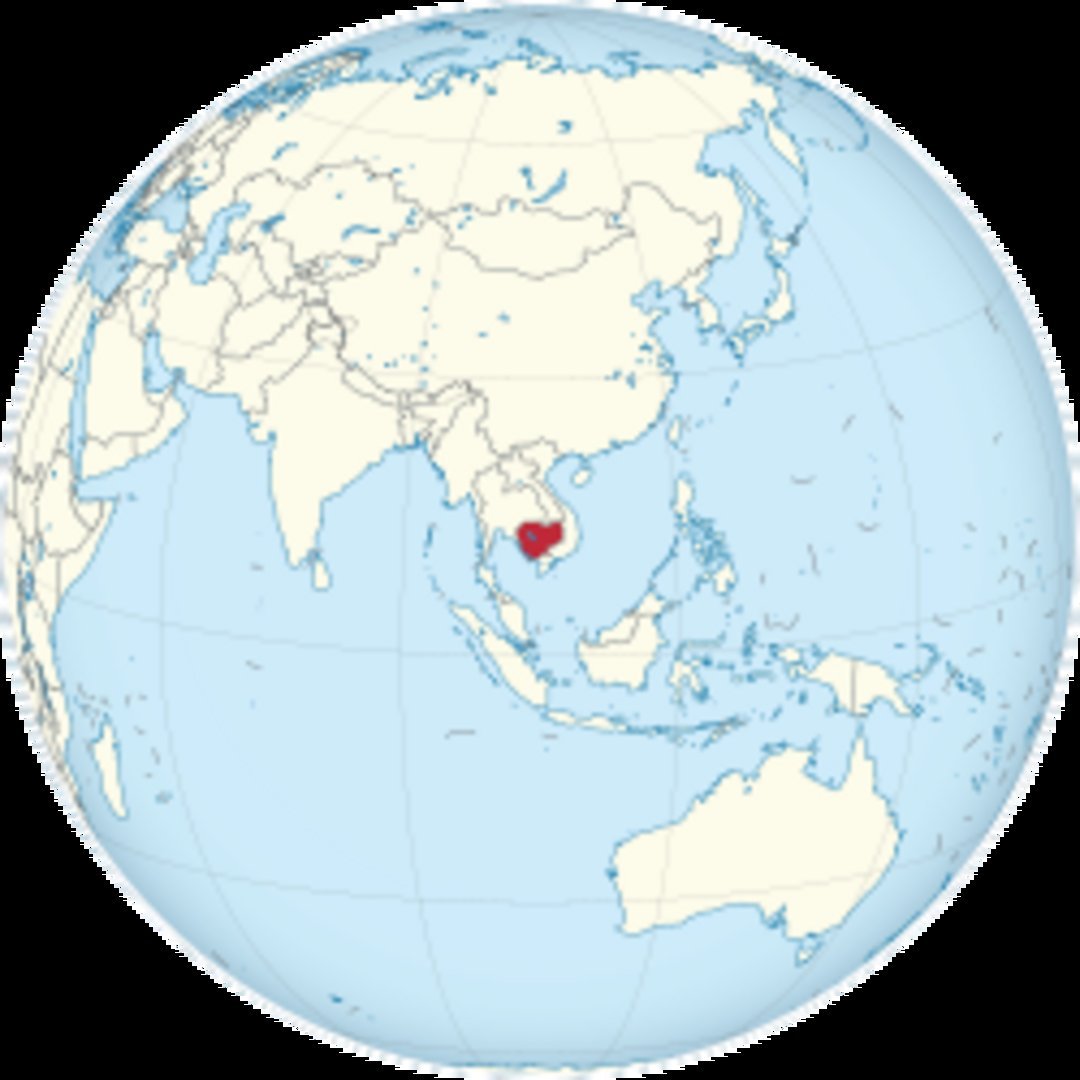
Cambodia remains a rare earth frontier rather than a rare earth producer. Despite growing regional interest, the country has no operating rare earth mine, no JORC- or NI 43-101-compliant rare earth resource, and no official inventory identifying rare earth elements (REEs) as a defined national mineral deposit type.
Exploration, Not Production
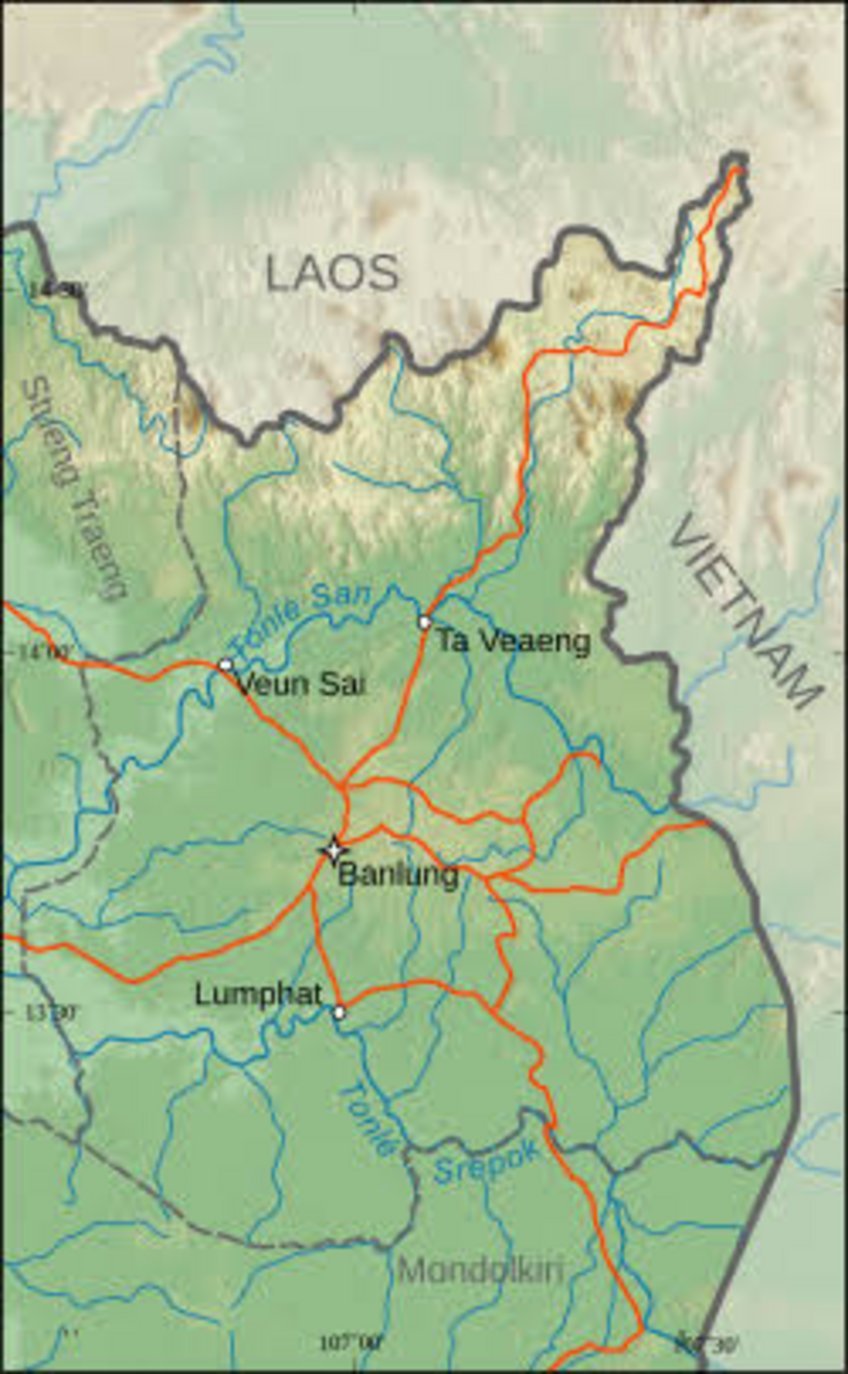
The country's strongest public REE evidence comes from Angkor Resources' Gossan Hills prospect (opens in a new tab) on the Andong Meas license in Ratanakiri Province. Exploration during 2021–2022 identified rare earth anomalies in soils and laterites, including approximately 450 ppm total rare earth oxides along with elevated scandium. In 2026, Angkor resumed drilling, although the primary exploration target remains copper-gold skarn and porphyry mineralization rather than a standalone rare earth deposit.
Did you know in Cambodia: Angkor Resources reported REE anomalies at its Gossan Hills prospect on the Andong Meas license in northeastern Cambodia, with soil assays reaching approximately 450 ppm total rare earth oxides (TREO) and more than 200 ppm scandium. Company geologists believe the mineralization is associated with weathered carbonate rocks adjacent to granodiorite intrusions rather than confirmed ionic clay deposits. The discovery remains early-stage exploration, with follow-up geochemical analysis, geophysical surveys, and drilling planned to determine whether economically recoverable concentrations of high-value rare earth elements exist. At present, no mineral resource has been defined, and commercial viability has not been established.
Ratanakiri Province
Cambodia also faces reports of unregulated alluvial and heap-leach mining in remote northeastern regions, including areas near Virachey National Park (opens in a new tab), but there is no evidence of commercial-scale rare earth production.
No Confirmed Ionic Clay Deposits
Unlike southern China, Myanmar, Laos, and Vietnam, Cambodia has no publicly confirmed ion-adsorption clay (ionic clay) deposits. While weathered lateritic profiles at Gossan Hills are geologically interesting, they differ fundamentally from the ionic clay systems supplying much of the world's heavy rare earths. The country remains prospective—but unproven.
Geological Picture Improving
Early assessments such as JICA's 2010 mining sector study (opens in a new tab) concluded Cambodia had no known rare earth deposits. Since then, nationwide geochemical mapping covering 71 elements and academic research in Ratanakiri have documented alkaline volcanics, zircon-bearing rocks, and evidence of carbonatitic influence. These findings improve exploration models but stop well short of demonstrating an economic REE district.
Mining Industry Dominated by Gold
Cambodia's mining industry is still led by gold. The country's flagship operation remains the Okvau Gold Mine (opens in a new tab), operated by Renaissance Minerals, a subsidiary of Australia's Emerald Resources (opens in a new tab). The only publicly active REE-related explorer is Canada's Angkor Resources (opens in a new tab).
Chinese investment, however, is prominent throughout Cambodia's broader mining sector. Companies such as Rong Cheng Industrial Investment (opens in a new tab) (Cambodia) operate exploration projects, while Khmer-language government reports during 2026 highlighted increased environmental oversight of Chinese-owned mining activities.
Politics, Regulation, and Geopolitics
Mining is regulated primarily by the Ministry of Mines and Energy (MME) through its General Department of Mineral Resources, under the 2001 Law on Mineral Resource Management and Exploitation and subsequent licensing regulations. Land-use approvals also involve the Ministry of Environment and the Ministry of Land Management.
Since early 2025, Cambodia has expanded mining cooperation with Australia while modestly improving relations with the United States under the Trump administration through renewed trade and security engagement. Nevertheless, China remains Cambodia's dominant strategic partner, providing investment, infrastructure financing, and expanding security cooperation.
Key Players
Government leadership centers on the Ministry of Mines and Energy (opens in a new tab), the Cambodian Development Council (opens in a new tab), and the Ministry of Environment (opens in a new tab). Important private-sector participants include Angkor Resources, Emerald Resources/Renaissance Minerals, and Chinese firms including Rong Cheng Industrial Investment.
Rare Earth Exchanges View: Cambodia deserves monitoring, but investors should remain cautious. The geology is becoming more intriguing, yet the country remains years away from joining Southeast Asia's emerging rare earth producers. Perhaps more is going on to be discovered—Rare Earth Exchanges continues outreach in this and other Southeast Asian nations. Today, Cambodia represents an exploration story—not a supply-chain solution. At least not yet.
Profile
Angkor Resources is a Canadian public exploration company founded in 2008 and headquartered in Sexsmith, Alberta. Originally established as Angkor Gold Corp., it rebranded to Angkor Resources in 2019 and trades on the TSX Venture Exchange (TSXV: ANK) and OTCQB (ANKOF). Rather than relying heavily on traditional venture capital financing, the company has advanced its projects through more than 10 joint venture and strategic partnership agreements since 2012, collectively valued at over US$20 million. Its business focuses on natural resource exploration in Cambodia and North America, with key assets including the Andong Meas gold-copper exploration license—where rare earth anomalies have also been identified—and Block VIII, a large onshore oil and gas concession in Cambodia.
Register today: REEx Marketplace™ (opens in a new tab)


0 Comments
No replies yet
Loading new replies...
Moderator
Join the full discussion at the Rare Earth Exchanges Forum →