
Highlights
- SASAC is tightening Party governance across central SOEs to standardize execution and accelerate national industrial priorities, including rare earth supply chains.
- China is commissioning major energy projects—including molten-salt solar, gas turbines, and zero-carbon freight corridors—to power energy-intensive rare earth and critical minerals operations.
- State-owned enterprises including Chinalco and China National Nonferrous Metals Group ranked among top reform performers, reinforcing their strategic roles in critical materials.
- A new China-Europe chemical freight rail corridor from Lanzhou to Warsaw signals expanding Eurasian logistics capacity that could eventually serve rare earth exports.
- State Grid's $5 GW UHVDC project in Brazil deepens China's ties with a top rare earth-prospective nation, blending infrastructure investment with long-term resource strategy.
China's state-owned enterprise (SOE) system is entering another phase of coordinated execution. A series of announcements over the past week from the State-owned Assets Supervision and Administration Commission (SASAC) and major central enterprises reveal an increasingly integrated strategy: strengthen Party governance, modernize enterprise management, expand energy infrastructure, and build resilient logistics networks that support China's industrial base—including the rare earth and critical minerals supply chain.
Governance First: SASAC Tightens the Operating System
The week's most important development is organizational rather than technological.
Across central SOEs—from State Grid to provincial SASAC organizations—officials are implementing a nationwide campaign to study and apply Xi Jinping's Party-building doctrine. While Western observers often dismiss these announcements as political messaging, they also serve as management directives intended to standardize governance and improve execution across China's state enterprise system.
The objectives are straightforward:
- strengthen execution;
- improve coordination across state enterprises;
- tighten oversight and accountability;
- accelerate implementation of national priorities; and
- reduce bureaucratic fragmentation.
For investors following China's rare earth sector, this matters because many of the country's largest mining, separation, metals, magnet, and advanced materials enterprises ultimately operate within the broader state-owned enterprise framework.
The appointment of Cheng Fubo (opens in a new tab) as Party Secretary of SASAC further underscores Beijing's emphasis on centralized leadership over strategically important state enterprises.
Energy Security Is Supply Chain Security
Rare earth mining and separation are among the most energy-intensive industrial activities in the world. Reliable, resilient electricity is therefore a strategic input into the entire value chain.
China continues investing accordingly.
Among this week's announcements:
- State Grid continues organizational reforms while emphasizing grid resilience and execution.
- China Huadian completed China's first 550 MW F-class gas turbine project, bringing 1.1 GW of flexible combined-cycle generation online to strengthen grid stability in the Chongqing region while supporting renewable integration.
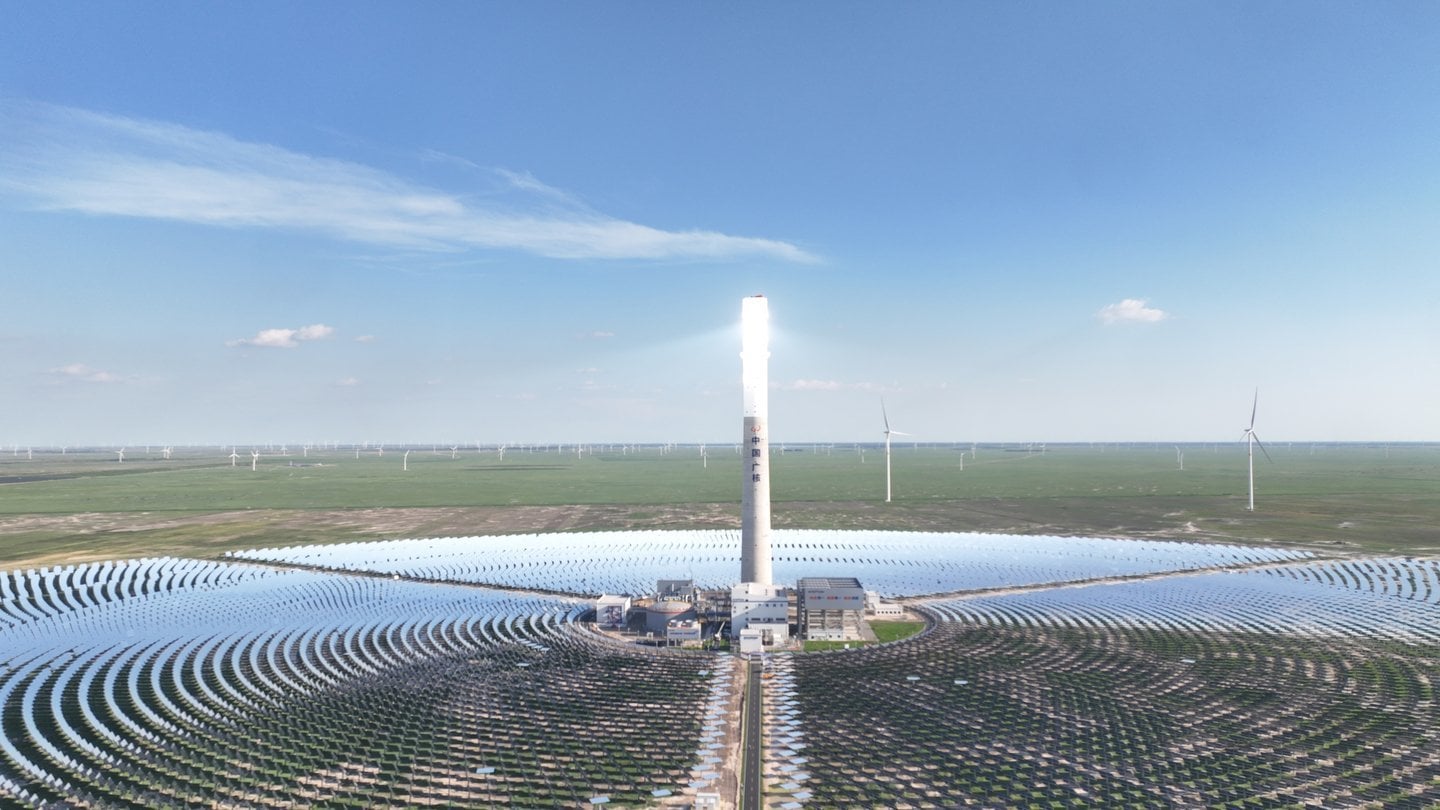
- China General Nuclear (CGN) commissioned Northeast China's first commercial 100 MW molten-salt solar thermal power plant, featuring eight hours of thermal storage and demonstrating dispatchable renewable generation under high-latitude, cold-weather conditions.
- China Energy Engineering Group (Energy China) began construction of western China's first large-scale zero-carbon freight corridor, integrating distributed solar generation, battery storage, smart microgrids, megawatt-class truck charging, battery-swapping infrastructure, and ecological carbon-offset projects.
Northeast China's First Commercial 100 MW Molten-Salt Solar Thermal Power Plant
None of these projects directly produce rare earths or critical minerals.
Collectively, however, they strengthen the energy infrastructure needed to support mines, chemical separation plants, metals production, magnet manufacturing, semiconductor fabrication, and broader advanced manufacturing industries.
Reform Is Producing Measurable Results
Economic indicators remain mixed but broadly resilient.
According to China's Ministry of Finance, state-owned and state-controlled enterprises generated 1.7258 trillion yuan (approximately US$240 billion) in total profits during the first five months of 2026, an increase of 3.5% year over year, despite a modest 0.7% decline in total operating revenue. Meanwhile, SASAC released its latest evaluations under its Science and Technology Reform Demonstration Program and Double Hundred Reform Initiative, recognizing dozens of central enterprises for governance reforms, innovation performance, and commercialization.
Among the strongest performers were:
- State Grid
- China Energy Engineering Group
- Aluminum Corporation of China (Chinalco)
- China National Nuclear Corporation
- China National Nonferrous Metals Group
Collectively, these organizations occupy critical positions across China's strategic materials, energy, engineering, and industrial technology ecosystem.
Building the Corridors of Industrial Power
China also continues investing beyond factory gates. A notable logistics milestone was the launch of Gansu Province's first dedicated China-Europe freight train for chemical products, connecting Lanzhou to Warsaw via Kazakhstan, Russia, and Belarus.
The significance extends well beyond chemical exports.
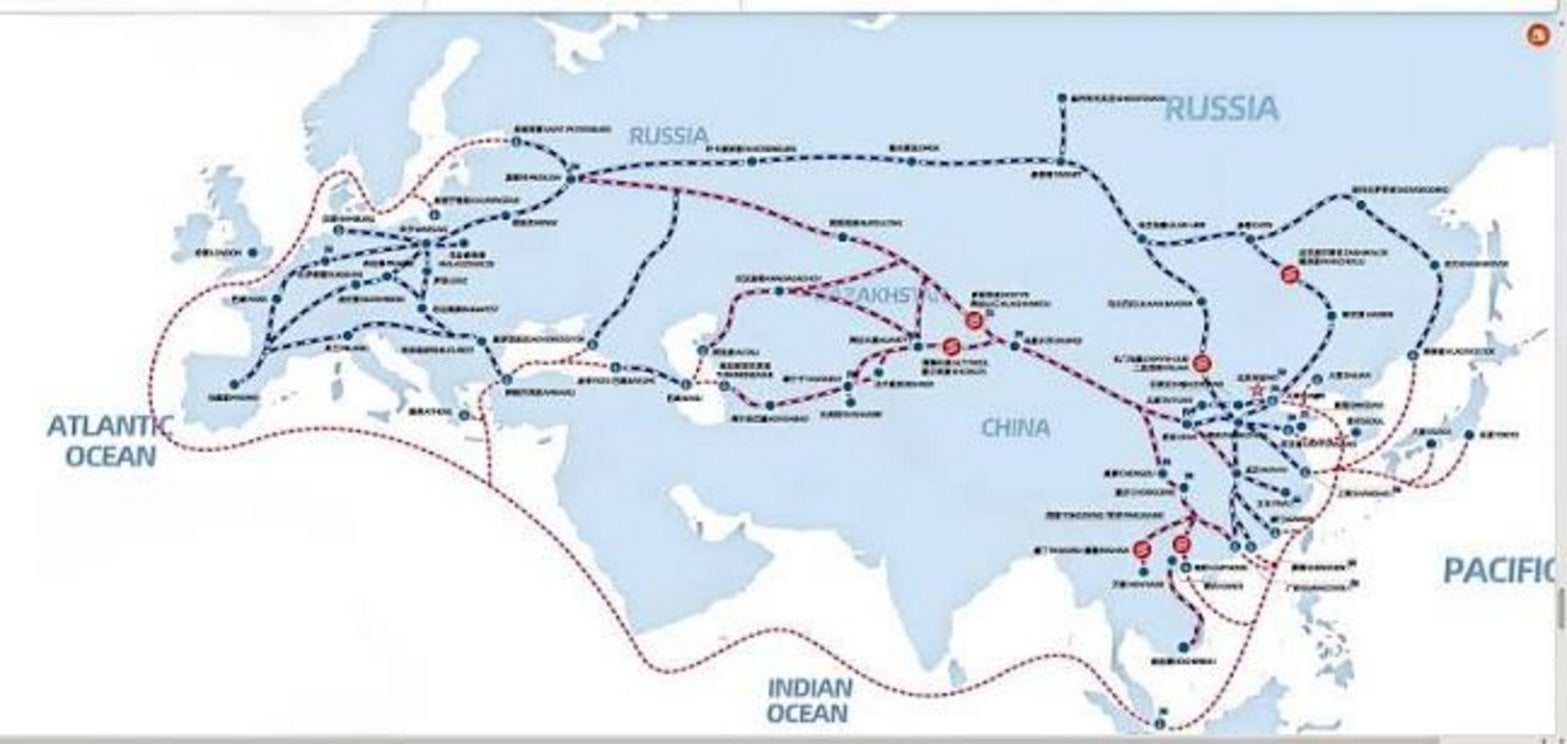
The new service illustrates China's continuing effort to develop standardized Eurasian logistics corridors capable of moving industrial products with fewer transfers, faster customs clearance, shorter transit times, and greater supply chain reliability. Over time, similar corridors could facilitate exports of advanced materials, specialty chemicals, battery materials, and potentially rare earth-related products destined for European manufacturers.
Brazil Becomes an Increasingly Important Strategic Partner
Outside China, State Grid Brazil officially commenced full construction of the Northeast Brazil ±800 kV ultra-high-voltage direct current (UHVDC) transmission project. The 1,468-kilometer transmission line will deliver up to 5 GW of renewable electricity from Brazil's northeast to major demand centers. It is State Grid's third overseas UHV transmission project and the largest transmission concession project in Brazilian history.
For Rare Earth Exchanges® readers, the significance extends beyond electricity.
Brazil is emerging as one of the world's most prospective rare earth jurisdictions. As Chinese firms deepen investments in transmission infrastructure, they also strengthen long-term relationships with a country likely to become an increasingly important supplier of critical minerals. Modern transmission infrastructure facilitates industrial development—including mining and mineral processing—while reinforcing China's broader economic engagement across Latin America.
Rare Earth Exchanges Perspective
Taken together, these announcements illustrate that China increasingly approaches industrial competition as a systems challenge rather than a collection of individual projects. Governance reform, energy generation, transmission infrastructure, logistics corridors, overseas investment, and enterprise management are advancing simultaneously.
Western analysis often focuses on individual mines or processing facilities. Beijing appears equally focused on building the institutional, logistical, and energy infrastructure that allows those assets to operate efficiently for decades.
For investors, the lesson is significant. China's competitive advantage increasingly rests not on any single mine or refinery, but on the coordinated ecosystem of state-owned enterprises, reliable energy systems, integrated logistics, and industrial policy that supports the entire critical minerals value chain.
Disclaimer: This analysis is based primarily on announcements published by Chinese government agencies and state-owned enterprises. These statements reflect official institutional messaging and should be independently verified before informing investment, commercial, or policy decisions.
Register today: REEx Marketplace™ (opens in a new tab)


0 Comments
No replies yet
Loading new replies...
Moderator
Join the full discussion at the Rare Earth Exchanges Forum →