
Highlights
- Solvay's La Rochelle plant has processed rare earths since 1948 and inaugurated a new NdPr production line in 2025, with dysprosium and terbium targeted for 2026.
- A letter of intent with Brazil's Viridis Mining and Minerals aims to secure ionic clay feedstock for La Rochelle, reducing European dependence on Chinese rare earth supply chains.
- Solvay is open to a U.S. rare earth processing facility but conditions expansion on stronger government and customer commitments.
- The company targets meeting 30% of European permanent magnet rare earth demand by 2030, aligned with the EU Critical Raw Materials Act.
- Process improvements aim to cut CO₂ emissions by 40% and water consumption by 50% by 2030, combining industrial scale with sustainability goals.
Solvay is not a miner, magnet maker, or junior explorer. It is something rarer in the West: an operating rare earth separator with decades of chemical know-how. Its La Rochelle facility in France, Brazil feedstock arrangements (opens in a new tab) with Viridis Mining and Minerals, and possible U.S. expansion make Solvay strategically important to Europe, Belgium, and any serious ex-China rare earth supply chain. The caution: this is still separation-first, not mine-to-magnet.
The Verified Core
Solvay's 2025 Annual Integrated Report (opens in a new tab) says its La Rochelle site has processed rare earths since 1948. The company reports a new NdPr line inaugurated in 2025, samarium production started, and dysprosium/terbium targeted for 2026. It also lists rare earth operations across France, Japan, and China, plus agreements with Permag, Noveon, Less Common Metals, and Arnold Magnetic Technologies.
That matters because the West's chokepoint is not geology. It is separation, purification, metals, alloys, and magnets.
Brazil, Belgium, and the Malaysia Signal
Solvay's LOI (opens in a new tab) with Viridis Mining and Minerals points toward Brazilian rare earth feedstock for La Rochelle, with Solvay providing separation expertise and processing technology. REEx separately reported EU interest in Brazil's critical minerals sector, including Viridis and a possible Solvay-linked supply arrangement.
That gives Belgium's Malaysia overture more weight. When Belgian officials mention Solvay and Umicore in the context of technology transfer, they are not naming decorative industrial brands. Solvay is one of the few Western firms with relevant rare earth separation capability.
The American Temptation
Solvay is open to a U.S. rare earth processing plant, but only if public support is stronger. CEO Philippe Kehren (opens in a new tab) reportedly said commercial-scale production depends on customer and government backing, and Solvay has not yet greenlit a larger La Rochelle expansion.
Separation Facility
Solvay has inaugurated commercial production of rare earth materials for permanent magnets at its La Rochelle, France facility, a major milestone in Europe's effort to reduce dependence on China's rare earth supply chain. The expansion transforms one of the world's few full-spectrum rare earth separation plants outside China into a commercial supplier of magnet-grade materials for electric vehicles, wind turbines, defense systems, and advanced electronics. Solvay says the project is intended to help meet 30% of European demand for permanent magnet rare earths by 2030, in line with the EU's Critical Raw Materials Act, by sourcing feedstock from diversified mining and recycling partners. The company also announced process improvements aimed at reducing CO₂ emissions by 40% and water consumption by 50% by 2030, while leveraging more than 75 years of rare earth separation expertise. CEO Kehren emphasized that building a competitive European rare earth value chain will require close collaboration among governments, suppliers, customers, and industry, while An Nuyttens, President of Solvay's Special Chem business, highlighted the company's focus on combining operational scale with sustainable processing technology to strengthen Europe's industrial and technological sovereignty.
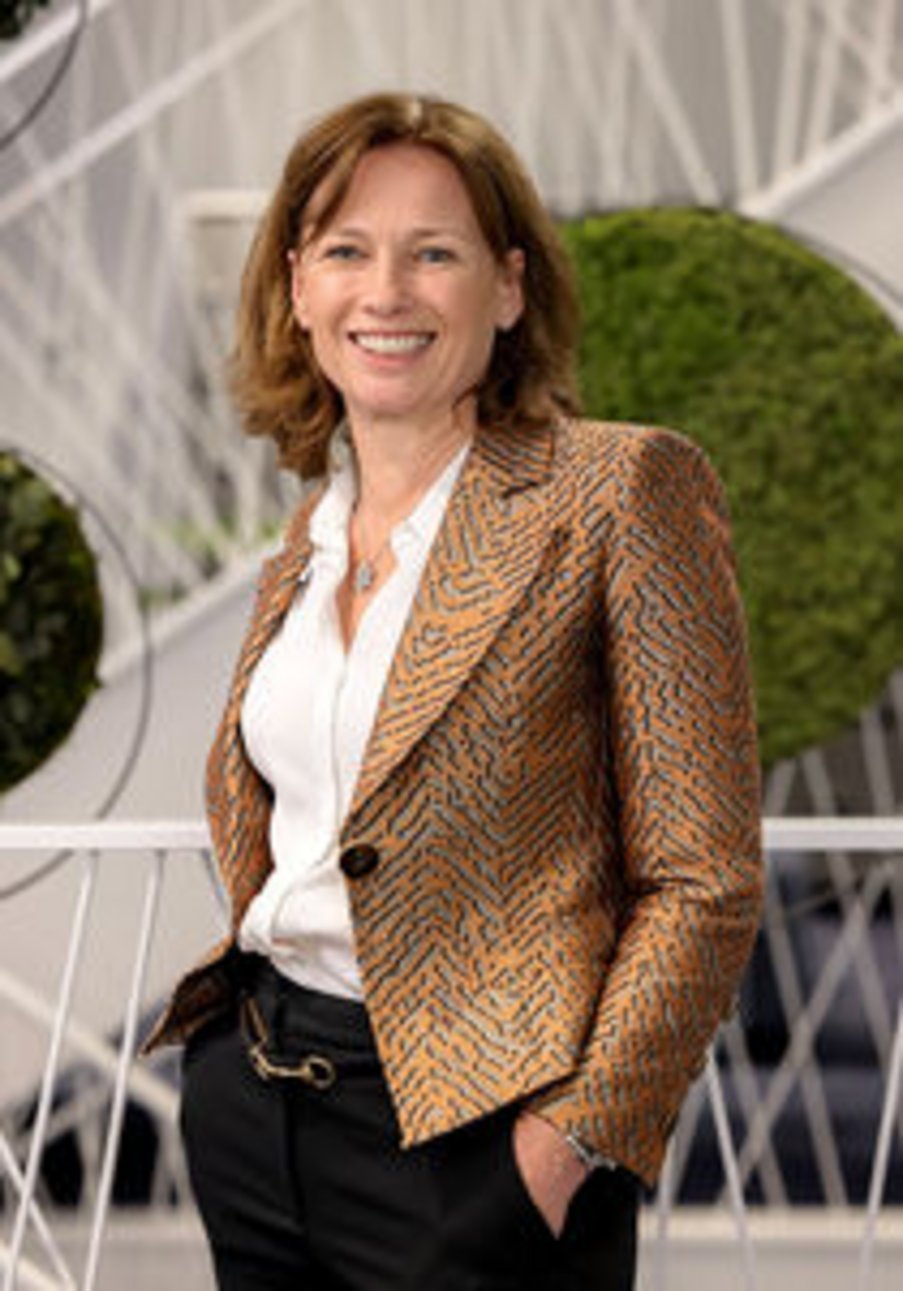
An Nuyttens, President of Solvay's Special Chem business
REEx Take
Solvay is a real asset, but not yet a complete answer. Feedstock must be secured. Buyers must commit. Governments must stop confusing strategy documents with bankable industrial policy. For investors, Solvay is a hinge point: if Europe is serious about rare earth sovereignty, La Rochelle should become a cornerstone. If Europe hesitates, the U.S. may offer the stronger landing zone.
Organizations Most Closely Connected to Solvay's Rare Earth Strategy
These organizations are arguably just as important as the executives:
- Solvay — Parent company
- La Rochelle Rare Earth Processing Facility (France)
- Viridis Mining and Minerals — Proposed Brazilian ionic clay feedstock partner
- Permag
- Noveon Magnetics
- Less Common Metals
- Arnold Magnetic Technologies
- European Commission (Critical Raw Materials Act implementation)
- Cyclic Materials (recycled rare earth feedstock discussions)
For technical insight into separation technology, An Nuyttens is a key contact. For strategy and geopolitics, Philippe Kehren is the key executive.
Register today: REEx Marketplace™ (opens in a new tab)


0 Comments