
Highlights
- INL researchers developed an electrophoretic platform that separates all 14 lanthanides in a single 10-minute pass using water-based chemistry instead of organic solvents.
- The technology uses inexpensive aqueous ligands similar to citric, lactic, and acetic acid, with continuous-flow systems being engineered toward kilogram-per-day production.
- INL's new 55,000-square-foot Critical Materials and Energy Systems Innovation Center integrates separations science, pilot-scale processing, and industry collaboration under one roof.
- A nine-lab METALLIC program and partnerships with universities and companies like Perpetua Resources form a growing national rare earth innovation ecosystem.
- Experts argue America must pursue transformative separation technologies rather than copying China's legacy solvent extraction model to achieve supply chain resilience.
China's rare earth industry still relies largely on solvent extraction—a mature process that can require 100 or more extraction stages to separate adjacent elements such as neodymium and praseodymium. Researchers at Idaho National Laboratory (INL) are pursuing an entirely different path. In a Rare Earth Exchanges podcast, research scientist Dr. Chloe Tolbert (opens in a new tab) described an electrophoretic separation platform capable of separating all 14 lanthanides in a single laboratory pass of roughly 10 minutes using water-based chemistry instead of large volumes of organic solvents. The technology remains at laboratory scale, but if successfully commercialized, it could represent one of the most important advances in rare earth midstream processing in decades.
Rethinking Rare Earth Separation
Rather than refining China's legacy solvent-extraction model, INL is attempting to replace it. The laboratory's approach combines an electric field with inexpensive, environmentally benign aqueous ligands—including compounds similar to citric acid, lactic acid, and acetic acid—to separate rare earth elements without conventional organic solvent systems. The current demonstrations occur at nanogram-to-microgram quantities, but researchers are already engineering continuous-flow systems designed to scale toward kilogram-per-day production. As Tolbert emphasized, the challenge has now shifted from chemistry to engineering.
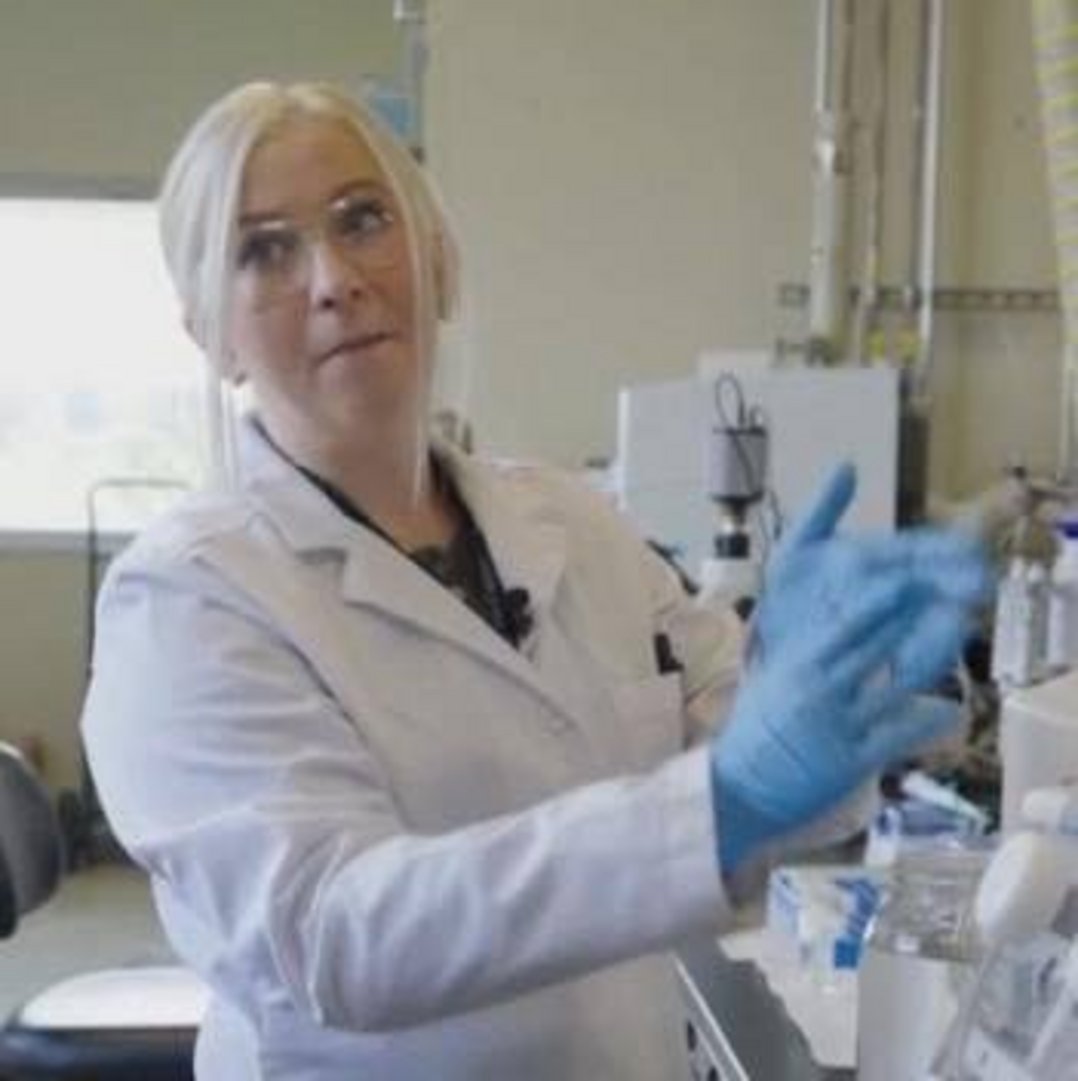
Chloe Tolbert, PhD
Source: Facebook
Building America's Midstream Innovation Ecosystem
The science is only half the story. INL's new 55,000-square-foot Critical Materials and Energy Systems Innovation Center (opens in a new tab) (CME SIC) brings mineral characterization, separations science, pilot-scale processing, and industry collaboration together in one integrated facility. Combined with the METALLIC program (opens in a new tab)—linking nine national laboratories—and strategic partnerships with Colorado School of Mines, Arizona State University, Idaho State University, and industry collaborators including Perpetua Resources (opens in a new tab) (NASDAQ: PPTA) and US Critical Materials, the effort represents a growing national innovation ecosystem rather than a single research project.
Innovation Is America's Strategic Advantage
Dr. Tolbert's closing message may have been the most important of the entire discussion: incremental improvements to legacy technologies will not be enough. Rare Earth Exchanges has argued since our formal launch in early 2025 that America cannot out-China China by copying China's industrial model. It must build something better.
Whether electrophoretic separation ultimately succeeds at commercial scale remains to be proven. But that is precisely how scientific leadership is built—through bold experimentation, sustained public-private collaboration, and a willingness to pursue transformative technologies rather than incremental gains. In the Great Powers Era 2.0, resilience will not be won by mines alone. It will be won by breakthrough science, engineering excellence, and the industrial partnerships that transform laboratory discoveries into resilient American supply chains.
Follow the link to watch the REEx Podcast with Dr. Tolbert (opens in a new tab).
Register today: REEx Marketplace™ (opens in a new tab)


0 Comments
No replies yet
Loading new replies...
Moderator
Join the full discussion at the Rare Earth Exchanges Forum →