
Highlights
- Brazil holds roughly 21 million tonnes of rare earth reserves, second only to China, with strategically valuable ionic clay-hosted heavy rare earth deposits.
- President Lula declared Brazil will no longer export raw minerals while others export technology, signaling a major shift in critical minerals strategy.
- China's dominance stems not from geology but from decades of investment in separation chemistry, metallurgy, magnet manufacturing, and specialized engineering talent.
- The U.S. and Brazil are now attempting to compress decades of industrial development into just a few years—an extraordinarily difficult challenge.
- Investors should track commercial separation capacity, metal and alloy output, magnet production, and long-term offtake agreements as true measures of progress.
Brazilian President Luiz Inácio Lula da Silva (opens in a new tab) says Brazil will no longer be content exporting rocks while others export technology. That ambition places Brazil squarely at the center of what Rare Earth Exchanges® calls Great Powers Era 2.0™—the global competition to control the industrial supply chains underpinning defense, advanced manufacturing, artificial intelligence, robotics, and electrification. Brazil possesses one of the world's richest rare earth endowments, including strategically important ionic clay-hosted heavy rare earth deposits. But geology alone does not create geopolitical power. The winners will be the nations that master separation, metals, alloys, magnets, engineering talent, and industrial execution.
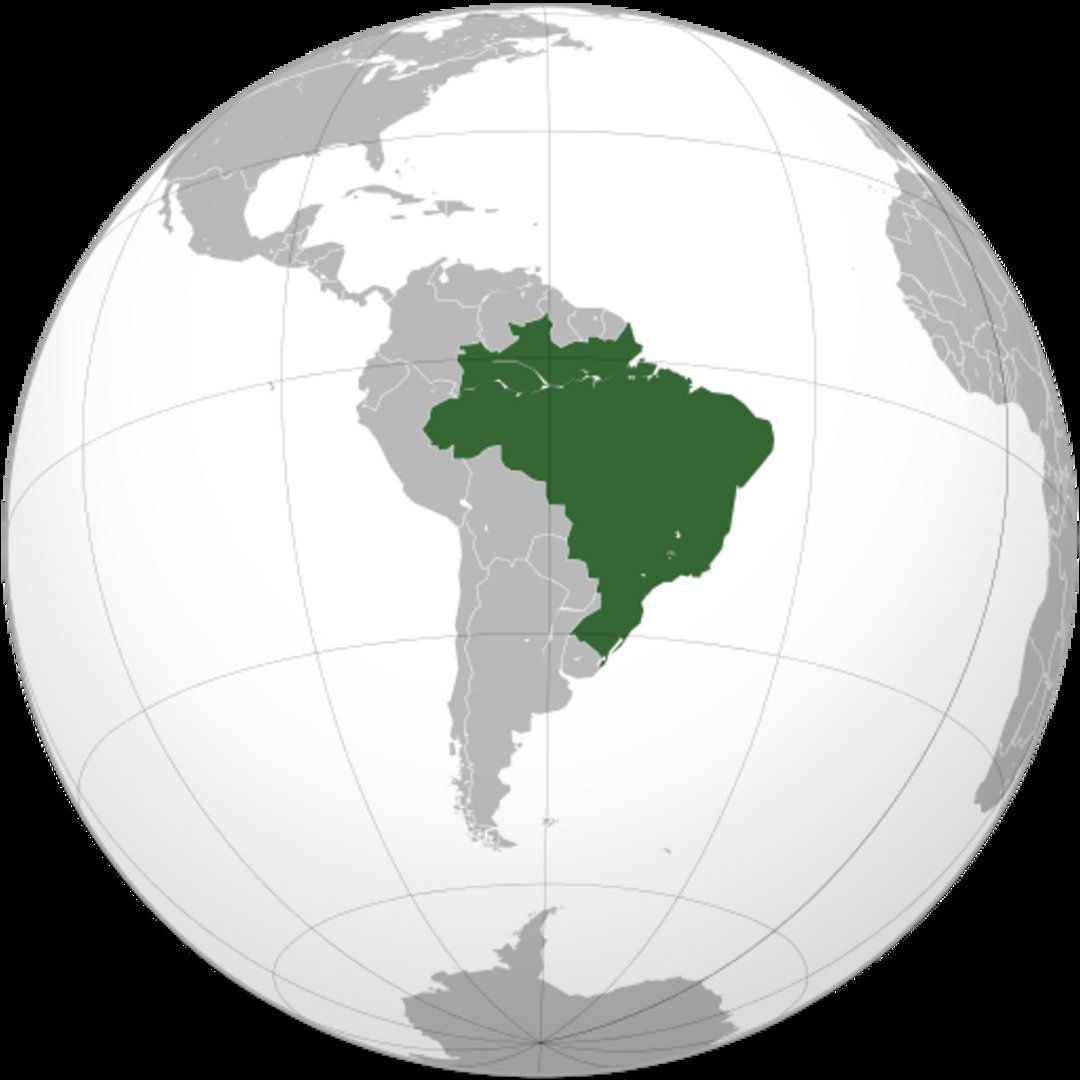
Brazil Has the Ore. China Still Commands the Value Chain.
President Lula's latest remarks reported (opens in a new tab) in Rio Times were equal parts ambition and candor. Following a meeting on Brazil's critical minerals strategy, Lula declared that if the United States worries about China's rare earth dominance, it should begin worrying about Brazil. In the same breath, he acknowledged that until recently he knew relatively little about rare earths, while announcing plans for a national council to accelerate critical mineral technologies.
Rare Earth Exchanges welcomes the strategic direction. Brazil should aspire to export technology—not simply mineral concentrates.
Yet the strategic question is no longer who owns the rocks. It is who controls the industrial ecosystem that transforms those rocks into finished products. According to the U.S. Geological Survey, Brazil holds roughly 21 million tonnes of rare earth reserves, second only to China. More significant than the headline number is the geology itself. Several Brazilian deposits contain ionic clay-hosted mineralization enriched in valuable heavy rare earth elements, placing Brazil among the few jurisdictions capable of meaningfully diversifying future global supply.
The Quiet Advantage Beneath the Surface
Rare Earth Exchanges® has repeatedly highlighted Brazil—not simply because of its reserve base, but because ionic clay deposits such as Serra Verde resemble, in important geological respects, the deposits that underpinned southern China's rise to rare earth dominance.
Every deposit is different. Mineralogy, clay chemistry, impurity profiles, recoveries, and economics vary considerably. Nevertheless, ionic clay deposits can, under favorable geological conditions, permit simpler extraction than many conventional hard-rock rare earth deposits, requiring less intensive crushing and beneficiation before leaching. The true technological challenge, however, begins after mining. Separating seventeen chemically similar rare earth elements into commercial oxides remains one of the world's most sophisticated industrial processes.
That distinction is why Rare Earth Exchanges continues to describe Brazil as one of the most strategically significant rare earth jurisdictions outside China and the ionic clays dispersed in Southeast Asia.
Great Powers Era 2.0™ Is an Industrial Competition
This story perfectly illustrates Rare Earth Exchanges' central thesis. Great Powers Era 2.0™ is not a contest over mineral deposits.
It is a contest over industrial ecosystems. China understood this decades ago. It built universities, chemical engineering programs, solvent extraction expertise, metallurgical capacity, magnet manufacturing, equipment suppliers, state financing mechanisms, and specialized workforces alongside its mining industry. Mining became only the first step in an integrated strategic enterprise.
The United States—and increasingly Brazil—are now attempting to compress decades of industrial development into a handful of years. That is extraordinarily difficult.
Beyond the Headlines
Rare Earth Exchanges has closely followed Brazil's emergence as a strategic battleground, including U.S. investment in Serra Verde, Brasília's insistence on domestic value addition, growing competition among Western allies for Brazilian supply, and the broader geopolitical struggle to reduce dependence on Chinese processing. The speeches matter. The policy matters. But ultimately, success will be measured by far more tangible milestones: commercial separation plants, metal and alloy production, magnet manufacturing, engineering talent, customer qualification, and long-term commercial contracts.
The Investor's Compass
As tracked in the supply chain rankings via REEx Insights, investors should watch for:
- Commercial separation capacity
- Heavy rare earth oxide production
- Metal and alloy manufacturing
- Magnet production
- Engineering workforce development
- Long-term offtake agreements
- Downstream industrial investment
- Government policy consistency
- Strategic partnerships with defense and automotive manufacturers
Rare Earth Exchanges has consistently argued that the winners of Great Powers Era 2.0™ will not necessarily own the largest mineral deposits. They will own the deepest industrial capabilities. Brazil possesses one of the world's greatest geological opportunities. Whether it converts that advantage into a fully integrated rare earth industry will shape not only Brazil's economic future, but also the balance of industrial power between China, the United States, and the broader Western alliance for decades to come.


0 Comments
No replies yet
Loading new replies...
Moderator
Join the full discussion at the Rare Earth Exchanges Forum →