
Highlights
- Niron Magnetics poured first concrete for its Sartell, Minnesota facility, targeting 1,500 metric tons annually of rare-earth-free permanent magnets by 2027.
- The company's proprietary iron nitride technology offers the first commercially credible alternative to rare earth permanent magnets in decades.
- The facility consolidates material production and magnet manufacturing under one roof, strengthening domestic supply chain resilience.
- Construction aligns with the Department of Defense's DFARS 2027 sourcing requirements, addressing urgent demand to reduce reliance on Chinese magnet supply chains.
- Niron's milestone signals that magnet market diversification—not a single chemistry—will define America's critical minerals strategy in the Great Powers Era.
The future of permanent magnets is beginning to take physical shape. This week, Niron Magnetics poured the first concrete for its new commercial manufacturing facility in Sartell, Minnesota, marking a significant milestone in the race to strengthen America's magnet supply chain. Expected to begin production in 2027, the 287,000-square-foot facility will produce up to 1,500 metric tons annually of high-performance rare-earth-free permanent magnets, bringing material production and magnet manufacturing together under one roof.
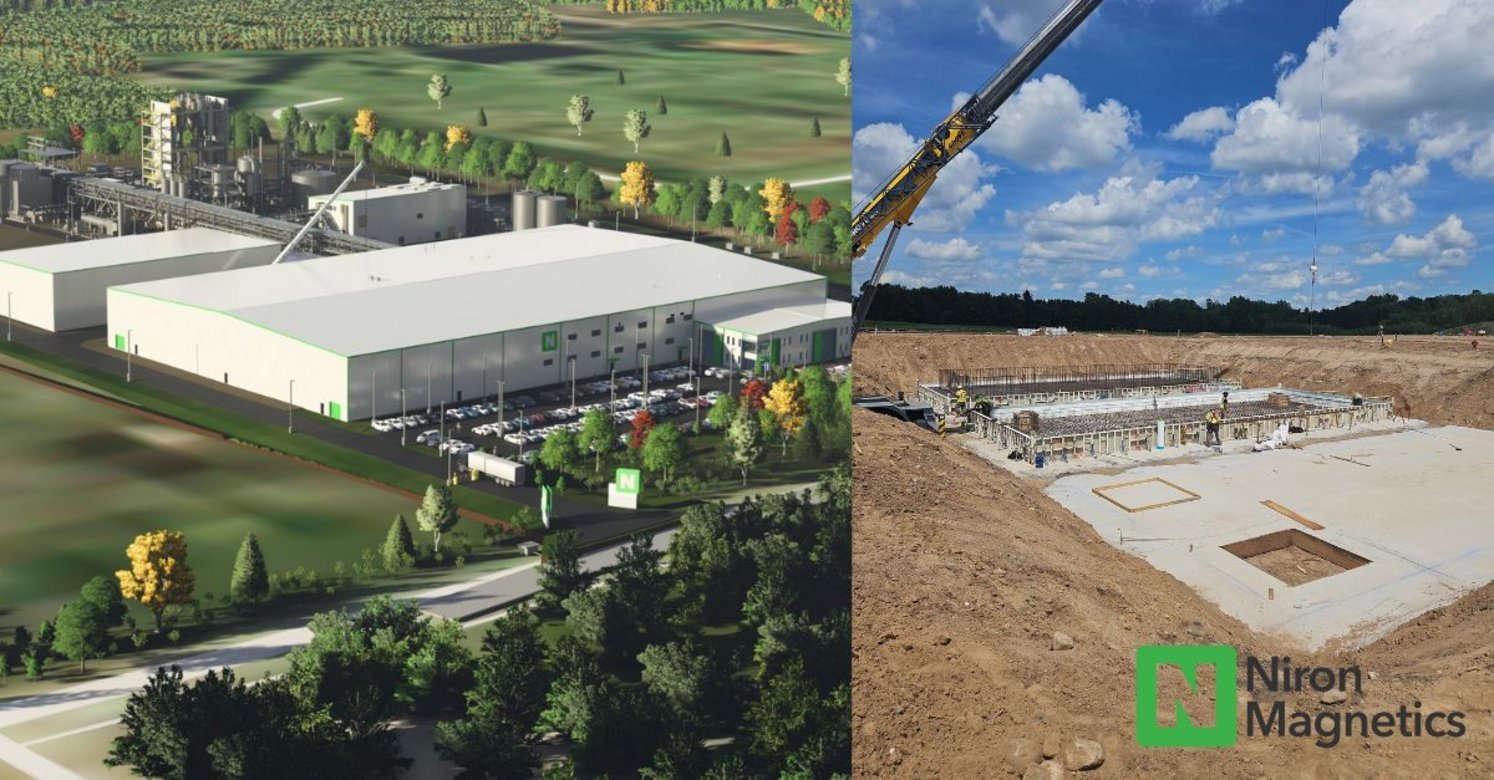
For Rare Earth Exchanges®, the groundbreaking represents more than another factory announcement—it is evidence that innovation is becoming a critical complement to rebuilding the West's mine-to-magnet ecosystem. As discussed in our recent podcast interview with Tom Grainger, Niron's Vice President of Commercial and Corporate Development (opens in a new tab), the company's proprietary iron nitride technology offers the first commercially credible alternative to rare earth permanent magnets in decades. Rather than competing head-on with every rare earth application, Niron aims to diversify the magnet marketplace by providing a domestic option for applications where supply-chain resilience, performance, and cost can align.
The timing could hardly be more important. With China's continued dominance in rare earth processing and permanent magnet production—and the Department of Defense's stringent DFARS 2027 sourcing requirements rapidly approaching—manufacturers are actively seeking technologies that reduce strategic dependence on Chinese supply chains.
Construction in Sartell moves that vision one step closer to reality. While rare earth magnets will remain indispensable across many advanced applications for years to come, companies like Niron demonstrate that innovation itself has become part of America's critical minerals strategy. The future Western magnet market is unlikely to depend on a single chemistry, but rather on a portfolio of technologies that collectively improve resilience, strengthen domestic manufacturing, and reduce geopolitical risk. For investors and industry alike, the foundation being poured in Minnesota is more than concrete—it is another building block in the emerging industrial architecture of the Great Powers Era 2.0™.


0 Comments
No replies yet
Loading new replies...
Moderator
Join the full discussion at the Rare Earth Exchanges Forum →