
Highlights
- The 4th MSIT Seminar on Rare-Earth Materials & Magnet Technology convenes November 16–17, 2026, in Stuttgart, Germany, covering the full mine-to-magnet value chain.
- China's export controls and U.S. industrial policy are reshaping permanent magnets from engineered materials into strategic assets, forcing Europe to accelerate its response.
- Speakers from HyProMag, ZF Friedrichshafen, Vestas, Max Planck Institute, and U.S. and Brazilian experts will address every stage of the permanent magnet ecosystem.
- Europe's critical bottleneck may lie downstream—in precision magnet manufacturing, automation, and qualification—not just in mining and processing.
- The EU's Critical Raw Materials Act offers a foundation, but experts warn legislation alone cannot build globally competitive magnet manufacturing ecosystems.
As Washington races to rebuild supply chains and Beijing tightens control over rare earths, Europe confronts a defining industrial question: can it move fast enough? Europe's permanent magnet industry has reached an inflection point. As the United States pours billions into rebuilding domestic rare earth supply chains and China increasingly treats rare earths and permanent magnets as instruments of industrial statecraft, Europe finds itself confronting an uncomfortable question: can it still compete in one of the world's most strategically important manufacturing sectors?
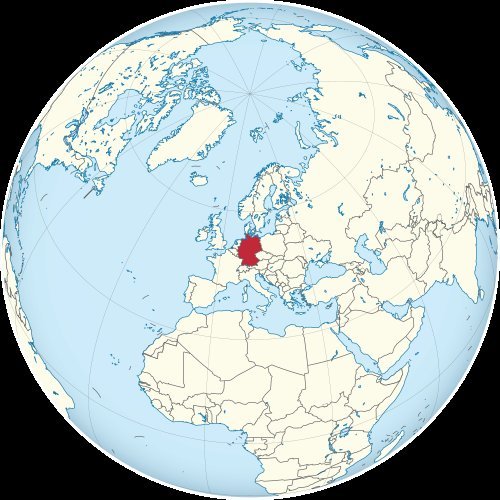
That question will hang over the 4th MSIT Seminar on Rare-Earth Materials & Magnet Technology (opens in a new tab), taking place November 16–17, 2026, at the Parkhotel Stuttgart Messe-Airport in Leinfelden-Echterdingen, Germany, with simultaneous online participation. Far more than another technical conference, the event has become a timely forum where materials science, industrial strategy, geopolitics, and manufacturing economics converge.
Why Stuttgart Matters
Few locations better symbolize Europe's industrial challenge than Stuttgart. Home to Mercedes-Benz, Porsche, Bosch, Mahle, and one of the world's deepest concentrations of automotive engineering and advanced manufacturing expertise, the region represents the heart of Europe's industrial economy. Holding one of Europe's premier rare earth and permanent magnet conferences here is more than symbolic—it places the critical minerals discussion at the center of the continent's manufacturing engine.
Organized by Materials Science International Services GmbH (MSI (opens in a new tab)) and PPM Intl. GmbH (opens in a new tab) under the leadership of Dr. Bernd Grieb (opens in a new tab), the seminar follows the complete "mine-to-magnet" value chain: rare earth geology, mining, separation, metals, NdFeB alloy production, powder processing, permanent magnet manufacturing, recycling, measurement technologies, and commercial applications. The published program remains subject to change, but its scope reflects the industry's most pressing technical and commercial challenges.
More Than Materials Science
Ten years ago, this would have been primarily a materials science conference. In 2026, it has become something much larger.
Every discussion about grain boundary diffusion, alloy chemistry, magnet measurements, recycling, and production technologies now sits within a geopolitical framework shaped by export controls, industrial subsidies, national security, supply-chain resilience, and intensifying competition between the United States and China.
Permanent magnets are no longer simply engineered materials. They have become strategic industrial assets.
A Program That Mirrors the Global Supply Chain
The speaker roster reflects virtually every stage of the permanent magnet ecosystem.
David Kennedy of HyProMag Ltd. (opens in a new tab) and the University of Birmingham will discuss rare earth mining, processing, and recycling—areas where HyProMag has become a leading commercial innovator through hydrogen-assisted magnet recovery.
Dr. Frank Stein of the Max Planck Institute for Sustainable Materials (opens in a new tab) and Dr. Andre Schneider of Thermo-Calc Software (opens in a new tab) will examine alloy thermodynamics, phase equilibria, grain boundary diffusion, and microstructure—the materials science that ultimately determines magnetic performance.
Professor Alexandros Charitos of TU Bergakademie Freiberg (opens in a new tab) will explore molten-salt electrolysis and alloy production, while Professor Dagmar Goll of Aalen University (opens in a new tab) will present on additive manufacturing and magnetic materials, highlighting emerging production methods that may reshape future manufacturing economics.
The downstream economy receives equal attention.
Dr. David Schuller of ZF Friedrichshafen (opens in a new tab) addresses electric traction drives. Priyanka Manda Golatgaonka of Vestas (opens in a new tab) examines wind power applications. Experts from Festo, Grundfos, Brockhaus Messtechnik, M-Pulse, and Heraeus AMLOY Technologies cover industrial automation, magnetic measurement, magnetization, recycling, and sustainable manufacturing.
From outside Europe, Dr. Stanley Trout of Spontaneous Materials (opens in a new tab) will provide an update on emerging U.S. magnet production, while Professor Fernando Landgraf of the University of São Paulo (opens in a new tab) examines Brazil's expanding rare earth opportunities.
Collectively, the program follows the entire industrial chain—from ore to motor.
The Geopolitics No One Can Ignore
This conference may be technical, but geopolitics will shape nearly every discussion.
China continues to dominate the global rare earth value chain, particularly in separation, metals, alloys, and NdFeB magnet production. Its export licensing regime has demonstrated that magnets and heavy rare earths are no longer merely commercial products—they have become strategic policy instruments.
The United States has responded with aggressive industrial policy, public financing, domestic magnet projects, defense procurement requirements, and efforts to rebuild an integrated mine-to-magnet ecosystem. Europe's response has been more measured.
Whether measured becomes sufficient is now an open question. The European Union's Critical Raw Materials Act represents meaningful progress, but legislation alone cannot create globally competitive manufacturing ecosystems. Factories require skilled labor, machine tools, precision machining, automation, testing laboratories, qualification infrastructure, recycling networks, and long-term industrial demand. That is precisely why Stuttgart matters.
Europe's Next Challenge Lies Downstream
Interestingly, much of Europe's policy debate continues to focus upstream—mining, processing, and recycling.
Yet conversations across the industry increasingly point to a different commercial bottleneck.
Producing rare earth oxide is one challenge. Producing metal and alloy is another.
Producing precision-finished, automotive-qualified magnets profitably at industrial scale may prove to be the greatest challenge of all.
Topics such as machining, coatings, production yields, automation, quality assurance, magnetization, and qualification rarely dominate political speeches. They may ultimately determine whether Europe builds a competitive magnet industry—or simply another collection of isolated projects.
REEx Takeaway
Europe does not suffer from a shortage of scientific expertise. Nor does it lack world-class automotive companies, engineering talent, research institutions, or industrial innovation. What it increasingly lacks is time. The United States and China are actively competing to shape the industrial architecture of the twenty-first century. Europe now faces a defining choice: accelerate the development of an integrated mine-to-motor ecosystem or remain heavily dependent on supply chains increasingly influenced by geopolitical competition.
By the time delegates leave Stuttgart in November, they will almost certainly understand the technical challenges ahead.
The larger question is whether Europe's political leaders, manufacturers, and investors will move quickly enough to solve them.


0 Comments
No replies yet
Loading new replies...
Moderator
Join the full discussion at the Rare Earth Exchanges Forum →