
Highlights
- Malaysia's Parliamentary Special Select Committee has concluded hearings on Lynas Rare Earths' role in the U.S. defense supply chain, recommending a clearer foreign investment framework within two weeks.
- The committee called for coordination across multiple ministries and legal guidance from the Attorney General on implications for Malaysia's international agreements.
- Malaysia's ionic clay rare earth deposits are attracting intensifying interest from the U.S., Japan, France, and Belgium as Western nations seek alternatives to China's dominance of heavy rare earth supply.
- Rare Earth Exchanges frames the developments under its Great Powers Era 2.0 thesis, arguing that control of complete supply chains—from mine to magnet—now defines strategic advantage over mere mineral ownership.
- Southern Alliance Mining's ionic clay assets in Malaysia could see substantially increased value as global competition for heavy rare earth processing capacity accelerates.
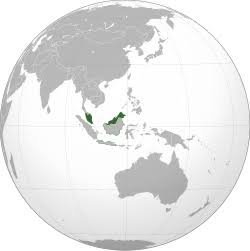
Malaysia's Parliament has begun examining far more than Lynas Rare Earths' (ASX: LYC) role in the U.S. defense supply chain. A parliamentary committee is urging the government to establish a clearer foreign investment policy for rare earths, obtain legal guidance on international agreements, and publicly define Malaysia's strategic position. Rare Earth Exchanges® believes the real story extends well beyond domestic politics. Under the REEx Great Powers Era 2.0™ thesis, governments are no longer competing simply for mineral resources—they are competing to control entire strategic supply chains from mine to magnet. Malaysia's ionic clay rare earth deposits have consequently become one of the world's most coveted geopolitical assets, attracting growing interest from the United States, Japan, France, Belgium, and other nations seeking alternatives to China's overwhelming dominance of heavy rare earth supply.
A Political Hearing That Reveals an Economic Awakening
Sometimes the most important news hides between the lines.
Malaysia's Parliamentary Special Select Committee on International Relations and International Trade has concluded hearings examining Lynas Rare Earths' (ASX: LYC) participation in the U.S. defense supply chain. The committee's statement—published by Chairman Wong Chen (opens in a new tab) on his official Facebook page (opens in a new tab)—focuses publicly on Malaysia's foreign policy, national reputation, and support for Palestine.
Investors, however, should recognize the larger story.
Rare Earth Exchanges has consistently argued that Great Powers Era 2.0 is fundamentally a contest for industrial control rather than simply resource ownership. Nations increasingly recognize that whoever controls rare earth feedstocks, separation, metals, alloys, magnets, digital provenance, and downstream manufacturing ultimately possesses greater strategic leverage than nations that merely own mineral deposits.
Malaysia's Parliament is beginning to acknowledge that reality.
Wong Chen, Chairman of the Malaysia Debt Ventures Berhad

What the Committee Actually Recommended
As REEx translated from the original Malay, the committee recommended:
- closer coordination among MITI, the Ministry of Foreign Affairs, NRES, and MOSTI;
- legal advice from the Attorney General regarding implications for Malaysia's international agreements;
- a clearer foreign direct investment framework protecting Malaysia's sovereignty, reputation, and national interests;
- an official government position within two weeks; and
- a comprehensive parliamentary report documenting its findings.
These recommendations are measured and fact-based. They do not call for restricting Lynas or abandoning existing agreements. Instead, they implicitly recognize that rare earth investment has become inseparable from diplomacy, industrial policy, and national security.
Malaysia Is Becoming the Next Strategic Battleground
Rare Earth Exchanges has repeatedly documented that Malaysia's ionic clay rare earth deposits are emerging as one of the world's most strategically valuable critical mineral opportunities.
Governments and industrial partners from Japan, France, Belgium, the United States, and elsewhere have intensified engagement as Western economies scramble to diversify heavy rare earth supply away from China.
Viewed through the Great Powers Era 2.0 framework, this is entirely predictable. The contest is no longer simply about discovering new ore bodies. It is about securing every link in resilient, allied supply chains capable of producing separated oxides, metals, alloys, permanent magnets, and ultimately advanced defense and industrial technologies.
That evolving landscape materially elevates the strategic importance of companies with Malaysian exposure, including Southern Alliance Mining (SGX: QNS), whose ionic clay assets could become substantially more valuable if commercial production and downstream processing mature as anticipated.
The Quiet Omission
The committee statement is notable for what it does not discuss.
It frames the issue largely through diplomacy and domestic politics while giving comparatively little attention to the accelerating global competition for ionic clay deposits, heavy rare earth processing, and downstream manufacturing capacity. That omission is understandable given the committee's mandate, but it leaves investors without the broader strategic picture.
Reuters likewise reported that the hearing was prompted primarily by domestic concerns surrounding Lynas' Pentagon agreement and Malaysia's longstanding support for Palestine—not by questions over the commercial viability of the rare earth sector itself.
For Rare Earth Exchanges, however, the broader conclusion is unmistakable. Malaysia is no longer simply home to one of the world's most important rare earth processing facilities. It is increasingly recognizing that it possesses strategic geological assets that major powers urgently need. As governments rethink critical mineral security, foreign investment policy is becoming industrial policy, industrial policy is becoming national security policy, and under the Great Powers Era 2.0 framework, the nations that control complete strategic value chains—not merely mineral deposits—will enjoy the greatest geopolitical and economic advantage.
Source: Media statement published by Wong Chen, Chairman of Malaysia's Parliamentary Special Select Committee on International Relations and International Trade and Member of Parliament for Subang, via his official Facebook page, July 17, 2026. Reuters also reported on the parliamentary hearings and their geopolitical context.


0 Comments
No replies yet
Loading new replies...
Moderator
Join the full discussion at the Rare Earth Exchanges Forum →