
Highlights
- GSI findings and India's Act East Policy are positioning the Northeast as a potential critical minerals hub in the Indo-Pacific.
- Promising geology must be backed by separation, refining, metals, magnets, and advanced manufacturing to create real strategic value.
- India has existing rare earth capabilities through IREL Limited, but scaling into globally competitive supply chains requires far more investment.
- Under Great Powers Era 2.0, economic winners will own the full value chain—not just the mineral deposits.
- Geographic proximity to Southeast Asia and a growing policy framework give India meaningful but not sufficient advantages.
India's Northeast is emerging as one of the country's most promising frontiers for rare earth exploration. A recent commentary argues that new Geological Survey of India (GSI (opens in a new tab)) findings, combined with New Delhi's Act East Policy and expanding infrastructure, could elevate the region into a future critical minerals hub. Rare Earth Exchanges® agrees that the geology appears increasingly prospective, but investors should distinguish between mineral potential and commercially integrated supply chains. The real prize is not simply discovering rare earth deposits—it is building separation, refining, metals, magnets, and advanced materials industries that capture far greater economic and strategic value.
India's Northeast Holds Promise—But Geology Alone Won't Challenge China
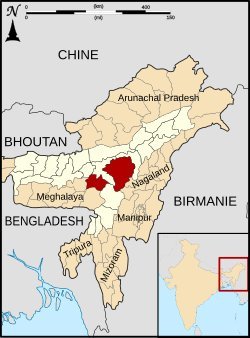
India's strategic center of gravity for critical minerals is increasingly shifting toward its Northeast. A recent analysis argues that promising discoveries by the GSI, combined with improved infrastructure and New Delhi's Act East Policy, could position the region as an important contributor to future Indo-Pacific rare earth supply chains. That thesis is supported by a growing body of geological research. Studies have identified the Karbi-Meghalaya Plateau, (opens in a new tab) associated carbonatite-alkaline complexes, and nearby mineralized provinces as prospective hosts for rare earth elements, niobium, and other critical minerals. While exploration remains ongoing, the science increasingly supports the region's long-term potential.
From Discovery to Industrial Reality
The commentary correctly highlights China's continued dominance across rare earth separation, refining, and downstream manufacturing while emphasizing the strategic need for supply-chain diversification. Where investors should exercise caution is in assuming that promising geology automatically translates into strategic market leadership. India is not starting from scratch. The country already possesses rare earth mining and processing capabilities through IREL (India) Limited (opens in a new tab), along with decades of experience processing monazite-bearing mineral sands. However, transforming new discoveries into globally competitive supply chains requires substantially more than resource development. Commercial success depends on expanding separation capacity, refining, metals, alloys, magnets, customer qualification, logistics, and advanced manufacturing.
The REEx Perspective
For investors, Northeast India represents something larger than another exploration story.
Under Great Powers Era 2.0™, governments increasingly recognize that the greatest economic returns come not from exporting ore, but from capturing progressively more value across the supply chain. Every additional downstream step—from separation and refining to metals, magnets, recycling, and advanced materials—creates higher margins, greater technological capability, and stronger strategic resilience.
India possesses favorable geology, a growing domestic manufacturing base, an expanding policy framework, and geographic proximity to Southeast Asia. Those are meaningful advantages. Whether the Northeast ultimately becomes a globally significant rare earth hub, however, will depend less on what lies beneath the ground than on what India builds above it. In the emerging critical minerals economy, the winners will not simply own the deposits—they will own the value chain.


0 Comments
No replies yet
Loading new replies...
Moderator
Join the full discussion at the Rare Earth Exchanges Forum →