
Highlights
- China's Rare Earth Industry Association toured Dongguan magnet manufacturers, signaling continued focus on governing the full rare earth value chain.
- Discussions covered export control compliance, volatile raw material prices, and rare earth traceability systems—key pillars of China's supply-chain strategy.
- Permanent magnets for robotics, drones, EV motors, and intelligent manufacturing were highlighted as China's core strategic downstream priority.
- Beijing's model relies on continuous ecosystem coordination rather than episodic policy announcements, making its advantage difficult for rivals to replicate.
- Western nations face growing pressure to match China's midstream capabilities in separation, alloys, magnet production, and provenance tracking.
An apparently routine industry tour reveals Beijing's continued focus on the real strategic prize: permanent magnets, export control implementation, and supply-chain governance.
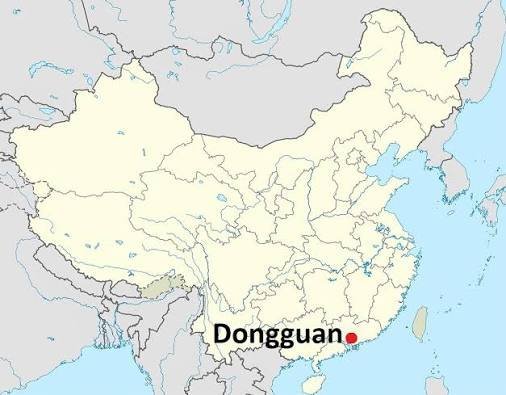
Industry association visits rarely make international headlines. This one deserves attention. China's Rare Earth Industry Association (CREIA) announced that Vice Chairman and Secretary General Lin Anli spent July 16–17 touring magnet manufacturers across Dongguan, one of China's premier advanced manufacturing hubs. No new export restrictions were announced. No major investment package was unveiled.
Yet the discussions themselves reveal where Beijing continues to focus its efforts: not simply extracting rare earths, but coordinating the industrial ecosystem that transforms them into high-value strategic products.
The Midstream Remains China's Strategic Advantage
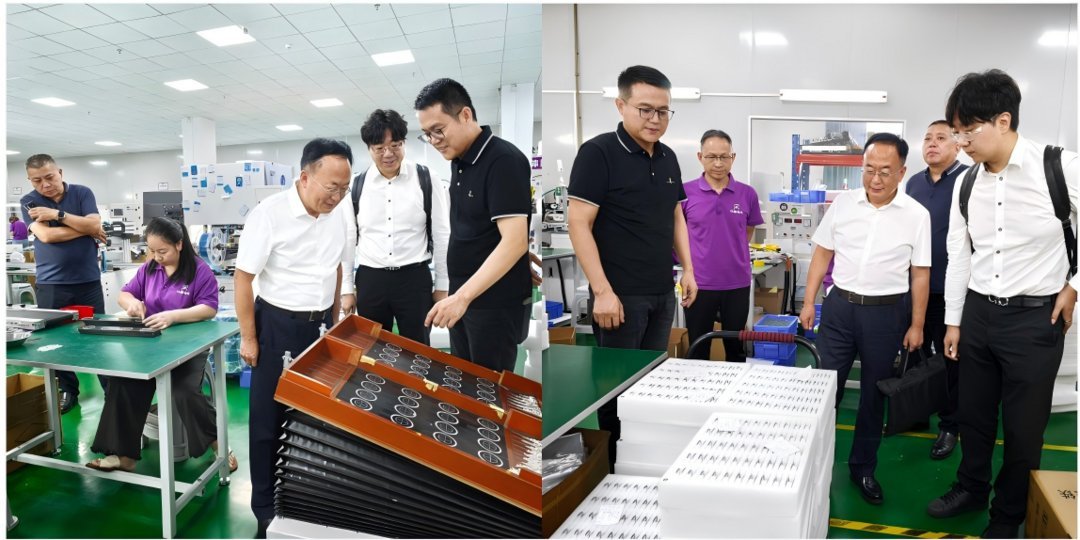
The delegation visited Dongguan Jinkun New Materials, Dongguan Jiahao Magnetic Products, Dongguan Hanjiang Magnetoelectric, and Guangdong Dongguan Motor Co., where discussions covered consumer electronics, permanent magnets, factory automation, electric motors, robotics, drones, and intelligent manufacturing.
Three topics stood out:
- volatile rare earth raw material prices;
- export control policies;
- rare earth traceability systems.
These are not isolated operational concerns. Together they point to continued attention on the governance of China's rare earth supply chain—from raw materials through finished magnet production.
Traceability Quietly Advances
Perhaps the most significant takeaway is the continued discussion of rare earth traceability systems.
The original Chinese report provides few technical details, but its inclusion alongside export controls and raw material pricing suggests China continues to strengthen oversight of material flows throughout its domestic supply chain. For Western manufacturers facing increasingly stringent sourcing requirements, provenance is rapidly becoming as strategically important as production capacity. Ironically, the United States and its allies are pursuing many of the same objectives through defense procurement rules, supply-chain transparency initiatives, and chain-of-custody requirements.
Permanent Magnets Remain the Strategic Prize
Officials repeatedly emphasized rare earth permanent magnets as enabling technologies for robotics, unmanned aerial systems (UAS), intelligent manufacturing, wireless charging, and high-efficiency industrial motors. Executives also described growing demand for high-performance NdFeB (neodymium-iron-boron) magnets while acknowledging both technical progress and continuing challenges in China's domestic substitution efforts. The broader message aligns with China's long-term industrial strategy: capture more value downstream, strengthen manufacturing capabilities, and reinforce coordination between upstream suppliers and downstream manufacturers.
The REEx Take
What makes this report significant is not a single announcement but what it reveals about China's operating model.
Rather than relying on episodic policy pronouncements, Beijing appears to be continuously coordinating its rare earth ecosystem—from raw material pricing and export compliance to traceability, automation, end-use applications, and industrial collaboration. That ongoing coordination helps sustain advantages that are difficult to replicate through individual investments alone.
In the Great Powers Era 2.0™, the decisive competition is increasingly centered on the industrial midstream: separation, metals, alloys, permanent magnets, qualification, provenance, and advanced manufacturing. This delegation reinforces a core Rare Earth Exchanges® thesis: strategic advantage will belong not simply to the countries that mine rare earths, but to those that orchestrate the entire value chain.


0 Comments
No replies yet
Loading new replies...
Moderator
Join the full discussion at the Rare Earth Exchanges Forum →