
Highlights
- China's published rare earth prices reflect state quotas, export controls, and Communist Party priorities—not transparent global market discovery.
- Outside China, roughly 90% of separation capacity remains Chinese, leaving Western buyers reliant on confidential bilateral contracts with highly variable terms.
- Heavy rare earth availability—not price—is increasingly the critical challenge for Western manufacturers seeking dysprosium, terbium, and other critical materials.
- DoD-backed price floors for NdPr at $110/kg and terbium at $2,050/kg are bespoke strategic deals, not benchmarks for the broader ex-China market.
- Investors and procurement teams must recognize that no single 'Western price' for rare earths exists today—every contract tells its own story.
One of the biggest mistakes investors make is assuming China's published rare earth prices represent transparent global market prices. They do not. China's rare earth industry operates inside a hybrid socialist-capitalist system where production quotas, state-owned enterprises, export licensing, industrial planning, environmental mandates, and Communist Party strategic priorities all influence supply and pricing. Domestic prices therefore function more as state-influenced reference prices than the kind of market-discovered benchmarks seen in globally traded commodities such as copper, gold, or crude oil.
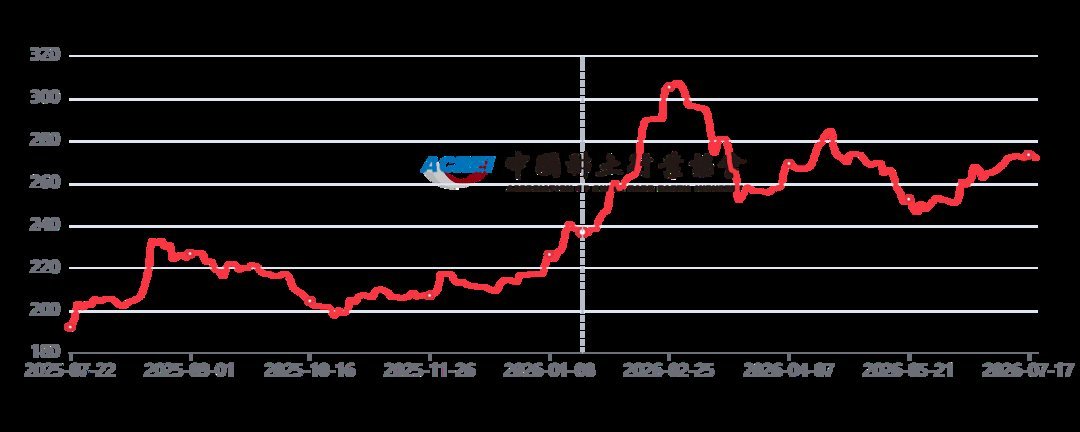
Today's CREIA prices provide an important indicator of conditions inside China, but they should not be interpreted as the prices Western manufacturers can necessarily obtain.
Among major products:
- NdPr Oxide: ¥749.4–769.4/kg (US$112.41–115.41/kg) ↓
- NdPr Alloy: ¥911–931/kg (US$136.65–139.65/kg) ↓
- Dysprosium Oxide: ¥1,395–1,435/kg (US$209.25–215.25/kg) ↓
- Terbium Oxide: ¥5,000–5,200/kg (US$750–780/kg) →
- Holmium Oxide: ¥621.7–641.7/kg (US$93.26–96.26/kg) →
- Yttrium Oxide: ¥15–17/kg (US$2.25–2.55/kg) →
(Conversions use ¥7.5 = US$1.00.)
The Ex-China Market Is Also Far From Perfect
The irony is that the market outside China is not a fully transparent market either. With roughly 90% of global rare earth separation capacity still located in China, only a small fraction of refined material trades through non-Chinese supply chains. Most Western transactions occur through confidential bilateral contracts negotiated over-the-counter between producers and customers.
Each agreement can differ materially depending upon:
- product specification and purity;
- delivery schedules;
- security-of-supply provisions;
- financing arrangements;
- processing location;
- geopolitical risk allocation;
- strategic partnership terms.
Unlike copper or aluminum, there is no deep, continuously traded exchange establishing universally accepted spot prices. Pricing agencies provide valuable market intelligence, but they generally collect information from a relatively small universe of producers, traders, brokers, and consumers. Their published assessments therefore represent informed snapshots—not definitive market-clearing prices. REEx has repeatedly cautioned that corporate procurement teams should understand precisely what these indices measure before assuming they represent universally executable transaction prices.
Heavy Rare Earths: Scarcity Is Now More Important Than Price
Perhaps the most important development is that availability—not price—is increasingly becoming the defining characteristic of the heavy rare earth market outside China. Numerous Western manufacturers report that materials including dysprosium, terbium, yttrium, erbium, holmium, thulium, ytterbium, and lutetium can be difficult—or in some cases impossible—to procure consistently in commercial quantities.
Consequently, a quoted Chinese domestic price may have little practical relevance for a Western buyer attempting to secure physical supply.
Price Floors Illustrate Strategy—Not the Entire Market
Recent strategic transactions demonstrate just how specialized the emerging ex-China market has become.
The U.S. Department of Defense-backed agreement with MP Materials established a US$110/kg floor for NdPr under that specific arrangement. Separately, the USA Rare Earth–Serra Verde transaction created what appears to be the industry's first publicly disclosed contractual heavy rare earth price floors, including approximately US$575/kg for dysprosium and US$2,050/kg for terbium, together with US$110/kg floors for neodymium and praseodymium, under a 15-year government-supported offtake structure.
These agreements are historically important because they establish financing certainty for strategically important projects. However, they should not be extrapolated across the broader ex-China market. Every long-term rare earth agreement remains highly bespoke, reflecting unique commercial negotiations, geopolitical considerations, product forms, delivery obligations, financing structures, and customer requirements. There is no single "Western price" for rare earths today.
Buyer beware: in today's fragmented rare earth market, every contract tells its own story to a large extent. Only with time, separation and metallization at scale, and transparency will this ex-China market begin to become more stable and predictable.
Disclaimer: This report is based primarily on pricing information and market commentary published by the China Rare Earth Industry Association (CREIA), an industry organization operating within China's state-directed rare earth sector. The reported prices reflect domestic Chinese reference prices and should not be interpreted as transparent, globally market-discovered prices. China's rare earth market is influenced by government production quotas, export controls, industrial policy, state-owned enterprises, and broader national economic and security objectives. Likewise, the emerging ex-China rare earth market lacks deep, transparent price discovery, as most transactions occur through confidential bilateral agreements with bespoke commercial terms. The analysis presented herein incorporates independent commentary and market interpretation from Rare Earth Exchanges® and should not be construed as investment, legal, or procurement advice. Readers should independently verify pricing, availability, and contractual terms before making commercial or investment decisions.


0 Comments
No replies yet
Loading new replies...
Moderator
Join the full discussion at the Rare Earth Exchanges Forum →