
Highlights
- Senior scientists, engineers, and executives convened in Hohhot to outline rare earth research priorities for China's 15th Five-Year Plan covering 2026–2030.
- Discussions centered on higher-value utilization of rare earths and balanced development across the full rare earth value chain, not just mining and processing.
- China Northern Rare Earth and leading academic institutions demonstrated the tight coordination between government, industry, and research that shapes long-term materials strategy.
- The forum signals that competitive advantage in rare earths increasingly depends on advanced materials and downstream manufacturing, not just mineral resource ownership.
- Western investors and policymakers should note that China is already organizing and prioritizing the next generation of rare earth technologies years before commercialization.
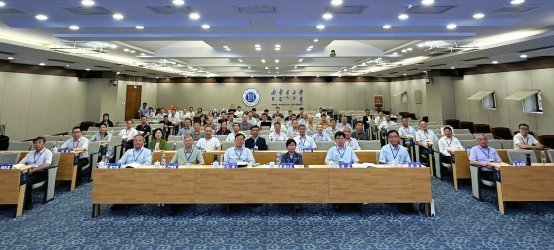
The most important rare earth announcements are not always new mines or new factories. Sometimes they are the meetings that determine where future investment and research will flow. At the 28th Annual Meeting of the China Association for Science and Technology (CAST), leading scientists, engineers, executives, and policymakers convened in Hohhot for a high-level forum on "Key Components and Materials for High-End Equipment." No new products or commercial agreements were unveiled. Instead, the gathering outlined research priorities that will help shape the rare earth materials agenda under the nation's 15th Five-Year Plan (2026–2030). For investors, the significance lies not in an immediate breakthrough, but in the degree of coordination between government, academia, and industry.
Planning Tomorrow's Materials Economy
The forum brought together senior representatives from the Chinese Academy of Sciences, Chinese Academy of Engineering, major universities, research institutes, and China Northern Rare Earth, one of the world's largest rare earth producers. Presentations focused on the future of rare earth permanent magnets, optical functional materials, and other advanced materials needed for high-end manufacturing. Speakers reviewed progress made during the 14th Five-Year Plan while identifying research priorities for the next planning cycle. Perhaps most revealing were the closed-door discussions among senior academicians on two recurring themes Rare Earth Exchanges® has called attention to in the West: higher-value utilization of rare earths and balanced development across the rare earth value chain.
The Story Behind the Story
The forum demonstrates how the country's rare earth ecosystem aligns scientific research, industrial policy, and manufacturing strategy years before products reach commercial markets. Rare Earth Exchanges has consistently argued that competitive advantage increasingly depends not simply on producing more rare earth oxides, but on creating higher-value materials that feed advanced manufacturing. Permanent magnets, optical materials, catalysts, polishing compounds, hydrogen technologies, and other engineered products all represent opportunities to capture more value downstream.
The repeated emphasis on higher-value utilization also mirrors recent policy discussions encouraging broader commercial applications for abundant light rare earth elements while preserving scarce heavy rare earth elements for strategically important applications.
Why Investors Should Care
Western governments often focus on financing mines and processing plants. This forum highlights another dimension of competition: coordinated long-term planning across research institutions, universities, state-owned enterprises, and industry associations.
The news is not that a breakthrough occurred. The news is that the next generation of rare earth technologies is already being organized, prioritized, and coordinated. For investors, that reinforces a central Rare Earth Exchanges thesis: the future competitive battleground is not simply ownership of mineral resources—it is leadership in advanced materials, downstream manufacturing, and commercialization.
Source Disclaimer: This report is based on information published by the Chinese Society of Rare Earths, an organization operating within China's state-directed scientific and industrial ecosystem. The statements reflect official communications and should be independently verified before being relied upon for investment, commercial, engineering, or policy decisions.


0 Comments
No replies yet
Loading new replies...
Moderator
Join the full discussion at the Rare Earth Exchanges Forum →