
Highlights
- Indian FM Jaishankar and Chinese FM Wang Yi met at ASEAN Foreign Ministers' Meeting in Manila, signaling cautious diplomatic progress.
- India insists lasting normalization requires sustained Himalayan border peace, fair market access, and more predictable supply chains.
- China dominates rare earth separation, refining, and permanent magnet production while India lags in midstream processing capabilities.
- Improved bilateral relations may ease trade tensions but do not alter structural concentration of critical mineral processing globally.
- Control over critical mineral supply chains—not territorial expansion—is increasingly the defining contest of the Great Powers Era 2.0.
The latest meeting between Indian External Affairs Minister S. Jaishankar and Chinese Foreign Minister Wang Yi at the ASEAN Foreign Ministers' Meeting in Manila (opens in a new tab) signals a measured thaw in one of Asia's most consequential geopolitical relationships. Yet beneath the diplomatic language lies a far larger strategic contest defining what Rare Earth Exchanges® calls the Great Powers Era 2.0™.
China's objectives were clear: stabilize bilateral relations, deepen BRICS coordination under India's presidency, and encourage greater regional cooperation while reinforcing Beijing's vision of a multipolar world. India welcomed dialogue but reiterated that lasting normalization depends on sustained peace along the disputed Himalayan border while pressing for fair market access, balanced trade, and more predictable supply chains.
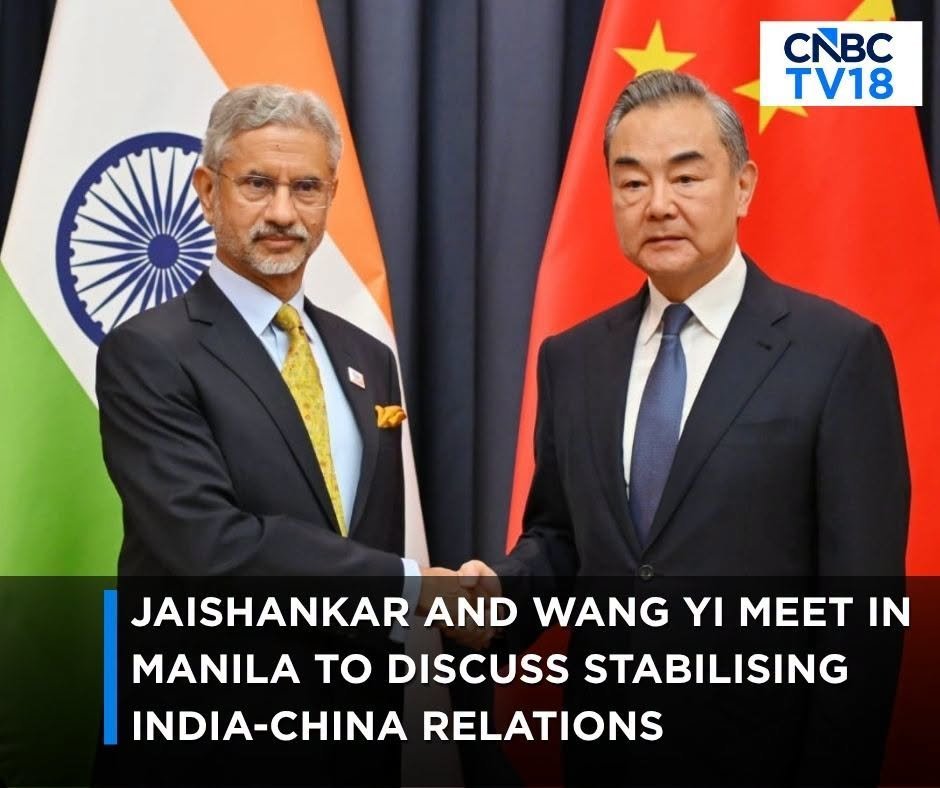
Source: Facebook; CNBC TV 18 India
For investors and industrial leaders, the most consequential message concerns what was left largely unsaid: critical minerals and rare earth elements. China continues to dominate global rare earth separation, refining, metals, alloys, and permanent magnet production, while India possesses significant geological potential but remains far behind in commercial midstream capabilities. Improved political relations could ease near-term trade tensions, but they do little to alter the structural concentration of critical mineral processing that underpins electric vehicles, defense systems, robotics, and advanced manufacturing.
The Great Powers Era 2.0 is not defined by territorial expansion alone—it is increasingly determined by who controls the supply chains powering the technologies of the future. Diplomatic engagement may reduce immediate friction, but strategic competition over critical minerals remains firmly intact.


0 Comments
No replies yet
Loading new replies...
Moderator
Join the full discussion at the Rare Earth Exchanges Forum →