
Highlights
- Chinese FM Wang Yi declared China 'firmly supports Iran' in sovereignty and security at the SCO foreign ministers' meeting in Kyrgyzstan.
- China remains Iran's largest oil customer, conducting trade through renminbi-denominated transactions outside the dollar-based financial system.
- Critical mineral investors face compounding risks as China's export-control suspension may expire November 10, 2026, and DFARS mine-to-magnet rules expand January 1, 2027.
- Beijing's strategic partnership with Tehran signals that critical materials are increasingly instruments of statecraft, not merely industrial commodities.
China has once again made clear that it is not distancing itself from Tehran. At the Shanghai Cooperation Organization (SCO (opens in a new tab)) foreign ministers' meeting in Kyrgyzstan, Chinese Foreign Minister Wang Yi (opens in a new tab) told Iranian Foreign Minister Abbas Araghchi (opens in a new tab) that China "firmly supports Iran in safeguarding its sovereignty, security and national dignity," while urging a return to negotiations and implementation of previous diplomatic understandings. The statement came directly from China's Foreign Ministry and was echoed by state media. The remarks also directly rebut recent speculation in Washington that Beijing might reduce support for Iran as U.S.-China relations stabilize.
The event in Kyrgyzstan was covered by multiple media outlets, including Turkish Anadolu Ajansı (opens in a new tab), a state-run, joint-stock company owned by the Turkish government.
Is China Supporting Iran?
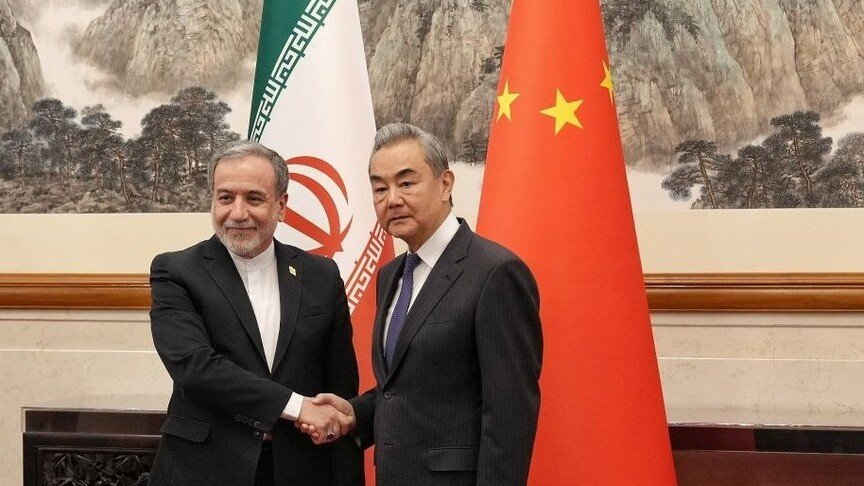
Source: Anadolu Ajansı
More Than Diplomacy
For critical minerals and rare earth element supply chain investors, the significance extends well beyond geopolitics. China remains Iran's largest oil customer despite Western sanctions, with much of the trade reportedly conducted through renminbi-denominated transactions and other mechanisms outside the traditional dollar-based financial system. The relationship is reinforced by the two countries' 25-year comprehensive strategic partnership, which encompasses energy, infrastructure, technology, and broader economic cooperation. At the same time, Beijing continues to avoid direct military involvement. Instead, it positions itself as both Iran's strategic partner and a diplomatic advocate for renewed negotiations.
Why Rare Earth Markets Should Care
Rare Earth Exchanges® has consistently argued that geopolitics increasingly drives critical material supply chain markets in the Great Powers Era 2.0. Any prolonged instability involving Iran raises questions about energy security, shipping through the Strait of Hormuz, sanctions enforcement, and the resilience of global manufacturing supply chains. For rare earth markets, these concerns arrive as the United States approaches two major milestones: the potential expiration on November 10, 2026, of China's temporary suspension of certain export-control measures, and the expansion of DFARS mine-to-magnet sourcing requirements on January 1, 2027. Those developments could further tighten already fragile supply chains if geopolitical tensions worsen.
While there is no evidence that China's latest diplomatic support for Iran signals imminent changes to rare earth export policy, the broader message is unmistakable: Beijing continues to leverage strategic partnerships while preserving flexibility over the critical materials supply chains it dominates.
For manufacturers, defense contractors, and investors alike, the lesson is familiar. Critical minerals and rare earth elements are no longer simply industrial commodities—they are increasingly instruments of statecraft, especially as we move into this new era we coined Great Powers Era 2.0.
Rare Earth Exchanges will continue monitoring developments from Beijing, Tehran, Washington, and global supply chains as this story evolves.


0 Comments
No replies yet
Loading new replies...
Moderator
Join the full discussion at the Rare Earth Exchanges Forum →