
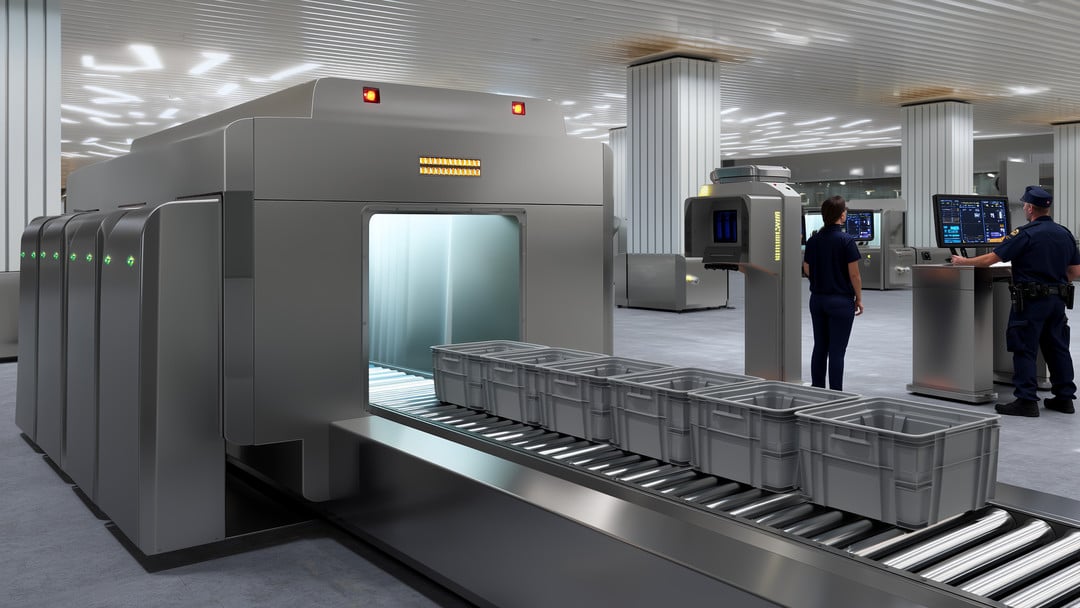
Before modern screening, airport checkpoints relied more heavily on walk-through metal detectors plus manual bag searches, which could miss non-metallic threats and create inconsistent throughput across airports and lanes. Today's checkpoints often combine multiple systems—metal detection, millimeter-wave imaging, and advanced X-ray/CT carry-on screening—to flag specific anomalies faster while keeping passenger flow more predictable. Rare earth elements (REEs) matter because they quietly enable key performance features inside these machines, including high-strength permanent magnets for compact motors and conveyors, specialized optics and scintillators for X-ray detection, phosphors for efficient light conversion, catalysts and polishing compounds used in precision manufacturing, and alloys that hold up under heat and vibration. This article explains the main scanner types travelers encounter, then connects the checkpoint experience to the components inside the systems and the REEs that help them work reliably. It also covers recent deployment trends for 2025 to 2026, major innovators and standards, supply-chain risks, and what materials and design shifts may shape the next decade of screening.
Table of Contents
How Did Airport Security Scanners Change Aviation Screening — and Why Do Rare Earths Matter?
Not long ago, getting through an airport checkpoint meant walking through a metal detector arch while a screener eyeballed your bag on a basic X-ray monitor. If nothing beeped and nothing looked odd on screen, you were on your way. That system caught guns and knives reasonably well, but it could miss non-metallic threats entirely. Throughput was unpredictable, too — one nervous traveler emptying a stuffed carry-on could back up an entire lane.
Today's checkpoints look different. Most busy airports now layer several technologies together: walk-through metal detectors or millimeter-wave body scanners for people, plus advanced X-ray or computed tomography (CT) systems (opens in a new tab) for carry-on bags. Each tool handles a different detection job, and together they flag specific anomalies faster while keeping the line moving more steadily.
What most travelers never think about is what is happening inside those machines at the materials level. Rare earth elements — a group of metallic elements with unique magnetic, optical, and chemical properties — quietly enable many of the performance features that make modern scanners compact, fast, and reliable. They show up in the magnets that spin conveyor motors, in the crystals that convert X-rays into readable images, and in the polishing compounds used to manufacture precision optics.
This article walks through the main scanner types you encounter at the checkpoint, then connects what you see on the outside to the components and rare earth materials working on the inside. It also covers recent deployment trends heading into 2026, the companies and standards shaping the field, supply-chain risks, and what design shifts may matter over the next decade.
Scanner Types at a Glance
| Scanner Type | What It Does | Where You See It |
|---|---|---|
| Walk-through metal detector | Detects metallic objects on or near the body | Passenger lane entry at most airports worldwide |
| Millimeter-wave body scanner | Creates a generic body outline highlighting surface anomalies | Passenger screening; common in US, EU, UK, and expanding globally |
| X-ray / CT bag scanner | Images carry-on contents by material density and shape | Conveyor belt where bins and bags enter the screening tunnel |
Each type plays a specific role, and many checkpoints use two or all three in sequence. Procedures vary by country, airport, and even lane, so always follow the screening officer's instructions.
Rare Earth Role in Airport Security Scanners
Which Elements Are Used and Why
Rare earth elements, often called REEs, are a set of seventeen metallic elements. Only a handful show up regularly in security screening equipment, but each one fills a role that is hard to replace.
Neodymium (Nd) and praseodymium (Pr) are the backbone of powerful NdFeB permanent magnets. These magnets drive the compact motors, actuators, and rollers that move bins, open shutters, and keep conveyor belts running at a steady speed. They deliver high torque in a small package, which matters when every centimeter of space inside a scanner housing is accounted for. Dysprosium (Dy) and terbium (Tb) are often added in small amounts to keep those magnets strong when motors run hot — a real concern in enclosed, continuously operating checkpoint equipment. Materials references from organizations like ASM International and technical notes from magnet suppliers such as Arnold Magnetic Technologies describe this tradeoff in detail.
Samarium (Sm) pairs with cobalt to form SmCo magnets, which hold up better in extreme heat and resist corrosion. They cost more than NdFeB, so they tend to appear only in tightly enclosed drive units where temperature stability is non-negotiable.
Cerium (Ce) and lanthanum (La) play a quieter role. They are widely used in glass polishing and specialty glass formulas that help manufacturers produce the precision lenses and detector windows found in screening equipment. The USGS rare earths summaries document these industrial uses extensively.
On the detection side, europium (Eu), yttrium (Y), gadolinium (Gd), erbium (Er), and ytterbium (Yb) can appear in phosphors, scintillators, or laser and optical materials used in X-ray detection chains. IAEA detector materials primers and vendor datasheets from companies like Hamamatsu Photonics describe how these elements improve the conversion of X-ray energy into readable signals.
How It Works
Understanding how rare earths connect to what happens at the checkpoint is simpler than it sounds. Think of the screening lane as a chain of mechanical and electronic steps, each depending on specific materials.
The conveyor belt that carries your bin into the scanner tunnel is driven by a motor built around NdFeB magnets containing neodymium, praseodymium, and sometimes dysprosium or terbium. These magnets give the motor high torque density, meaning the motor can be small yet powerful enough to keep belt speed constant. Consistent belt speed matters because the X-ray or CT system needs each bag to pass through the imaging zone at a predictable rate to produce a clear, undistorted picture.
Shutters, diverters, and bin-handling actuators also rely on rare earth magnets — either NdFeB or SmCo — to generate strong magnetic fields in compact assemblies. Tighter mechanical timing from these actuators reduces jams and re-scans, which helps keep the line moving.
Inside the imaging tunnel, the X-ray detection chain often uses a scintillator or phosphor doped with rare earth elements from the gadolinium, yttrium, or europium families. These materials convert incoming X-ray photons into visible light, which a photodetector then reads and feeds into the image reconstruction software. Higher-efficiency conversion means better signal-to-noise ratio, which helps the system distinguish dense objects more clearly with fewer repeat scans.
Thermal constraints tie everything together. Enclosed motors running continuously, tightly packed electronics, and warm imaging components all raise temperatures inside the housing. Heavy rare earths like dysprosium and terbium, or the use of SmCo magnets, help maintain magnetic performance under heat — and that directly supports system uptime.
Journey from Mine to Product
Supply Chain Steps
The path from raw mineral to working scanner is long and precise. It starts with mining rare-earth-bearing ore — often from hard-rock deposits or ion-adsorption clays — and producing a mineral concentrate. That concentrate goes through chemical separation, a complex solvent extraction process that isolates individual rare earth oxides at high purity.
From there, the oxides are converted into metals and alloys. For magnets, this means producing NdFeB or SmCo alloy powders, then sintering them under pressure and heat into magnet blocks, machining them to exact dimensions, and coating them to resist corrosion. For detector materials, it means growing scintillator crystals or processing ceramic phosphors with tightly controlled composition and minimal contamination. Cerium-based polishing compounds, meanwhile, are used upstream to finish the precision glass lenses and windows that protect and focus optical paths inside the equipment.
These finished materials become subassemblies — motors, encoders, detector modules, optical windows — that security equipment manufacturers integrate into complete screening systems. Before deployment, each system goes through calibration, image-quality testing, and reliability qualification aligned to aviation security standards and local regulatory requirements.
Typical Chokepoints
Several steps in this chain can become bottlenecks:
- Separation capacity is a persistent constraint because producing high-purity individual oxides requires complex chemistry and strict process control, and heavy REEs like dysprosium and terbium are naturally scarcer than light REEs.
- Magnet alloying and sintering demand specialized furnaces, powder-handling environments, and tight quality control to meet coercivity and dimensional specifications at scale.
- Detector material production — crystal growth, ceramic densification, and phosphor coating — is sensitive to contamination and yield loss, which can slow manufacturing ramp-ups during large equipment refresh cycles.
Any disruption at these stages can ripple forward into delayed system deliveries or higher component costs for airport operators.
Statistics and Societal Impact
Quantitative Snapshot
The global aviation security screening equipment market — covering checkpoint and checked-baggage systems — is valued in the range of several billion US dollars as of 2025, with continued growth expected through 2026 and beyond, according to industry analysts such as MarketsandMarkets and Omdia. This growth tracks airport modernization programs, passenger traffic recovery, and regulatory mandates pushing adoption of newer screening technology.
In the United States, the Transportation Security Administration has been steadily deploying CT-based carry-on scanners across major airports, with public procurement announcements through 2025 and 2026 indicating hundreds of additional units planned or in progress. The UK Department for Transport has similarly set deadlines for CT screening adoption at major airports, and airport annual reports from hubs across Europe and Asia-Pacific reflect parallel investment.
On the materials side, according to the 2025 and 2026 USGS Mineral Commodity Summaries, China continues to dominate midstream rare earth processing, accounting for a large majority of global separation, oxide production, and magnet manufacturing capacity. The IEA's critical minerals updates reinforce that supply concentration for neodymium, praseodymium, dysprosium, and terbium remains a significant risk factor for industries that depend on high-performance permanent magnets.
A single checkpoint lane-equivalent system can contain multiple motors and actuators, each housing magnets that use relatively small but precisely specified quantities of rare earth alloy. Across thousands of lanes worldwide, that aggregate demand adds up.
Downstream Effects
When conveyor speed stays consistent and actuators time their movements precisely, re-scans and lane stoppages drop. That translates to shorter lines during peak hours and fewer missed connections — outcomes that matter to every type of traveler, from first-timers to business flyers.
Better detector sensitivity and more consistent imaging increase the chance that the system identifies a concern on the first pass, reducing the need for manual bag checks on ambiguous items. That helps screening officers focus their attention where it counts.
Higher equipment uptime also eases staffing pressure. Every lane closure during a rush period forces passengers to redistribute, creating longer waits and cascading delays. Reliable components — including the magnets and detector materials inside — help keep lanes open.
Innovators and History
Key Breakthroughs
The materials story behind airport scanners stretches back decades. The commercialization of samarium-cobalt magnets in the 1960s and 1970s, followed by the development of neodymium-iron-boron magnets in the early 1980s, gave engineers a way to build motors and actuators that were far smaller and more powerful than anything possible with older ferrite magnets. ASM International histories and magnet industry retrospectives trace how these materials moved from laboratory curiosities to mass production.
On the detection side, advances in scintillator materials and photodetector readout electronics steadily improved X-ray image quality and scanning speed. Key developments are documented across IAEA technical materials and white papers from detector manufacturers like Hamamatsu Photonics. Many of these innovations were shared across medical imaging and security imaging, with improvements in one field accelerating progress in the other.
The shift from legacy two-dimensional X-ray screening toward CT-based carry-on scanning accelerated as computing power caught up with the reconstruction algorithms needed to generate three-dimensional images in near real time. Adoption has been shaped by performance standards from regulators including the TSA and the European Civil Aviation Conference.
From Lab to Product
Research became deployable technology when magnet manufacturers achieved consistent sintering yields at industrial scale and when detector material producers could guarantee repeatable light output and durability under high-throughput conditions. OEMs then packaged these components into maintainable, serviceable modules — motors, belt assemblies, detector arrays, and calibration routines — so airports could run systems continuously with predictable parts replacement and technician training.
Why It Matters Now
Current Drivers
Heading into 2026, several forces are pushing demand higher. Airport modernization programs are accelerating across North America, Europe, and Asia-Pacific. Passenger traffic has recovered and in many markets exceeded pre-pandemic levels, putting pressure on checkpoint throughput. Regulators in multiple countries have set timelines for upgrading carry-on screening to CT-based systems, which means more lanes need more precision motors, actuators, and detector modules per installation.
At the same time, cybersecurity, maintainability, and uptime expectations are rising. OEMs are under pressure to deliver higher-quality components with tighter quality assurance, which can increase dependence on controlled supply chains for specialty materials like rare earth magnet alloys and scintillator compounds.
Security and Policy Context
The geographic concentration of rare earth processing remains a live policy issue. According to IEA critical minerals reporting and USGS summaries updated through 2025 and 2026, a large share of global separation, metalmaking, and magnet sintering capacity is located in China. This concentration creates supply risk for industries worldwide, including aviation security equipment.
Governments are responding. Onshoring and "friend-shoring" initiatives in the United States, the European Union, the United Kingdom, Japan, and Australia target separation, metalmaking, and magnet manufacturing capacity. Procurement rules increasingly ask equipment vendors for supply-chain transparency and continuity planning — meaning the question of where magnets and detector materials come from is moving from a technical footnote to a contractual requirement.
Export controls and licensing uncertainty around heavy rare earths like dysprosium and terbium add another layer. Design teams are motivated to reduce heavy REE content where feasible, or to qualify alternate suppliers, without sacrificing the reliability that airport operators and regulators demand.
Future Outlook
Materials and Design Trends
Magnet engineers are actively working to maintain performance with less heavy rare earth content. Grain-boundary diffusion techniques allow dysprosium or terbium to be applied precisely where it is needed in the magnet microstructure, rather than distributed throughout the entire block. This approach, widely described in industrial magnet manufacturing literature, can cut heavy REE usage significantly while preserving coercivity.
In lower-demand, cooler-running subsystems, ferrite magnets may substitute for rare earth magnets where space and efficiency constraints allow. But for compact, high-torque drives in conveyor and gantry systems, NdFeB or SmCo remain difficult to replace.
Recycling of rare earth magnets is expected to scale gradually, with magnet scrap recovery from manufacturing waste and end-of-life equipment. However, collection logistics and the economics of separating mixed scrap remain challenging. The European Commission and the US Department of Energy have both published updates through 2025 and 2026 on pilot programs and policy frameworks aimed at improving recovery rates.
On the detector side, innovation is focused on higher-efficiency scintillators, improved photodetectors, and lower-power electronics. Reducing heat output inside the scanner housing can ease thermal stress on nearby magnets and actuators, indirectly extending component life and reducing the need for heavy REE-enhanced magnet grades.
Five-to-Ten-Year Scenario
Demand for rare earths in airport screening equipment will likely follow airport capital refresh cycles and security standard updates. Periodic surges are expected when regulators tighten requirements or when major hubs modernize multiple terminals at once.
The most likely bottlenecks remain in midstream processing — separation, alloying, and sintering — especially for heavy REE-enhanced magnet grades. Dual-sourcing and materials efficiency will be central risk mitigations for OEMs and their airport customers.
A plausible path forward combines new separation capacity outside China, incremental recycling gains, and continued design-for-less-heavy-REE magnets. But timelines depend on permitting, financing, and the qualification cycles typical of safety-critical equipment, which tend to move more slowly than commercial consumer products.
Glossary
NdFeB: Neodymium-iron-boron, the alloy used in the strongest type of permanent magnet found in screening equipment motors and actuators.
Coercivity: A magnet's resistance to losing its magnetism, especially important when motors run hot inside enclosed scanner housings.
Grain-boundary diffusion: A manufacturing technique that places heavy rare earths like dysprosium at the boundaries between crystal grains in a magnet, improving heat resistance while using less material.
Sintering: A process that compresses and heats metal or ceramic powder into a solid, dense shape — used to make both magnets and some detector materials.
Scintillator: A material that absorbs X-ray energy and re-emits it as visible light (opens in a new tab), forming a key step in how bag scanners create images.
Phosphor: A substance that converts one form of energy (such as X-rays or ultraviolet light) into visible light, used in detection and display systems.
Millimeter-wave imaging: A body-scanning method that uses non-ionizing radiofrequency energy — not X-rays — to detect surface anomalies under clothing.
Heavy vs. light rare earth elements: A supply-chain distinction, not a physical weight description. Light REEs like neodymium and cerium are more abundant and easier to source. Heavy REEs like dysprosium and terbium are scarcer and often more expensive, which affects cost and availability for manufacturers.
Ionizing vs. non-ionizing radiation: X-ray bag scanners use ionizing radiation directed at luggage, not at passengers. Millimeter-wave body scanners use non-ionizing radiofrequency energy. Exposure policies and safety assessments differ by technology type and by country, so travelers with concerns should check with their airport or national screening agency for current information.
FAQs
Are airport security scanners the same thing as metal detectors?
They are different tools used for different detection goals, and many checkpoints use more than one system in sequence. Walk-through metal detectors primarily respond to metal mass and shape, while millimeter-wave body scanners look for anomalies on the body surface, and X-ray or CT systems examine carry-on bags for material density and shape patterns. Procedures vary by country and even by airport, so travelers should follow officer instructions and check their airport or agency for updates before flying.
Do airport security scanners expose passengers to harmful radiation?
Policies and technologies differ, but most body scanners used at checkpoints are millimeter-wave systems that use non-ionizing radiofrequency energy rather than X-rays, and agencies publish safety assessments for the models they approve. Carry-on bag scanners using X-ray or CT technology direct ionizing radiation at baggage, not at the passenger directly, and are designed to meet regulatory limits for equipment emissions and shielding. Travelers with specific medical concerns should ask for alternate screening options where available and follow the screening officers' instructions at the checkpoint.
What common items trigger alarms in body screening?
Alarms are often triggered by items or features that break the expected contour of clothing or reflect signals oddly, such as foil wrappers, money belts, layered clothing, thick seams, sweatbands, bulky hair accessories, or dense pockets of paper currency. Medical braces, prosthetics, ostomy supplies, and some underwire or compression garments can also create anomalies that require a quick resolution step. When an alarm occurs, the usual next steps are targeted re-screening, a pat-down of the indicated area, or a request to adjust or remove an item, depending on local policy and officer instructions.
How should travelers with medical devices or disabilities prepare?
Devices like pacemakers, insulin pumps, continuous glucose monitors, and implanted medical hardware may require a specific screening approach, and travelers can request assistance or alternate screening methods depending on the airport and country. It helps to carry documentation when available, but officers generally rely on the screening process rather than paperwork, and travelers should clearly tell the officer what device or mobility aid they use before screening begins. In the US, programs such as TSA Cares are commonly referenced for planning support, while other countries have their own assistance services, so checking your airport or national screening agency for updates reduces surprises.
What should families with kids expect at the scanner, especially with strollers and snacks?
Families often need extra time because strollers, car seats, and baby carriers may need to be sent through X-ray or CT screening, folded, or inspected depending on size and local rules, and officers may ask you to carry the child through the walk-through system. Snacks, liquids, and baby formula rules vary by country and by screening lane technology, and CT lanes may allow more items to stay in the bag while older lanes require more removal. The most reliable approach is to pack so you can quickly separate liquids, powders, and electronics if asked, then follow officer instructions and check your airport or agency for updates before travel.
Conclusion
Airport security scanners depend on a range of rare earth elements that most travelers never see but that directly affect screening speed, image quality, and system uptime. From neodymium and praseodymium magnets driving conveyor motors to europium and gadolinium-doped scintillators converting X-rays into usable images, REEs are embedded throughout the detection chain. As airports worldwide modernize checkpoints and adopt CT carry-on screening through 2025 and beyond, the demand for these materials will grow alongside the need for resilient supply chains. Efforts to reduce heavy REE usage through grain-boundary diffusion, diversify sourcing through onshoring and friend-shoring, and scale recycling will shape whether the next generation of screening equipment can be deployed on schedule and at scale. For travelers, the practical takeaway is that the reliability and speed of the checkpoint experience are quietly supported by materials mined, processed, and engineered across a global supply chain that policymakers and manufacturers are working to strengthen.
