
Highlights
- Energy Fuels has begun construction of heavy rare earth separation circuits at its White Mesa Mill, targeting commercial dysprosium and terbium oxide production by end of 2027.
- Heavy rare earth separation is far more chemically complex than light rare earth processing, which is why China currently refines an estimated 98% of global heavy rare earth oxides.
- The $104 million expansion is expected to rely heavily on U.S. government grants and loans, but public financing cannot substitute for the metallurgical expertise required to operate circuits at scale.
- Key regulatory deadlines—including DFARS Section 4872 restrictions effective January 1, 2027—arrive before most Western heavy rare earth projects, including Energy Fuels', are expected to reach commercial operation.
- The critical investment question remains which Western company will first demonstrate sustained commercial-scale heavy rare earth separation and successfully convert oxides into qualified metals and magnets.
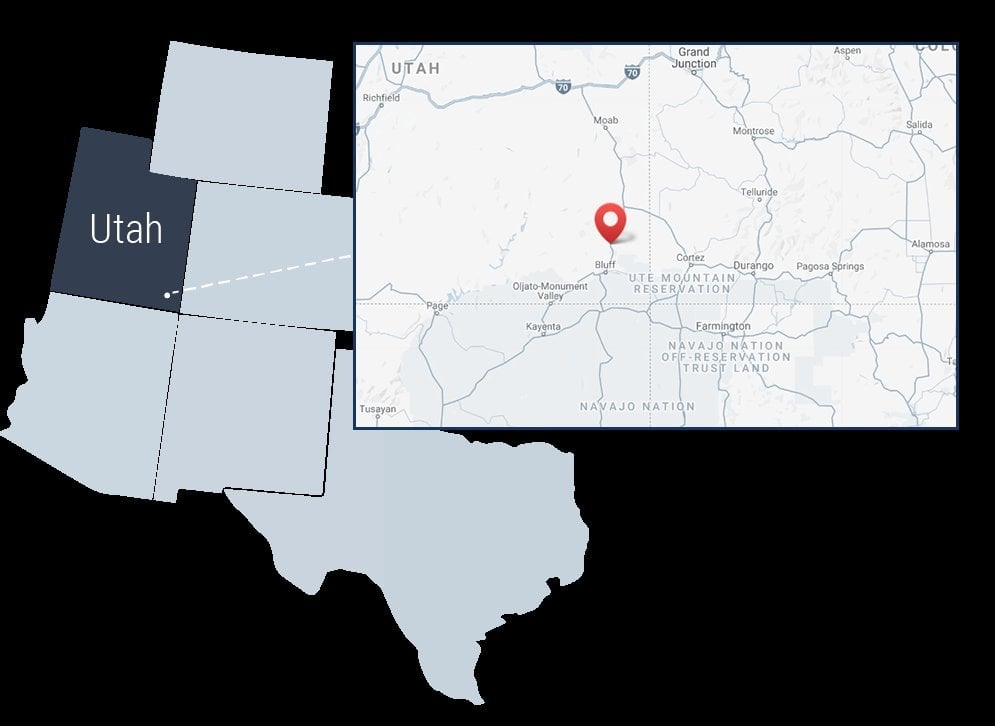
Energy Fuels (NYSE American: UUUU | TSX: EFR) has begun construction of heavy rare earth separation capacity at its White Mesa Mill in Utah, targeting commercial production of dysprosium (Dy) and terbium (Tb) oxides by the end of 2027. The announcement represents one of the most important Western midstream developments this year. Rare Earth Exchanges (REEx) agrees the project is strategically significant. However, investors should distinguish between construction milestones and industrial execution. Heavy rare earth separation remains one of the world's most technically demanding chemical processes, and Western companies have yet to demonstrate sustained commercial production at scale.
A Major Step for America's Midstream
Energy Fuels (NYSE American: UUUU | TSX: EFR) announced that construction has commenced on an expansion of its White Mesa Mill to produce commercial quantities of heavy rare earth oxides, including dysprosium and terbium—materials essential for high-performance permanent magnets used in electric vehicles, robotics, data centers, and defense systems. The company expects Tb and Dy circuits to be completed by the end of 2027, with additional samarium, europium, and gadolinium circuits planned for 2028.
Energy Fuels currently ranks among the highest-scoring companies in the REEx Insights Rankings for ex-China midstream processors, reflecting its operating White Mesa Mill, diversified monazite strategy, and integrated mine-to-magnet ambitions.
The Chemistry Becomes Much Harder
The announcement deserves attention. So does the reality. To date, Energy Fuels has demonstrated commercial production of light rare earth oxides, primarily neodymium-praseodymium (NdPr), at comparatively modest volumes. Heavy rare earth separation is considerably more complex. Producing high-purity dysprosium and terbium requires substantially more solvent extraction stages, tighter process control, and significantly greater operating expertise. This is precisely why China today refines an estimated 98% of the world's heavy rare earth oxides. Building separation circuits is only one milestone. Successfully operating them continuously, economically, and at commercial scale is another.
Political Timelines or Industrial Timelines?
Management targets commissioning of its Tb and Dy circuits in late 2027, aligning closely with U.S. strategic policy objectives. Yet investors should ask whether these are industrial schedules or political ones. The United States has already committed substantial public capital to rebuild rare earth processing. MP Materials, for example, previously secured a $150 million U.S. government loan to accelerate heavy rare earth separation, alongside broader Department of Defense support. Meanwhile, Energy Fuels expects approximately $104 million in expansion costs to be supported in significant part by government grants and loans. Government financing can accelerate construction. It cannot accelerate metallurgy.
The Clock Is Ticking
The strategic backdrop continues to tighten. On November 10, 2026, the current U.S.-China rare earth export-control reprieve is scheduled to expire, potentially restoring significantly tighter restrictions on critical materials. Less than two months later, DFARS Section 4872 sourcing restrictions become effective on January 1, 2027, requiring U.S. defense contractors to source permanent magnets outside prohibited supply chains. Those deadlines arrive well before most Western heavy rare earth projects—including Energy Fuels' own announced schedule—are expected to achieve commercial operation.
REEx Bottom Line
Energy Fuels remains one of the strongest Western midstream companies and deserves its high ranking within the REEx Insights Rankings. The White Mesa expansion is a meaningful strategic milestone and another step toward reducing Western dependence on China. But investors should resist confusing construction with commercial capability.
The rare earth industry has no shortage of ambitious announcements, generous government funding, or aggressive mine-to-magnet roadmaps.
The defining investment question remains unchanged: Which Western company will first demonstrate sustained, commercial-scale heavy rare earth separation—and then successfully convert those oxides into qualified metals, alloys, and magnets? That answer—not another groundbreaking ceremony—will determine who ultimately wins the race to rebuild the Western rare earth supply chain.
Source: Energy Fuels Inc. (NYSE American: UUUU | TSX: EFR), press release dated July 29, 2026.


0 Comments
No replies yet
Loading new replies...
Moderator
Join the full discussion at the Rare Earth Exchanges Forum →