
Highlights
- Idaho National Laboratory unveiled a new antimony pilot processing facility funded by the Department of War, capable of processing one ton of ore per day from Perpetua Resources' Stibnite Gold Project.
- The facility will produce military-grade antimony trisulfide for U.S. Army munitions, addressing America's heavy dependence on Chinese-controlled antimony supply chains.
- INL Director John Wagner called the project proof that national laboratories can demonstrate processing technologies that are reliable, economical, and scalable for domestic industry.
- Beyond immediate output, the pilot plant generates critical engineering knowledge, process optimization experience, and technical confidence needed to scale future commercial facilities.
- Antimony is essential for defense, energy storage, semiconductors, and flame retardants, yet the U.S. currently has no meaningful domestic commercial antimony processing capability.
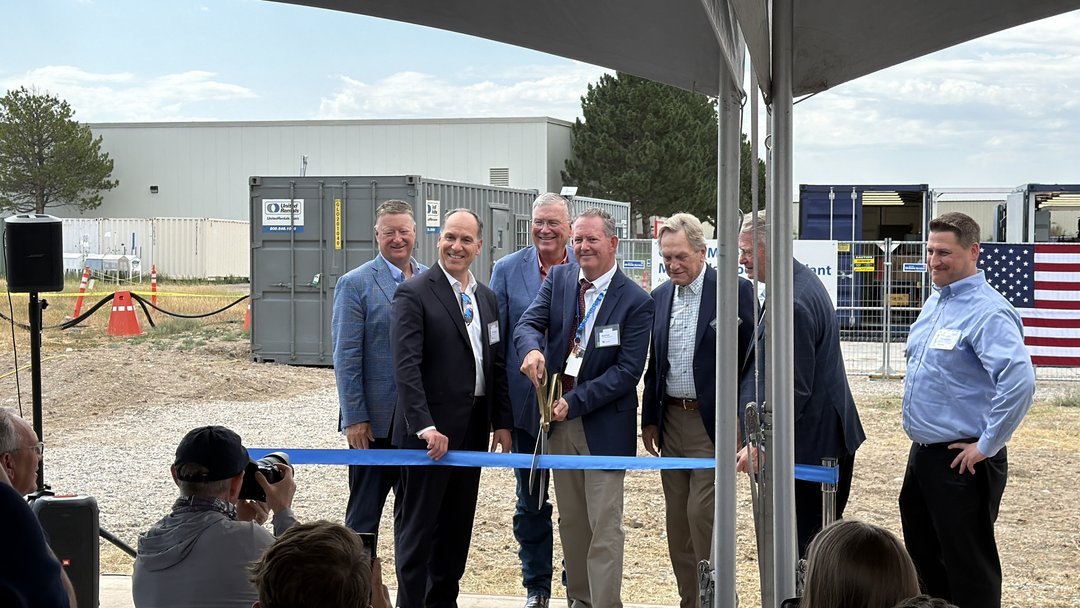
For years, America's critical minerals strategy has largely consisted of speeches, white papers, and funding announcements. At Idaho National Laboratory (opens in a new tab) (INL), that strategy became something far more important: operating equipment. Rare Earth Exchanges® co-founders Daniel O'Connor and Dustin Olsen attended yesterday’s ribbon-cutting ceremony along with key political dignitaries of the State of Idaho for the new antimony pilot processing facility at INL with Perpetua Resources (opens in a new tab), where they also received a personal tour of the modular plant and met with many of the scientists and engineers building America's next-generation critical minerals capability.
Rare Earth Exchanges at the INL and Perpetua Resources Ribbon Cutting
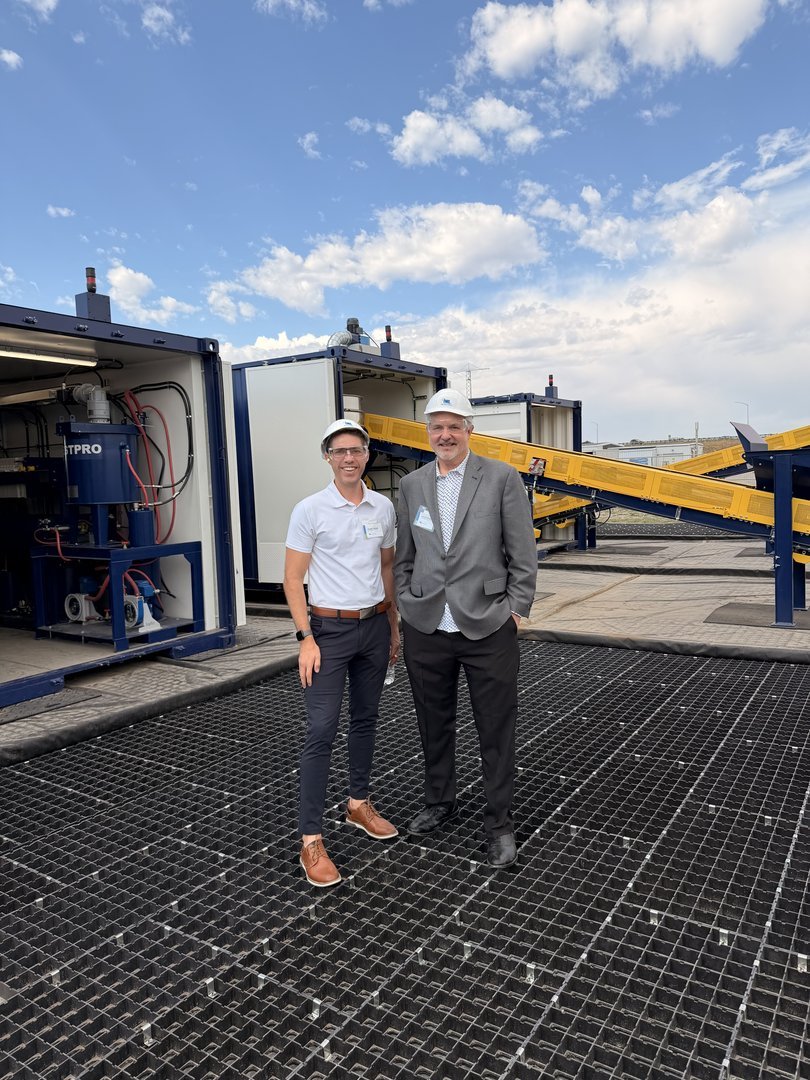
Among those welcoming Rare Earth Exchanges were Robert ("Bob") Fox, INL Directorate Fellow (opens in a new tab), and Travis McCling, Director of Critical Materials (opens in a new tab) at INL—both familiar voices to our audience through previous appearances on the Rare Earth Exchanges Podcast. (opens in a new tab) The significance of today's event extends well beyond antimony.
The pilot facility, paid for by the Department of War, will process approximately one ton of ore per day from Perpetua Resources' Stibnite Gold Project, generating operational data and demonstrating domestic processing capabilities for military-grade antimony trisulfide, an essential ingredient in U.S. Army munitions. Until now, the United States has remained heavily dependent on foreign—primarily Chinese-controlled—supply chains for this strategically important material.
The Pilot Facility: The First of More to Come at INL
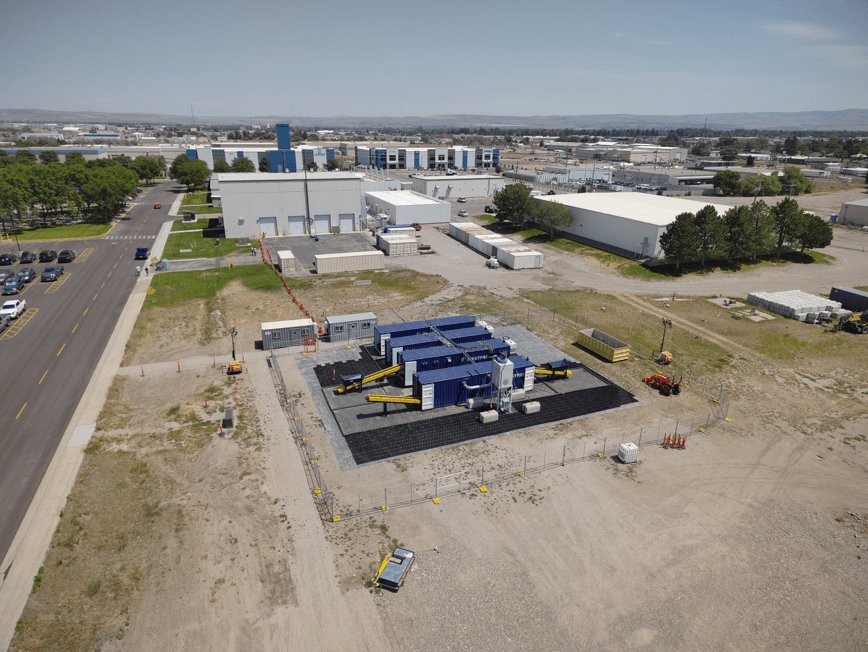
INL Director John Wagner (opens in a new tab) described the project as proof that national laboratories can demonstrate processing technologies that are reliable, economical, and scalable for domestic industry. Perpetua CEO Jon Cherry (opens in a new tab) emphasized that the project helps extend America's supply chain downstream beyond mining toward actual materials production, while Congressman Mike Simpson (opens in a new tab) highlighted the national security imperative of rebuilding domestic critical mineral capabilities.
Beyond Mining: Building the Missing Midstream
Rare Earth Exchanges has consistently argued that the greatest vulnerability facing the West is not simply access to mineral deposits—but the lack of domestic midstream processing capacity. Today's facility represents precisely the kind of infrastructure that has been missing.
While processing one ton per day is pilot scale rather than commercial production, facilities like this generate something arguably more valuable than immediate output: engineering knowledge, process optimization, operating experience, and the technical confidence necessary to scale future commercial plants. Walking through the facility reinforced an important reality. Rebuilding America's industrial base is not accomplished by policy announcements alone. It requires engineers, operators, metallurgists, laboratories, pilot plants, and years of disciplined technical execution.
Rare Earth Exchanges' Perspective
Our conversations with INL personnel reinforced that the United States is beginning to move beyond simply identifying critical mineral vulnerabilities and toward systematically rebuilding the industrial capabilities needed to address them. This pilot plant will not eliminate America's dependence on foreign antimony overnight. Nor does it solve broader bottlenecks across rare earth separation, metals, alloys, and magnet manufacturing. But it demonstrates an increasingly important shift: America is beginning to rebuild industrial know-how one pilot plant at a time.
Ribbon Cutting Including Governor Brad Little
In the Great Powers Era 2.0™ (our thesis of this new stage of globalization), competitive advantage belongs not simply to the nation with the largest mineral resources, but to the one capable of transforming those resources into strategic materials at industrial scale.
Yesterday’s ribbon cutting represents another step in that direction.
Did you know why Antimony is important?
Antimony is one of the world's most strategically important critical minerals because it is indispensable for defense, energy, and advanced industrial manufacturing. Its highest-value use is in antimony trisulfide, a key ingredient in U.S. Army small-arms ammunition, artillery primers, pyrotechnics, and other military applications, while antimony metal and oxides are also used in lead-acid batteries, flame retardants, semiconductors, infrared sensors, glass manufacturing, and emerging energy-storage technologies. Despite its importance, the United States currently has no meaningful commercial domestic antimony processing capability and has relied heavily on imports. Today, China dominates global antimony refining and downstream processing, controlling much of the world's capacity to convert mined concentrate into high-purity metal and specialty compounds, while Tajikistan has also emerged as a major processor in recent years. Smaller refining operations exist in countries such as Belgium, Bolivia, Myanmar, Russia, and Vietnam, but China's combination of mining, refining, chemical processing, and export influence makes it the pivotal player in the global antimony supply chain. This concentration has transformed antimony from an industrial commodity into a strategic material central to supply chain resilience and national security.


0 Comments
No replies yet
Loading new replies...
Moderator
Join the full discussion at the Rare Earth Exchanges Forum →