
Highlights
- JOGMEC will invest up to C$47.7 million alongside Toyota Tsusho to advance the Lofdal heavy rare earth deposit in Namibia's Kunene region.
- The project targets annual production of ~2,000 tonnes TREO including 119 tonnes of dysprosium and 18 tonnes of terbium over a 13-year mine life.
- A commercialization decision is targeted for Japan's fiscal year ending March 2027, but a definitive feasibility study and US$348M in capital costs still lie ahead.
- Lofdal represents Japanese industrial policy prioritizing long-term supply resilience over short-term efficiency in critical heavy rare earths.
- Investors should distinguish government-backed momentum from a finished supply chain—ore must still become specification-qualified material for Japan's magnet economy.
The Japan Organization for Metals and Energy Security (JOGMEC) will invest up to C$47.7 million (US$33.9 million) in Toyota Tsusho’s Namibia vehicle to advance the Lofdal heavy rare earth project. Rare Earth Exchanges views the move as strategically important: Japan is pairing state capital with industrial expertise to secure dysprosium, terbium, and yttrium outside China. Yet this is feasibility-stage financing—not proof of an operating mine, qualified products, or a complete ex-China magnet supply chain.
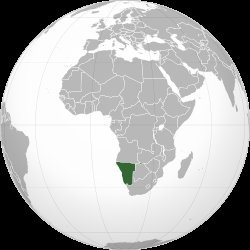
Namibia
Did You Know?
Toyota Tsusho formed a special purpose corporate vehicle named TJ Namibia Rare Earths alongside state-backed JOGMEC (opens in a new tab) to develop the Lofdal heavy rare earth deposit in Namibia's Kunene region. The project focuses on mining dysprosium and terbium for electric vehicle motors.
Tokyo Buys Optionality in Africa
Japan is no longer waiting for the rare earth market to solve itself, as reported in Reuters. State-owned JOGMEC and Toyota Tsusho are advancing Lofdal in Namibia’s Kunene region, with a commercialization decision targeted for Japan’s fiscal year ending March 2027. The partnership grew from JOGMEC’s 2020 exploration alliance with Namibia Critical Metals, while Toyota Tsusho entered in March 2026 by assuming part of JOGMEC’s option interest.
Lofdal matters because its planned output is unusually heavy-rare-earth rich. The 2026 preliminary feasibility study models average annual production of about 2,000 tonnes TREO, including 119 tonnes of dysprosium, 18 tonnes of terbium, and 841 tonnes of yttrium over a 13-year mine life.
The Headline Is Strong; the Mine Is Not Built
The reporting is accurate on strategic intent but light on execution risk. Lofdal has a mining license and completed a PFS, yet it still requires a definitive feasibility study, financing, construction, metallurgical validation, customer qualification, and dependable downstream separation. The PFS estimates US$348 million in capital costs and a base-case after-tax NPV of US$275 million—credible progress, but not commercial certainty.
Rare Earth Exchanges’ View
This is industrial policy in action: Japan is exchanging short-term efficiency for long-term resilience. Lofdal could become a meaningful ex-China source of scarce heavies, but investors should distinguish government-backed momentum from a finished supply chain. The real victory comes only when Namibia’s ore becomes specification-qualified material delivered into Japan’s magnet economy.


0 Comments
No replies yet
Loading new replies...
Moderator
Join the full discussion at the Rare Earth Exchanges Forum →