
Highlights
- Europe's metals industry has called for a dedicated €10 billion Critical Raw Materials Fund to bridge the gap between policy and project execution.
- The proposal includes strategic stockpiles, demand aggregation, price-support mechanisms, and direct project financing for the new EU Critical Raw Materials Centre.
- The recommendations implicitly concede that critical minerals like rare earths, gallium, and germanium do not function like ordinary commodity markets.
- Europe joins the US, Japan, and Australia in abandoning the assumption that free markets alone will build resilient strategic supply chains.
- Rare Earth Exchanges frames this shift as a defining feature of Great Powers Era 2.0, where resilience commands a premium over efficiency.
Europe's metals industry has proposed an ambitious blueprint for the new EU Critical Raw Materials Centre. The recommendations go far beyond market monitoring, calling for a dedicated €10 billion Critical Raw Materials Fund, strategic stockpiles, demand aggregation, price-support mechanisms, and direct project financing. Rare Earth Exchanges® sees this as another milestone in Great Powers Era 2.0™: Europe is moving away from pure market liberalism toward strategic industrial policy. The question is no longer whether governments should intervene—it is whether they can intervene fast enough.
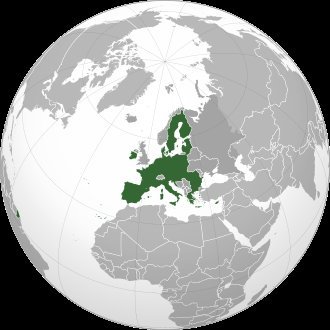
From Free Markets to Strategic Markets
The European Metals association's recommendations (opens in a new tab) read less like a trade paper and more like an industrial strategy.
The group urges Brussels to create an independent Critical Raw Materials Centre equipped with financing tools, market intelligence, strategic stockpiles, demand aggregation, and a dedicated investment fund to bridge the gap between policy and project execution. The most notable proposal is explicit recognition that Europe needs public capital, structured offtake agreements, guarantees, equity investments, and even price-floor mechanisms to make critical mineral projects bankable.
The Quiet Revolution
What makes the document remarkable is not what it says—but what it implicitly concedes.
Europe increasingly accepts that critical minerals do not function like ordinary commodity markets.
Rare earths, gallium, germanium, antimony, and other strategic materials are characterized by opaque pricing, concentrated supply chains, geopolitical risk, and market distortions. The paper argues that conventional financing has proven insufficient and calls for targeted intervention while cautioning against broad market distortions from mandatory purchasing or indiscriminate stockpiling.
Rare Earth Exchanges' View
This is another confirmation of a trend Rare Earth Exchanges has tracked across the United States, Japan, Australia, and now Europe. Governments are abandoning the assumption that markets alone will build strategic supply chains. The paper correctly recognizes that financing, processing, refining, recycling, and downstream manufacturing must advance together. It also acknowledges a reality REEx has emphasized repeatedly: market intelligence without capital deployment does not build mines, separation plants, or magnet factories.
In Great Powers Era 2.0™, resilience increasingly commands a premium over efficiency. Europe is no longer asking whether industrial policy is necessary. It is debating how to execute it before strategic dependence becomes permanent.


0 Comments
No replies yet
Loading new replies...
Moderator
Join the full discussion at the Rare Earth Exchanges Forum →