
Highlights
- The European Initiative for Energy Security proposes an autonomous Critical Raw Materials Centre modeled on Japan's JOGMEC to secure Europe's mineral supply chains.
- The proposed institution would have commercial authority to invest, aggregate demand, manage stockpiles, and take on risk alongside private industry.
- Japan's JOGMEC has spent decades deploying equity, loans, guarantees, and offtake support, offering Europe a proven but imperfect blueprint.
- Execution remains the critical unanswered question, as capital alone cannot solve permitting, technical risk, or commodity pricing challenges.
- The proposal reflects a global shift: governments from Washington to Tokyo now treat critical minerals as strategic infrastructure, not mere commodities.
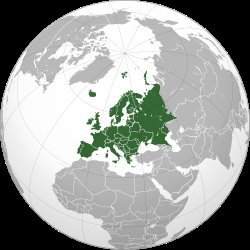
Europe is no longer asking whether it needs a critical minerals strategy—it is debating how to finance and govern one. A new proposal from the European Initiative for Energy Security (opens in a new tab) (EIES) urges the European Commission to establish an autonomous Critical Raw Materials Centre modeled partly on Japan's JOGMEC, backed by public and private capital, with the authority to invest, aggregate demand, manage stockpiles, and take commercial risk. Rare Earth Exchanges® finds the proposal intellectually serious and directionally correct. More importantly, it reflects a global shift: governments increasingly recognize that free markets alone will not build resilient rare earth and critical mineral supply chains.
What is JOGMEC?
Japan Organization for Metals and Energy Security (opens in a new tab) (JOGMEC) is Japan's government-backed strategic resource agency, established in 2004 through the merger of the Japan National Oil Corporation and the Metal Mining Agency of Japan. Operating under the Ministry of Economy, Trade and Industry (METI), JOGMEC's mission is to strengthen Japan's long-term energy and mineral security by supporting Japanese companies investing in overseas oil, gas, metals, and critical mineral projects. The organization provides equity investments, loans, debt guarantees, technical assistance, and risk-sharing mechanisms while managing Japan's strategic stockpiles of petroleum and critical minerals. Beyond traditional resource development, JOGMEC also supports carbon capture and storage (CCS), hydrogen, geothermal energy, and offshore wind initiatives. Unlike a traditional government regulator, JOGMEC functions as an active commercial partner, helping finance and de-risk supply chains that are strategically important to Japan's economy and national security.
Europe Wants Its Own JOGMEC. That's Bigger News Than It Sounds.
The age of passive industrial policy is ending. EIES argues Europe needs an institution with the commercial authority—not merely regulatory authority—to finance, coordinate, and secure critical mineral supply chains. Rather than another Brussels bureaucracy, it proposes an independent, market-facing entity with its own balance sheet, professional investment staff, and the ability to co-invest alongside private industry while launching an interim European Minerals Investment Network (E-MIN).
Learning From Tokyo—Not Copying It
The report correctly identifies Japan's JOGMEC as an important precedent. JOGMEC has deployed equity, loans, guarantees, stockpiling, and offtake support for decades while partnering with Japanese trading houses. Europe's proposal similarly recognizes that financing, logistics, market intelligence, and industrial coordination must work together—not as isolated policies.
The Missing Ingredient: Execution
The proposal is ambitious, but execution remains the unanswered question. Creating a new institution does not automatically produce mines, separation plants, metals, alloys, or magnets. Nor does capital alone solve permitting, technical risk, customer qualification, or commodity pricing. Investors should recognize this as a governance blueprint—not an industrial outcome.
What is most notable is the broader trend. Europe is arriving at the same conclusion increasingly embraced in Washington, Tokyo, Canberra, and elsewhere: critical minerals are no longer simply commodities. They are strategic infrastructure. The next competitive advantage will belong not to the nation with the best white paper, but to the one that can translate industrial policy into commercial production at scale.


0 Comments
No replies yet
Loading new replies...
Moderator
Join the full discussion at the Rare Earth Exchanges Forum →